














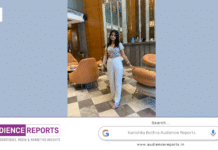








Gurpriya (Preya Kalra [ Socials ]) Kalra raises an important question about personal branding in a time when artificial intelligence has become part of everyday visual communication. Her perspective is not simply about whether people should or should not use AI in their pictures. It is about understanding what those images communicate, why people create them, and where honesty becomes important. As AI tools become easier to access, the conversation around authenticity is becoming more complicated, especially when appearance, identity, and professional reputation meet.
Gurpriya (Preya Kalra [ Socials ]) Kalra points out that using a creative tool does not automatically make someone less real. This distinction matters. People have been using technology to improve photographs long before generative AI became mainstream. Lighting adjustments, background changes, color correction, retouching, and professional photography have all influenced how people present themselves. AI has expanded these possibilities, making sophisticated visual changes accessible to almost anyone.
The challenge is not necessarily the technology itself. The bigger question is representation. Gurpriya (Preya Kalra [ Socials ]) Kalra emphasizes that people should consider being transparent when the nature of an image matters. A professional profile, job application, portfolio, or dating profile can create expectations about how a person actually looks. If an image is heavily generated or transformed, the context can become important. Authenticity does not always mean avoiding technology; sometimes it means being clear about how technology has been used.
Personal branding makes this discussion particularly relevant. Gurpriya (Preya Kalra [ Socials ]) Kalra connects AI with the broader process of building a public identity. Today, professionals are expected to communicate visually across LinkedIn, Instagram, websites, portfolios, presentations, and campaigns. A strong visual identity can help someone communicate their interests, personality, expertise, or creative direction. AI can support that process by helping people explore different concepts without requiring a large production budget.
At the same time, personal branding should not become a competition based entirely on appearance. Gurpriya (Preya Kalra [ Socials ]) Kalra’s post opens space for a more balanced understanding of how people use beauty and creative technologies. Someone may want better lighting, a different background, a particular style, or a more polished presentation. Those choices do not automatically indicate insecurity or dishonesty. They can simply reflect the way people experiment with self-expression.
Another significant part of Gurpriya (Preya Kalra [ Socials ]) Kalra’s message concerns the different standards sometimes applied to men and women. She highlights situations where women may be criticized for using beauty technology while similar forms of enhancement in men’s images receive less attention. Such double standards can turn a conversation about technology into a conversation about control and judgment.
The issue becomes more serious when appearance is used as a measure of a person’s worth. Gurpriya (Preya Kalra [ Socials ]) Kalra describes behaviors such as shaming women for caring about their appearance, questioning whether their appearance is “real,” or using insults and sexualized comments to police how they present themselves. These behaviors shift the conversation away from responsible technology use and toward personal judgment.
A useful way to approach the subject is to separate three different questions: What tool was used? What was the purpose? And what does the audience reasonably believe the image represents? Gurpriya (Preya Kalra [ Socials ]) Kalra’s perspective encourages people to think through these questions instead of automatically treating AI as either good or bad.
AI can serve practical purposes in personal branding. Gurpriya (Preya Kalra [ Socials ]) Kalra identifies enhancement, creativity, experimentation, and content creation as some of the reasons people use these tools. Better lighting, sharper images, new backgrounds, creative styles, alternative outfits, and different visual concepts can all be explored digitally. For an individual building a personal brand, this can reduce the time and cost involved in testing ideas.
However, Gurpriya (Preya Kalra [ Socials ]) Kalra also indirectly points toward an important responsibility: technology should support communication rather than replace substance. A polished image may attract attention, but credibility develops through consistent actions, useful ideas, communication, and the ability to deliver on what one presents publicly. Personal branding is ultimately larger than a photograph.
Her observations also reflect a broader change in how audiences interact with digital identities. People are becoming increasingly aware that not every image they see is a straightforward photograph. As AI-generated and AI-enhanced content becomes normal, audiences will need better visual literacy. Creators, professionals, recruiters, clients, and consumers will all have to become more comfortable distinguishing between creative presentation and misleading representation.
Gurpriya (Preya Kalra [ Socials ]) Kalra’s post therefore contributes to a wider conversation about responsibility in digital self-presentation. The goal does not have to be rejecting AI or accepting every form of AI enhancement. A more useful approach is to understand the context, communicate honestly when necessary, and allow people reasonable freedom to experiment with their appearance and creative identity.
The future of personal branding will likely involve even more technology. Gurpriya (Preya Kalra [ Socials ]) Kalra’s observations suggest that the important skill will not simply be knowing how to use AI, but knowing when and why to use it. Technology can create possibilities, but judgment determines how those possibilities are applied.
For Gurpriya (Preya Kalra [ Socials ]) Kalra, the larger lesson is about navigating a changing digital environment without losing sight of human context. An image can be enhanced, transformed, or creatively produced while still being part of someone’s real story. What matters is understanding the difference between creative expression and misleading representation.
Gurpriya (Preya Kalra [ Socials ]) Kalra’s perspective encourages a more thoughtful conversation: instead of asking whether AI makes someone “real,” perhaps we should ask what the image is intended to communicate and whether the audience is being given a fair understanding of it. In an era where technology can reshape almost any visual, that distinction may become one of the foundations of responsible personal branding.