



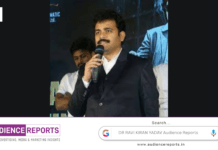































Himanshu Pathak’s recent LinkedIn post offers a practical reflection on competition, creator relationships, team capability, and the difference between buying access and building lasting value. As the Founder & CEO of ALL MAN®, Himanshu Pathak describes a situation where competing brands approached creators associated with his company, offering retainers and exclusivity deals in exchange for ending those relationships. Rather than treating the situation simply as a competitive setback, Himanshu Pathak uses it to examine what makes a business resilient when circumstances change.
The most important idea in Himanshu Pathak’s post is that money can influence decisions, but it cannot automatically reproduce capability. A competitor may be able to offer a creator more money or a longer contract. What cannot be purchased overnight is the accumulated knowledge inside a team. Understanding an audience, developing effective scripts, choosing the right camera angles, editing content, studying performance, and creating systems around distribution all require experience. Himanshu Pathak points toward this distinction when he explains that his team had worked closely with creators rather than simply managing campaigns.
This is an important lesson for growing businesses. Relationships matter, but systems matter too. If a company depends entirely on one individual, one influencer, one platform, or one customer, its growth can become fragile. Himanshu Pathak recognizes this directly through his reminder that one person should never become the entire system. A strong organization should be capable of adapting when circumstances change.
Himanshu Pathak also takes a balanced approach toward creators who choose financial security. From a creator’s perspective, a stable monthly income can be meaningful, especially when building a career. Calling that decision betrayal would ignore the realities of professional life. Businesses and individuals may have different priorities, and those priorities can change. Himanshu Pathak’s response suggests that a professional relationship should be strong enough to survive changes without turning every commercial decision into a personal conflict.
Another significant point in Himanshu Pathak’s message is his interpretation of competition. When competitors begin paying attention to a growing company, it can be evidence that the company has become visible enough to matter. However, competition itself should not become the goal. The more productive response is to examine what created that attention in the first place. If the answer is better products, stronger content, better customer relationships, or a more capable team, those are the areas worth strengthening.
For Himanshu Pathak, the answer is not to respond by spending more money simply to block competitors. His post raises a broader question about how founders use resources. Capital can accelerate growth, but its impact depends on where it is directed. Money invested in product development, people, technology, customer experience, and brand-building can strengthen a company. Money spent purely to prevent another company from accessing an opportunity may produce a temporary advantage without improving the underlying business.
This perspective becomes especially relevant for companies operating in competitive digital markets. Influencer marketing, social media, and creator partnerships can change quickly. A creator who performs well today may receive multiple offers tomorrow. A platform algorithm can change overnight. Consumer preferences can shift within months. Because of this, businesses need capabilities that remain useful even when individual relationships change.
Himanshu Pathak’s emphasis on internal knowledge highlights exactly that. When teams understand why certain content works, how audiences respond, and how campaigns are developed, that knowledge becomes an organizational asset. It can be transferred, improved, documented, and applied to new relationships. A company that continuously develops this capability is less dependent on any single external partner.
There is also a valuable leadership lesson in the way Himanshu Pathak describes his conversation with his team. His team was visibly upset by what had happened. Instead of ignoring their disappointment, he used the situation as an opportunity to provide perspective. Leadership is not only about making strategic decisions when things are going well. It is also about helping people understand setbacks without allowing those setbacks to define the direction of the organization.
Himanshu Pathak’s conclusion brings the discussion back to fundamentals: better products, better content, and partnerships with creators who genuinely want to grow. That approach shifts attention away from reacting to competitors and toward improving what the company controls.
The broader message from Himanshu Pathak is that sustainable growth cannot be built entirely through financial power. Money can create opportunities, secure contracts, and accelerate certain moves. But skills, processes, trust, creativity, and product quality take longer to develop and are harder to replicate. They become part of the foundation of a business.
Himanshu Pathak’s post ultimately presents competition as a reminder to strengthen the fundamentals rather than a reason to abandon them. When a relationship changes, the answer is not necessarily to fight harder for the same relationship. It may be to build better systems, develop stronger teams, improve the product, and create new partnerships.
For Himanshu Pathak, the path forward is therefore straightforward: continue building. That mindset turns a potentially discouraging situation into an opportunity to examine what truly gives a company its staying power. In a business environment where money can move quickly, the organizations that continue learning, improving, and creating genuine value have something much harder to buy the ability to keep moving forward when circumstances change.