



























Anisha Singh highlights a question that many entrepreneurs, investors, and business leaders are quietly wrestling with today: how much should a founder invest in building a personal brand when there is already a company demanding attention, energy, and leadership?
Anisha Singh begins her reflection with a simple but relatable tension. Her team believes she should be posting more on LinkedIn, while she believes she has a fund to run. Yet instead of dismissing either perspective, she acknowledges that both arguments hold merit. That recognition opens the door to a much larger discussion about leadership in the modern business landscape.
The entrepreneurial world has changed dramatically over the last decade. When Anisha Singh launched Mydala, the expectation for founders was very different. Success was measured by product quality, customer acquisition, operational excellence, and financial performance. Visibility was often a byproduct of achievement rather than a strategic activity in itself.
Today, the environment looks different. Founders are expected to communicate regularly, share insights, engage with audiences, and cultivate a public presence. Personal branding has become part of the entrepreneurial toolkit. Whether leaders welcome it or not, stakeholders increasingly expect access to the people behind the businesses they support.
Anisha Singh, raises an important point when she observes how personal branding has shifted from being optional to feeling almost mandatory. This shift reflects broader changes in technology, media consumption, and trust-building. Social platforms have created direct channels between leaders and audiences. Customers, employees, investors, and partners often seek authentic voices rather than polished corporate messaging.
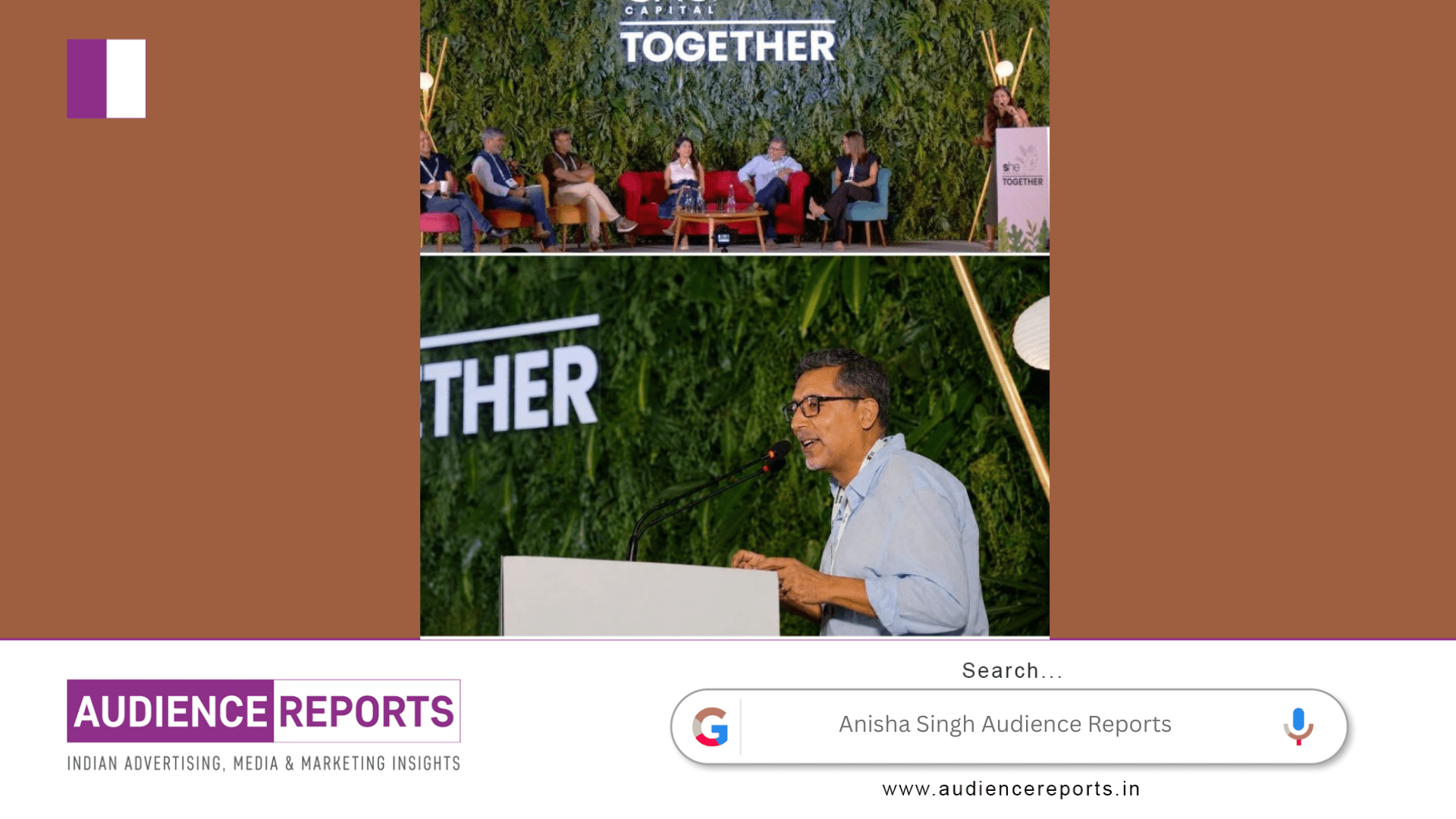
Anisha Singh, describes a debate organized at Together that explored this very issue. Rather than hosting a traditional panel discussion, participants were invited to argue opposing viewpoints from a podium. The format encouraged deeper thinking because individuals were asked to defend positions they did not necessarily hold.
One side argued that the company should always be larger than the founder. This perspective emphasizes building enduring institutions rather than individual reputations. Businesses that depend too heavily on one personality may struggle when leadership changes, market conditions shift, or public perception evolves.
Anisha Singh, presents this argument with fairness and balance. Strong companies develop systems, cultures, products, and teams that can thrive independently of any single individual. In this view, the founder’s role is to create sustainable value, not necessarily to become the face of every conversation.
The opposing side argued that founder and company brands have become deeply interconnected. Modern audiences often connect with stories before they connect with products. Customers want to know who is building the solution. Employees want to understand the vision driving the organization. Investors frequently evaluate the credibility, conviction, and communication skills of founders alongside business metrics.
Anisha Singh, recognizes that a founder’s reputation can become a powerful growth engine. A thoughtful public presence can attract talent, open doors to partnerships, generate customer trust, and amplify a company’s message. In some industries, founder visibility may accelerate growth more effectively than traditional marketing campaigns.
What makes the debate particularly compelling is that neither side is completely right or completely wrong. The strongest organizations often balance both realities. They benefit from visible leadership while simultaneously building brands that can stand independently.
Anisha Singh, points out that many founders become so closely associated with their companies that separating the two becomes difficult. This observation highlights one of the key risks of excessive founder-centric branding. When a company’s identity becomes tied exclusively to one individual, organizational resilience can weaken.
At the same time, avoiding public visibility altogether may mean overlooking opportunities to create trust and influence. In a crowded marketplace, people often remember stories and personalities more readily than products or features. A founder who communicates effectively can humanize an organization and strengthen its connection with stakeholders.
Anisha Singh, demonstrates intellectual honesty by resisting the temptation to declare a winner. The debate concluded without consensus, and perhaps that outcome is appropriate. Complex business questions rarely have universal answers because every company operates within unique circumstances.
For early-stage startups, founder visibility may provide essential momentum. For mature organizations, institutional strength may deserve greater emphasis. Some industries thrive on founder-led storytelling, while others prioritize operational credibility and corporate reputation.
Anisha Singh, reminds us that leadership often involves navigating competing truths rather than choosing between simple alternatives. Effective leaders understand that tension can exist between two valid perspectives. Instead of eliminating that tension, they learn how to manage it thoughtfully.
Another valuable lesson from the discussion is the importance of challenging assumptions. By asking participants to argue positions they did not fully support, the debate encouraged empathy and deeper understanding. Such exercises can help leaders move beyond rigid viewpoints and appreciate the complexity of strategic decisions.
Anisha Singh, also highlights a broader reality about modern entrepreneurship. Founders today must balance multiple responsibilities simultaneously. They are expected to lead teams, serve customers, raise capital, shape culture, and often maintain a visible public presence. Managing these competing demands requires constant prioritization.
Ultimately, the debate is not about choosing between founder brand and company brand. It is about understanding how the two can support each other without becoming overly dependent on one another. Sustainable growth often emerges when leaders invest in both personal credibility and institutional strength.
Anisha Singh, leaves readers with a question rather than an answer, and that may be the most valuable outcome of all. In a world eager for definitive conclusions, some of the most meaningful conversations are the ones that encourage continued reflection. The balance between founder visibility and company identity will remain an evolving challenge, but thoughtful discussions like this help leaders approach it with greater clarity and perspective.
Anisha Singh, shows that sometimes the most productive debates are not the ones that produce agreement, but the ones that deepen understanding.