

































Arun Bhati reached a point that many people work toward but few pause to question. He had achieved several goals that once represented success: engineering from NIT Bhopal, an MBA from IIM Calcutta, a rewarding career at Ericsson, and the experience of building Orahi and CONSAT ORAHI. He had also travelled, built a family, and created a life that could reasonably be described as fulfilling. Yet, after checking many boxes on his personal list, Arun Bhati found himself asking a more difficult question: what comes next?
That question can appear when external achievements stop providing the same sense of direction they once did. For Arun Bhati, the answer was not another title, another qualification, or another item to add to a personal achievement list. Instead, it became a question of contribution. He began thinking beyond what he could accomplish for himself and toward what he could create for others.
Arun Bhati’s experience reflects an important transition in the way people can understand success. Early in a career, success often has visible measurements. It can be a degree from a respected institution, a leadership position, financial stability, professional recognition, or the opportunity to build something of one’s own. These milestones matter because they represent effort and growth. But after reaching several of them, a person may begin looking for a different kind of measurement.
For Arun Bhati, that measurement became impact.
His initiative, 1 Million Founders, represents this shift. The mission is to help one million students discover the founder within themselves by 2035. Rather than limiting entrepreneurship to those who already have businesses, the idea focuses on helping students recognize their ability to think independently, identify problems, take initiative, and create solutions.
Arun Bhati has shared that the journey has already reached 10,000 students, while the larger target remains one million. The difference between those numbers is significant. It shows that meaningful missions are rarely completed quickly. They require patience, consistency, systems, people, and a willingness to continue even when the destination remains far away.
The story of Arun Bhati is therefore not simply about achieving success and then giving something back. It is about redefining the meaning of progress. A person can have professional accomplishments and still feel the need for a deeper purpose. The challenge is not necessarily to abandon ambition, but to redirect it.
Arun Bhati’s journey demonstrates that ambition and contribution do not have to exist on opposite sides. Building businesses and creating social impact can become connected when experience, knowledge, and resources are used to open opportunities for others.
There is also an important lesson in the question Arun Bhati asked himself: “What next?” It is a question that can emerge at different stages of life. A student may ask it after graduation. A professional may ask it after reaching a senior position. An entrepreneur may ask it after building a successful company. Even someone who appears to have everything figured out may still face uncertainty about the next chapter.
Arun Bhati’s response suggests that the answer does not always have to be another personal achievement. Sometimes, the next step is to make the journey useful to someone else.
Helping students discover their entrepreneurial potential is particularly relevant in a changing economy. Not every student will become a startup founder, nor does everyone need to. But entrepreneurial thinking can encourage curiosity, problem-solving, resilience, ownership, and the confidence to act on ideas. Arun Bhati’s 1 Million Founders mission places these qualities at the center of its larger purpose.
The significance of Arun Bhati’s story also comes from its honesty. Reaching a stage of success does not automatically eliminate uncertainty. Having the qualifications, career, business experience, family, and opportunities that many people aspire to does not necessarily answer every personal question. Sometimes, achievement creates the space to ask more meaningful questions.
That is where the idea of balancing success and meaning becomes relevant.
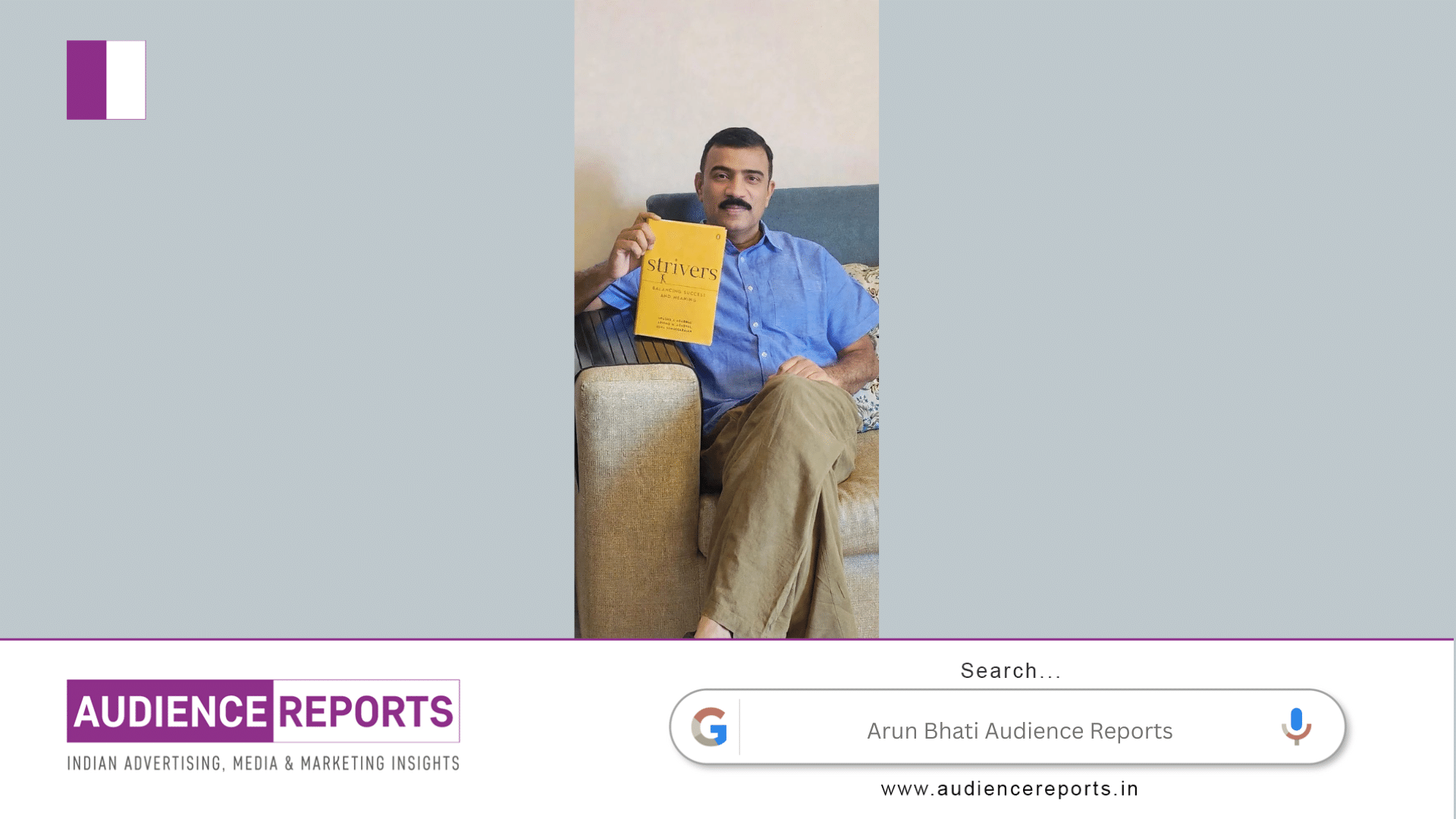
Arun Bhati is also featured among the 28 stories in Strivers: Balancing Success and Meaning, a book that explores how people navigate the relationship between achievement, contribution, and purpose. His inclusion reflects a broader conversation about what success can look like across different stages of life.
For Arun Bhati, the next chapter appears to be less about collecting achievements and more about multiplying possibilities for others. The goal of reaching one million students by 2035 is ambitious, but its value lies not only in the number. Behind that number are individual students who may discover an idea, solve a problem, start a venture, create employment, or simply develop greater confidence in their ability to build something meaningful.
Arun Bhati’s journey offers a practical reminder that success does not have to end with personal accomplishment. It can become a foundation for contribution.
The question “What next?” does not always demand a bigger personal goal. Sometimes, it asks us to look beyond ourselves. Arun Bhati chose to respond by creating a mission that could influence the ambitions of an entire generation of students.
That may be the beginning of a different definition of achievement: not only asking how far we can go, but also asking how many people can move forward because we did.