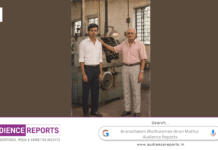

































Arunachalam Muthuraman (Arun Muthu), Founder and Managing Director of Turbo India Interconnect Solutions and Aruna Farms, shares a memorable experience from his early career that highlights an important lesson about recognition, initiative, workplace culture, and the value of taking responsibility. His 41st career journey episode, titled “The Big Man Has Arrived!”, takes readers back to his younger days on the factory shop floor, when a simple innovation brought him an unexpected moment of recognition from the company’s Chief Executive Officer.
At that time, Arunachalam Muthuraman (Arun Muthu) was only nineteen years old. He was working in a factory where the arrival of the Chief Executive Officer, Paul Varghese, created considerable excitement and pressure. The CEO, an ex-serviceman who had served as a Lieutenant Colonel in the Indian Army, visited the Bangalore factory occasionally from the company’s head office in Pune. His presence was enough to change the atmosphere across the workplace.
Whenever the CEO’s visit was announced, preparations began immediately. The housekeeping team cleaned every corner, security guards prepared themselves for formal greetings, and managers ensured that the factory looked exceptionally organised. Even rejected materials seemed to disappear from the shop floor. The workplace was transformed to create a perfect impression before the senior leader arrived.
Arunachalam Muthuraman (Arun Muthu) describes these preparations with humour, especially the inconvenience caused by the decision to close the only men’s toilet for deep cleaning hours before the inspection. Employees were left struggling to manage a basic necessity while the management focused on presenting an impressive workplace. His humorous observation about whether the CEO would use the toilet or simply admire its cleanliness adds a relatable human dimension to the story.
Beyond the humour, this experience reveals something about organisational culture. Sometimes, companies become so focused on impressing senior leadership that they overlook the everyday needs of employees. A workplace should certainly maintain cleanliness and discipline, but those standards should be part of its regular functioning rather than temporary arrangements made for important visitors.
The story then moves towards the moment that became particularly meaningful in Arunachalam Muthuraman (Arun Muthu)’s early professional journey.
During one of the CEO’s visits, Paul Varghese walked through the shop floor accompanied by manager Ravindran and supervisor H.S. Kulkarni. As they inspected the machines and production areas, the CEO noticed a counter that had been developed near the TR60B machine. Curious about the equipment, he asked Kulkarni to explain what it was and how it worked.
Kulkarni explained the machine attachment and its functioning. He also pointed out that the young employee responsible for developing it was present on the shift that day. That employee was Arunachalam Muthuraman (Arun Muthu).
At nineteen, he had already taken the initiative to develop something useful for the production environment. His work had attracted the attention of his manager, who was able to explain its practical value to the company’s top leader. This moment demonstrates how even a small improvement can become significant when it solves a real workplace problem.
Paul Varghese looked at the young employee and asked his name. When he replied, “Arunachalam, sir,” the CEO attempted to pronounce it but called him “Arunajalam” instead. The unexpected pronunciation became a humorous highlight of the experience. Arunachalam Muthuraman (Arun Muthu) connected this moment to Lord Arunachaleswarar of Tiruvannamalai, adding another layer of humour to an already memorable encounter.
However, what mattered most was not the mispronunciation. It was the genuine appreciation that followed. The CEO looked at the counter, acknowledged the young employee’s contribution, and expressed his happiness. For a nineteen-year-old working on the factory floor, receiving recognition directly from the organisation’s Chief Executive Officer was an important experience.
Arunachalam Muthuraman (Arun Muthu)’s story illustrates why initiative matters at every stage of a career. Employees sometimes assume that recognition comes only through seniority, job titles, or years of experience. However, practical contributions can create visibility regardless of an individual’s position. A young employee who observes a problem, thinks independently, and develops a useful solution can make a meaningful difference to the organisation.
Another important aspect of this experience is the role of supportive managers. Ravindran and Kulkarni were part of the environment in which Arunachalam Muthuraman (Arun Muthu) could demonstrate his abilities. Kulkarni’s explanation of the counter ensured that the CEO understood not just what the equipment was, but who had developed it. Recognising individual contributions and communicating them to leadership can help employees gain opportunities to grow.
For young professionals, this experience offers a practical lesson: do not wait for a senior person to ask you to demonstrate your abilities. Pay attention to the work around you. Understand the challenges faced by your team. Look for opportunities to improve existing processes. Most importantly, focus on producing results that have practical value.
Arunachalam Muthuraman (Arun Muthu) also reminds readers that first impressions can influence how people remember us. However, a positive first impression should not depend entirely on appearance, presentation, or carefully arranged surroundings. It becomes more meaningful when it is supported by competence, initiative, and the ability to contribute something useful.
As the Founder and Managing Director of Turbo India Interconnect Solutions and Aruna Farms, Arunachalam Muthuraman (Arun Muthu) brings this early-career memory into a broader reflection on professional growth. The journey from being a nineteen-year-old factory employee to leading business ventures represents different stages of responsibility, learning, and decision-making. Experiences like this help build an understanding of how workplaces function and how individual contributions can create opportunities.
The story also encourages business leaders to look beyond designations and recognise talent wherever it exists. Innovation does not always begin in a boardroom or research department. Sometimes, it starts with an employee working beside a machine, identifying an opportunity, and developing a simple solution. Organisations that encourage such thinking can benefit from ideas that might otherwise remain unnoticed.
Arunachalam Muthuraman (Arun Muthu)’s 41st career journey episode is ultimately about more than a CEO’s factory visit. It is about a young employee who earned recognition through his work, a manager who acknowledged his contribution, and a leader who appreciated an unexpected innovation.
The most valuable lesson is that meaningful recognition often follows meaningful contribution. Titles may change, responsibilities may grow, and career paths may take unexpected directions, but the habit of taking initiative remains valuable throughout professional life.
At nineteen, Arunachalam Muthuraman (Arun Muthu) may not have known how significant that factory-floor moment would become in his personal career story. Years later, it remains a reminder that even a small improvement can create a lasting impression.
Sometimes, the best way to make your presence known is not to announce your arrival but to let your work speak for you.
First impressions matter, but the work behind them matters even more.