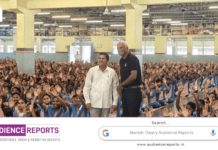






























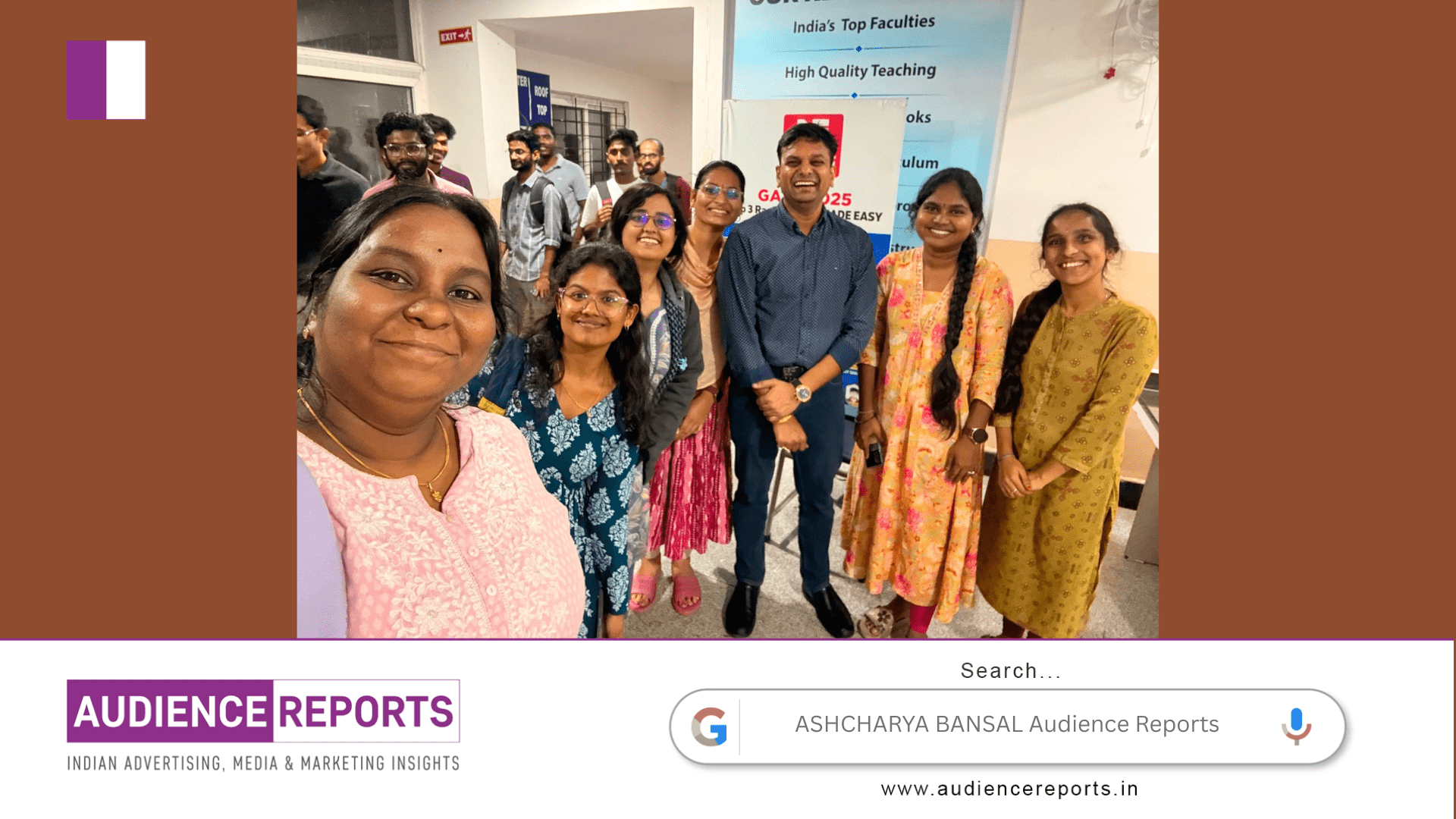
ASHCHARYA BANSAL walked into class expecting to teach, but walked away carrying something far more valuable a memory created by students who wanted to express their gratitude. What happened during a simple 20-minute break in Hyderabad became a meaningful reminder that education is not always measured by lessons completed, examinations cleared, or professional achievements. Sometimes, its greatest impact can be seen years later, when former students still remember the person who once stood in front of them and shared knowledge.
The surprise arranged by the Hyderabad students was simple yet thoughtful. Within only 20 minutes, they managed to organize two cakes and a celebration. For ASHCHARYA BANSAL, the surprise was not merely about the cakes or the occasion. It was about the effort behind them. Someone had taken the time to plan, coordinate, and create a moment of happiness. That effort transformed an ordinary teaching day into a memory worth keeping.
What makes ASHCHARYA BANSAL’s experience particularly meaningful is that the connection did not remain limited to one classroom or one city. Messages arrived from Delhi, Pune, Jaipur, and an online batch. Students from different locations and different generations found their own ways to participate. Some sent messages, while others created videos and shared personal wishes. The physical distance between teacher and student became almost irrelevant because meaningful relationships are not always dependent on proximity.
ASHCHARYA BANSAL also received messages from students taught five, ten, twelve, and even thirteen years ago. That detail carries an important lesson about the nature of teaching. A teacher may remember delivering a particular lesson, conducting a class, or helping a student understand a difficult concept. But students may remember something entirely different the confidence they gained, the encouragement they received, the perspective that changed their thinking, or simply the presence of someone who believed learning could open new possibilities.
ASHCHARYA BANSAL’s story demonstrates that influence does not always reveal itself immediately. In education, results can take years to become visible. A student may leave a classroom and move into another city, another profession, or another stage of life. Yet a lesson, principle, or moment of encouragement can continue working quietly in the background.
That is why the messages from former students carry significance. They suggest that education can outlive the classroom. The teacher-student relationship may change with time, but the respect created through genuine learning can remain.
There was also humor in the celebration. Someone apparently began with “Happy Birthday!” instead of “Happy Teachers’ Day!” The mistake made the occasion more human and enjoyable. It showed that meaningful relationships do not have to be formal or perfectly organized. Sometimes, the imperfect moments become the ones people remember most.
For ASHCHARYA BANSAL, teaching is described not simply as a profession but as a privilege. That perspective offers an important distinction. When teaching becomes only a job, the focus can easily become limited to completing a syllabus or fulfilling responsibilities. But when teaching is viewed as an opportunity to contribute to another person’s development, the role becomes broader.
ASHCHARYA BANSAL’s reflection also acknowledges an essential part of meaningful education: teachers learn from their students too. A classroom is not necessarily a one-way exchange in which one person gives knowledge and everyone else receives it. Students bring questions, experiences, challenges, and different ways of thinking. Those interactions can shape the teacher just as much as the teacher shapes the students.
The journey of ASHCHARYA BANSAL therefore highlights a powerful truth: impact cannot always be measured at the moment it happens. A teacher might never know exactly how a particular conversation influenced a student. There may be no immediate recognition, no visible result, and no guarantee that the student will return to express gratitude. Yet years later, an unexpected message can reveal that something mattered.
ASHCHARYA BANSAL’s Teachers’ Day experience is ultimately less about celebration and more about continuity. Students moved to different cities. Careers changed. Years passed. New batches replaced old ones. Yet a common thread remained the memory of learning together.
ASHCHARYA BANSAL also used the occasion to encourage former students to keep learning, growing, pursuing their dreams, and making their loved ones proud. That message extends the responsibility of education beyond a classroom. Learning does not end when a course ends. Growth does not stop after receiving a qualification. The strongest educational journeys continue throughout life.
ASHCHARYA BANSAL’s story reminds us that success in teaching is not only about how many people sit in a classroom today. It can also be reflected in how many people remember the value of what they learned years later.
The cakes will eventually be eaten. The messages will move down the inbox. The celebration will become a photograph or a memory. But ASHCHARYA BANSAL received something that cannot be measured so easily: evidence that a teaching journey had created connections capable of surviving time and distance.
Perhaps that is one of the quiet rewards of education. A teacher enters a classroom to share knowledge, but may leave behind confidence, curiosity, discipline, inspiration, and memories that continue long after the final class.
ASHCHARYA BANSAL’s experience is a reminder that meaningful work is not always defined by immediate recognition. Sometimes, its value becomes visible years later, through a message from someone you once taught saying, in the simplest possible way, “I still remember.”
And that may be one of the most powerful measures of a teacher’s journey not how long the class lasted, but how long the lesson remained in someone’s life.