


































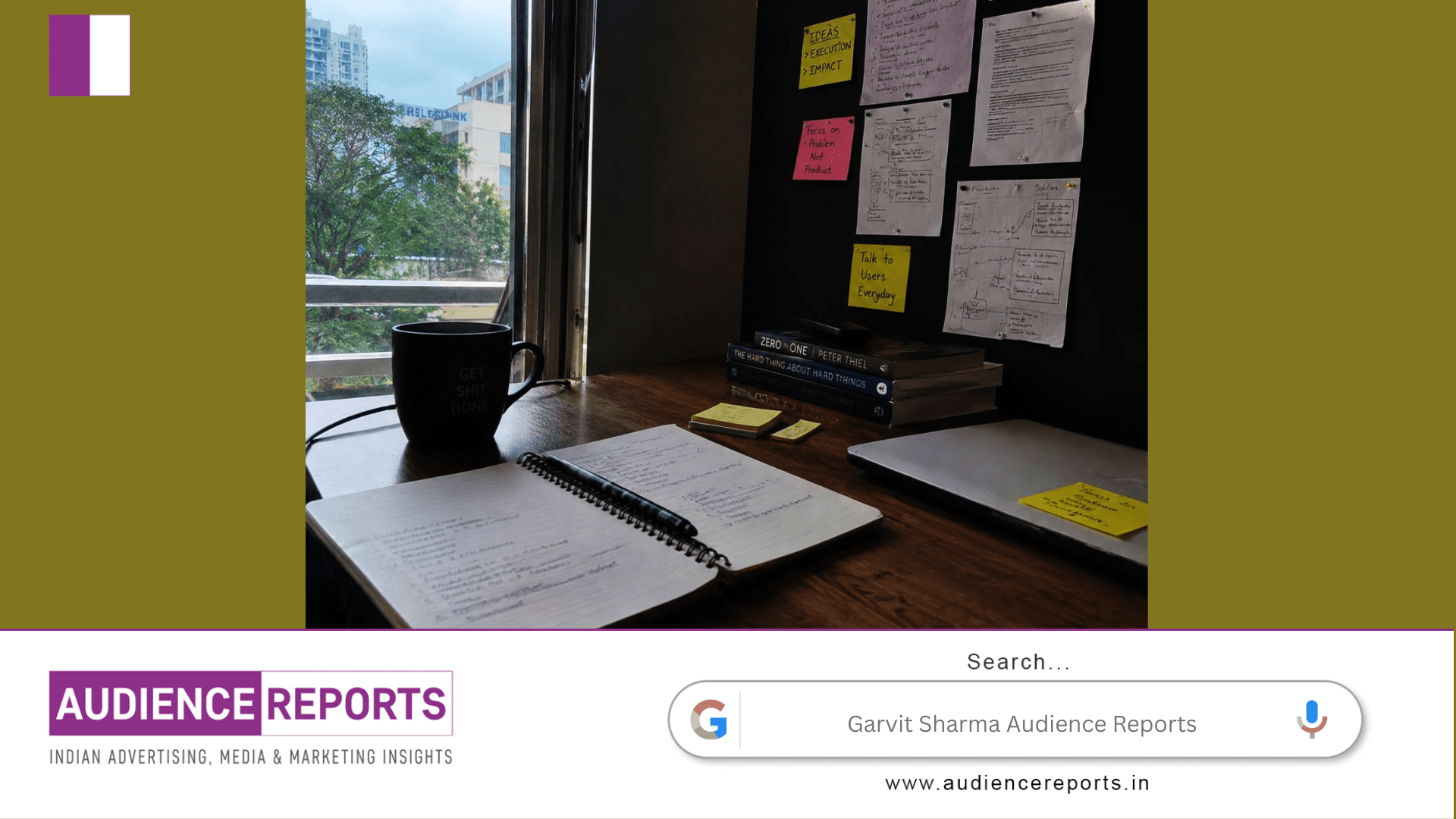
Garvit Sharma once thought the hardest part of building a startup was execution. That belief is understandable. Entrepreneurship is often presented as a game of speed: build quickly, launch early, acquire customers, raise capital, and keep moving. But shutting down a company can expose a different reality. For Garvit Sharma, the experience appears to have shifted the question from “How do I build?” to “What is actually worth building?”
That is a much more difficult question.
Garvit Sharma’s reflection is valuable because it challenges one of the most common assumptions in entrepreneurship: that determined execution can compensate for a weak idea. In reality, execution can only take a company so far. A team can work harder, ship faster, and spend more money, but none of those things automatically create a problem customers care enough to solve.
This is where Garvit Sharma’s distinction between ideas and problems becomes important. Ideas are attractive because they are easy to discuss. They can sound innovative, exciting, and ambitious. Problems are less glamorous. They require observation, conversations, research, patience, and sometimes the uncomfortable realization that an attractive opportunity is not actually valuable.
Garvit Sharma now appears more interested in that uncomfortable work.
Instead of immediately building another company, he describes spending time observing industries and speaking with people. That approach may seem slower than the conventional startup race, but it can be far more useful. Before investing years into a business, understanding how people currently work can reveal where frustration, inefficiency, wasted time, and unnecessary complexity exist.
The mention of spreadsheets, WhatsApp, and manual processes is especially relevant. Many businesses operate with systems that were never intentionally designed as systems. Employees create workarounds because they have no better option. Information gets transferred through messages. Data is copied between spreadsheets. Approvals happen manually. Repetitive tasks become accepted simply because everyone has become accustomed to them.
Garvit Sharma’s question is not whether these processes look sophisticated. It is whether people have accepted them unnecessarily.
That distinction matters.
Entrepreneurs often search for problems that look impressive from the outside. But some of the strongest opportunities can exist inside ordinary frustrations. A process that wastes ten minutes every day may not sound revolutionary. Yet when that inefficiency affects thousands of employees or businesses, the underlying opportunity can become significant.
Garvit Sharma also makes a deeper observation about why companies struggle. Financial problems are visible, but customer indifference can be more fundamental. A company may run out of cash because customers gradually stop seeing enough value in continuing to use its product. When customers have no compelling reason to stay, funding can only delay the inevitable.
That perspective changes how startup failure should be understood.
A shutdown is not necessarily evidence that the founders lacked determination. Sometimes it reveals that the underlying problem was not sufficiently important, the solution did not fit the market, or customers were not willing to change their behavior. Garvit Sharma’s experience seems to have encouraged him to examine those questions before committing himself to another venture.
There is discipline in that decision.
The startup ecosystem often celebrates action. Build. Launch. Iterate. Scale. Repeat. Those principles have their place, but action without direction can become expensive motion. Garvit Sharma’s willingness to spend months researching instead of rushing toward another launch demonstrates a different form of ambition: the patience to avoid building something merely because building feels productive.
Six months spent understanding a problem may feel slow compared with six years spent running a company. But the real comparison is not between six months and six years. It is between thoughtful uncertainty now and potentially expensive certainty later.
Garvit Sharma’s approach also highlights an important lesson for aspiring entrepreneurs: curiosity can be more valuable than confidence during the early stages. Confidence can encourage people to believe they already understand the market. Curiosity encourages them to keep asking questions.
The best founders are not necessarily the people with the most answers. They can be the people who know which questions deserve serious investigation.
Garvit Sharma is currently living in that questioning phase. There is no guarantee that it will produce the next startup. That uncertainty is part of the process. Research may lead to a business opportunity, a completely different career direction, or simply a better understanding of how industries function. All three outcomes can be useful.
The strongest part of Garvit Sharma’s message is therefore not a promise about what comes next. It is the willingness to wait until there is a reason to move.
Entrepreneurship should not be reduced to building startups. Building is only one stage. Before the product, there must be a problem. Before the company, there must be a customer who cares. Before growth, there must be a reason for people to choose the solution repeatedly.
Garvit Sharma’s experience points toward a simple but demanding principle: do not confuse movement with progress.
The goal is not merely to create something that can be launched. The goal is to create something whose absence would genuinely be noticed.
That mindset can influence far more than entrepreneurship. It can shape product development, careers, leadership, and even everyday problem-solving. Instead of asking, “What can I build?” people can begin asking, “What problem is important enough to deserve my time?”
Garvit Sharma has not claimed to have found the answer yet, and that honesty makes the reflection stronger. The search itself is meaningful.
Perhaps the next opportunity will come from a spreadsheet nobody questions, a manual process everyone tolerates, or a recurring frustration people have simply labeled as normal. Perhaps it will take longer than expected.
But as Garvit Sharma’s post suggests, finding the right problem may be worth far more than rushing to build the wrong solution.
Sometimes the smartest entrepreneurial move is not to start.
Sometimes it is to observe, question, listen, and wait until something genuinely worth building becomes impossible to ignore.