

























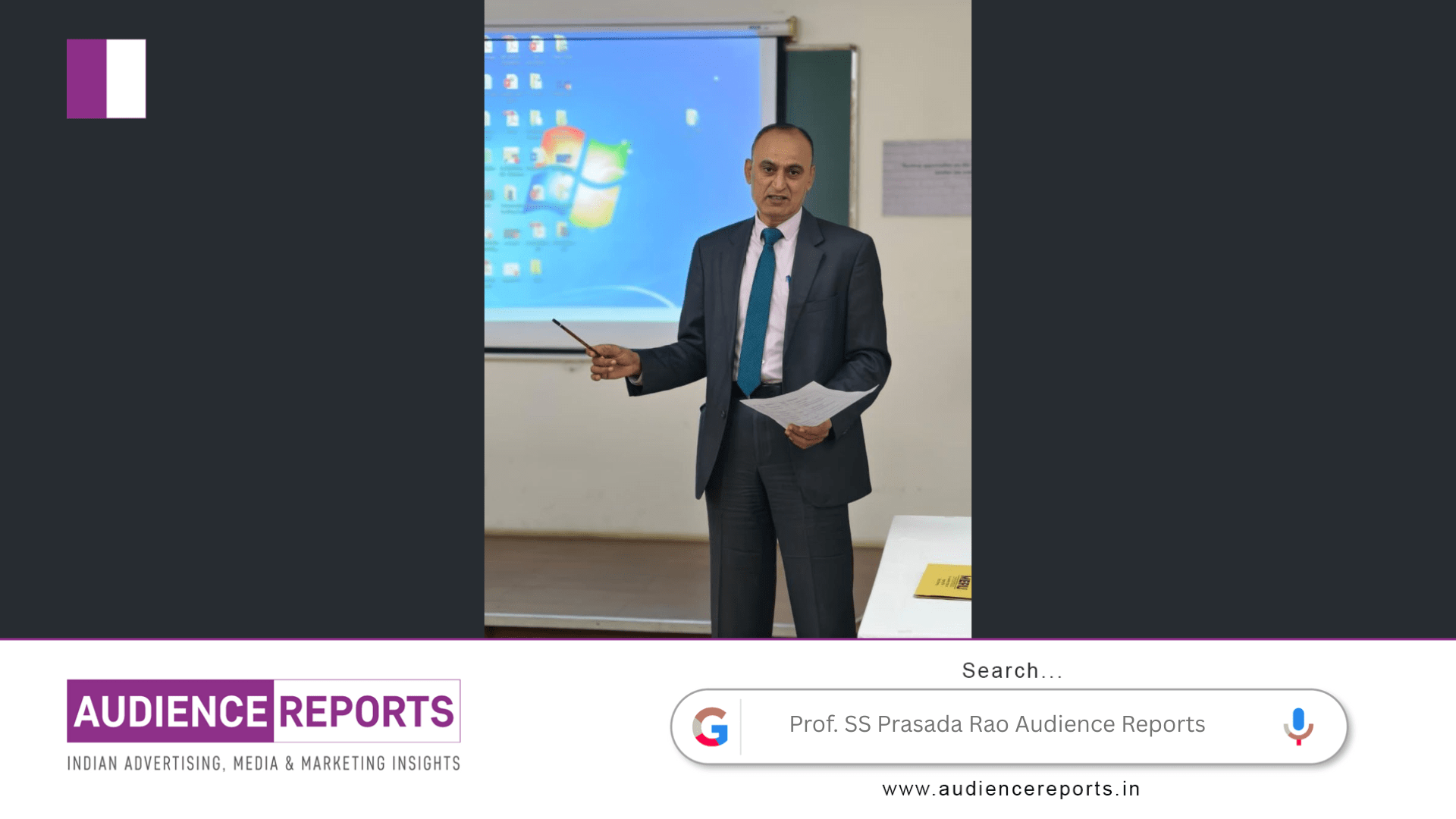
Prof. SS Prasada Rao reminds us that modern success is no longer built by isolated effort alone. In a world shaped by uncertainty, rapid change, and constant disruption, the ability to work together has become one of the most valuable strengths any organization or individual can develop. Prof. SS Prasada Rao highlights a truth that many leaders are beginning to understand deeply: progress today depends not only on intelligence or resources, but on meaningful collaboration.
The world has changed dramatically over the last decade. Markets evolve overnight, technologies transform industries, and customer expectations rise faster than ever before. In such an environment, old methods cannot always solve new problems. Prof. SS Prasada Rao points toward a mindset that accepts this reality and responds with openness rather than resistance. Instead of relying only on competition, organizations must learn how to cooperate, connect, and create value together.
Prof. SS Prasada Rao emphasizes that collaboration is not weakness. It is wisdom. It takes maturity to recognize that no single person, department, or company possesses every answer. When people with different skills, experiences, and perspectives come together, stronger ideas emerge. Innovation often grows at the meeting point of diverse thinking. This is why Prof. SS Prasada Rao places collaboration at the center of sustainable growth.
Many organizations still operate in silos. Teams protect information, departments chase separate goals, and leaders focus only on short-term wins. But Prof. SS Prasada Rao shows that this model limits progress. When communication is restricted, opportunities are missed. When knowledge is hidden, learning slows down. When teams fail to align, even talented people struggle to create impact. Breaking silos and building synergy can transform how institutions perform.
Prof. SS Prasada Rao also underlines the role of technology in enabling collaboration. Digital platforms, artificial intelligence, and data analytics have made it easier than ever for people across cities, countries, and industries to work together. A project team today may include members from multiple continents, each contributing expertise in real time. This ability to connect across boundaries creates enormous possibilities for creativity and efficiency. Prof. SS Prasada Rao reminds us that technology becomes most powerful when it strengthens human cooperation.
Leadership itself must evolve in this new era. Traditional leadership often focused on control, authority, and command. But Prof. SS Prasada Rao encourages a more relevant model for current times. Leaders today must become connectors who bring people together, listeners who value ideas from every level, and learners who remain adaptable. The strongest leaders are not those who claim to know everything, but those who create environments where everyone can learn and contribute.
Prof. SS Prasada Rao also speaks to an important challenge: collaboration is not automatic. Bringing people together does not guarantee success. Differences in culture, priorities, communication styles, and expectations can create friction. Without trust, partnerships weaken. Without clarity, confusion spreads. Without shared purpose, teams lose direction. This is why Prof. SS Prasada Rao stresses the importance of transparency, mutual respect, and alignment. Real collaboration requires effort, patience, and disciplined communication.
Another powerful lesson in the message of Prof. SS Prasada Rao is that collaboration is essential for solving larger global challenges. Issues such as sustainability, inclusivity, education, healthcare access, and technological ethics cannot be addressed by one organization alone. They demand partnerships between businesses, governments, educators, and communities. Collective action creates broader solutions. Prof. SS Prasada Rao encourages institutions to think beyond self-interest and toward shared progress.
There is also a personal lesson here. Collaboration is not only for corporations or leaders. Every professional can apply this principle. Students can learn better through teamwork. Employees can grow by supporting colleagues. Entrepreneurs can scale through partnerships. Communities can thrive when people contribute together. Prof. SS Prasada Rao reminds us that collective success often begins with individual willingness to cooperate.
The phrase “from silos to synergy” captures a major transformation in how success is achieved. Instead of protecting space, people must create space for others. Instead of competing over credit, teams must focus on results. Instead of asking, “How do I win alone?” the better question becomes, “How do we grow together?” Prof. SS Prasada Rao presents this shift as more than strategy, it is a necessary evolution.
Inspiring organizations of the future will be those that combine innovation with responsibility, growth with sustainability, and ambition with inclusion. They will welcome partnerships, encourage learning, and build cultures of trust. Prof. SS Prasada Rao shows that success in the modern world belongs to those who understand the strength of connection.
As uncertainty continues to shape business and society, one truth becomes clearer every day: no one advances far in isolation. Progress is faster, stronger, and more meaningful when built together. Prof. SS Prasada Rao offers a timely reminder that collaboration is not simply a management concept. It is the foundation of resilience, relevance, and long-term impact.