















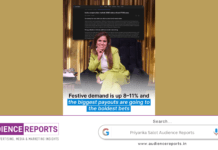



















Sugandha Kedia understands a difficult reality of entrepreneurship: the product a founder loves is not necessarily the product a customer wants. It is an uncomfortable lesson because building a business is rarely a purely logical exercise. Founders invest their time, money, creativity, emotions, and identity into what they create. When customers do not respond as expected, accepting that reality can feel like rejecting a part of the founder’s own vision.
In her reflection on building DUSALA INDIA, Sugandha Kedia points toward an important distinction between founder intuition and customer truth. Intuition has a place in entrepreneurship, but it cannot become an excuse for ignoring evidence. A founder may believe deeply in a particular design, colour, category, collection, or product story. Yet customers ultimately communicate their preferences through their actions.
That difference between belief and behaviour is where many businesses either learn or become stuck.
Sugandha Kedia’s observation is particularly relevant to consumer businesses, where the distance between what a creator likes and what a buyer values can be surprisingly large. A product can look excellent to its creator and still fail to generate interest. A carefully developed collection can receive little response. A founder may spend weeks refining something that customers simply do not consider important.
The natural response can be defensive.
It is easy to say that customers do not understand the product. Perhaps the market is not ready. Maybe the team did not promote it properly. Perhaps the content failed to communicate the idea. These explanations may sometimes be correct. But Sugandha Kedia highlights a more difficult possibility: sometimes, the customer has already provided the answer.
She did not choose it.
That simple reality can be more valuable than a hundred assumptions.
For Sugandha Kedia, the lesson is not that founders should abandon their instincts. Instead, intuition needs to be tested honestly. This is an important distinction. Entrepreneurship requires imagination because customers cannot always tell founders what should exist before they see it. Innovation often begins with an individual’s conviction that something could be better.
But conviction should lead to experimentation, not stubbornness.
Sugandha Kedia’s perspective suggests that founders should treat customer response as information rather than as criticism. When people do not buy, click, return, recommend, or engage with a product, those behaviours contain signals. They may reveal a problem with the product itself, its positioning, its pricing, its communication, its timing, or simply its relevance to the intended audience.
The challenge is interpreting those signals without immediately defending the original idea.
This is where emotional discipline becomes an entrepreneurial skill.
Sugandha Kedia’s post also raises a broader question about ownership. When founders create something personally meaningful, they can unconsciously treat criticism of the product as criticism of themselves. That makes objective decision-making harder. A founder may continue investing in an underperforming idea because admitting that it is not working feels like admitting personal failure.
But changing direction is not necessarily failure.
Sometimes, it is evidence that learning has taken place.
Sugandha Kedia points toward the importance of separating personal taste from business judgment. A founder can continue loving a particular design while recognising that it may not belong in the current product line. Someone can personally believe in an idea while deciding that the market needs a different version of it. Personal preference does not have to disappear; it simply should not control every business decision.
For Sugandha Kedia, this approach creates space for both creativity and accountability. Founder instinct can generate the idea, while customer behaviour can help determine whether the idea deserves further investment.
This principle extends far beyond fashion or consumer products. It applies to technology, education, consulting, food, media, services, and almost every entrepreneurial environment. A business can become attached to a feature, a campaign, a pricing model, a service package, or even a particular way of communicating with customers.
The strongest entrepreneurs are not necessarily those who are always right from the beginning. They are often the ones who can recognise when reality is telling them something different.
Sugandha Kedia’s reflection therefore offers a useful framework: create with conviction, test with humility, observe with honesty, and change when the evidence demands it.
There is also an important lesson for teams. If employees believe that disagreeing with the founder is dangerous, customer feedback may never reach the decision-maker honestly. A healthy organisation needs an environment where uncomfortable information can travel upward. Sales numbers, customer complaints, abandoned carts, reviews, conversations, and repeated objections should be examined rather than explained away.
Sugandha Kedia’s question whether it is harder to trust instinct or accept customer truth when the two disagree captures the heart of the entrepreneurial struggle.
Perhaps the answer is that both are difficult for different reasons. Instinct requires courage because there is no guarantee. Customer truth requires humility because it may force a change in direction.
The real strength lies in knowing when to use each.
Sugandha Kedia’s message is ultimately not about choosing customers over founders. It is about understanding that a sustainable business cannot be built entirely around what its creator wants to make. A founder begins the journey, but the customer helps reveal whether the journey is creating real value.
And when the market speaks differently from our expectations, the most productive response may not be to argue with it.
It may be to listen.