


































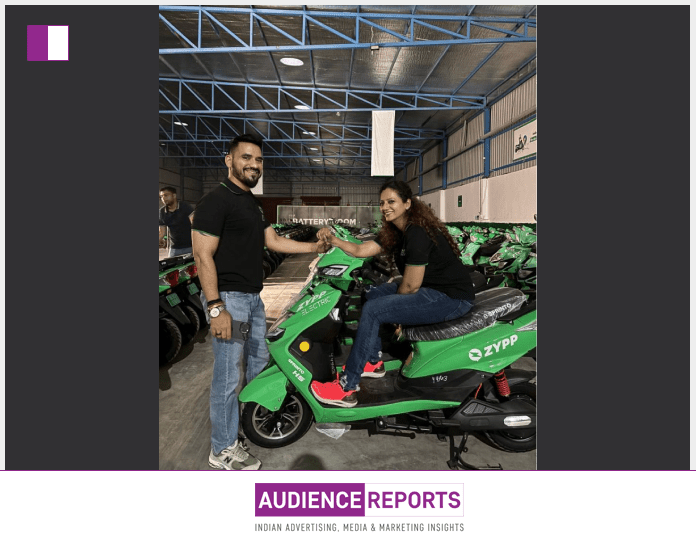
Rashi Agarwal, Co-Founder and Chief Business Officer at Zypp Electric, has never needed noise to make an impact. Her journey, shared recently on LinkedIn, is not just a personal memory it’s a mirror held up to the systemic challenges many women in leadership face, even today. The story she recounted isn’t extraordinary because of its rarity, but because of how commonly it echoes through the experiences of countless women in business, yet is so rarely spoken out loud.
Rashi Agarwal, in the early days of Zypp, was laying the foundation for what would become one of India’s leading EV logistics startups. As she and her co-founder, Akash, were pitching their vision to investors, a pivotal moment arrived one that tested more than just their business strategy. Akash returned from a meeting with a notable investor who expressed interest in funding Zypp Electric, but with a condition that stunned them both: Rashi Agarwal would have to step down.
What stood out wasn’t the business critique it was that the investor had never even met Rashi Agarwal. He had no understanding of her role, her capabilities, or her contributions. Yet he was ready to make a judgment about her place in the company, not based on merit, but likely influenced by outdated perceptions perhaps of gender, or co-founding dynamics between a couple, or simply because she didn’t fit his mental image of a founding team.
Rashi Agarwal’s reaction wasn’t fueled by anger or defensiveness. It was the quiet hurt that comes from being unseen. It wasn’t disagreement that unsettled her it was dismissal without dialogue. It’s a sentiment too familiar to many women who lead, who build, and who try to earn their place through sheer competence, only to find their presence questioned before their ideas are even heard.
In sharing this moment, Rashi Agarwal brings to light the dissonance between what the startup ecosystem often says about meritocracy, innovation, and backing great founders and what sometimes still happens behind closed doors. Her experience is a call to introspection for an industry that prides itself on being forward-thinking but can still harbor old biases.
But what makes Rashi Agarwal’s story even more powerful is not the bias she faced, but the decision that followed: they never returned to that investor. She wasn’t removed. She didn’t fade into the background. Instead, she continued to build Zypp Electric, playing a key role in turning it into a pioneering force in sustainable logistics.
Rashi Agarwal didn’t let silence undermine her conviction. She let it clarify her purpose.
Twelve words in that post ring loud: “You don’t have to be loud to shake someone’s confidence.” In a world that often rewards the loudest voices, Rashi Agarwal reminds us that quiet moments when people are underestimated, when rooms fall silent instead of showing support can leave deeper impacts. Yet, from those very moments, resilience can be born.
Rashi Agarwal’s story is not just for women. It’s a message for every investor, founder, manager, and team member: to challenge unconscious assumptions, to hold ourselves accountable to the values we claim, and to look at people as they are, not as we imagine them to be based on incomplete narratives.
To the women who are building and leading, Rashi Agarwal offers more than solidarity she offers direction. She urges them not to internalize the judgment, but to let it strengthen their resolve. She doesn’t suggest that the path is easy or fair, but she affirms that it is possible not in spite of the biases, but in defiance of them.
The world, as she says, still has a long way to go. And change doesn’t only come from policy or protest it comes from stories. Stories like that of Rashi Agarwal, which strip away the polished branding of startup culture and expose the real decisions, the real dynamics, and the real people behind them.
By telling her story, Rashi Agarwal has not just stood her ground she has expanded the circle of empathy and awareness. She has made space for the next woman walking into that room, ensuring she is met not with doubt, but with attention, curiosity, and respect.
Rashi Agarwal didn’t need that investor’s validation to build something remarkable. And that decision to say no to a tainted yes is one of the many reasons her journey matters. Because it teaches us that success is not just what you build, but what you refuse to compromise on.