






























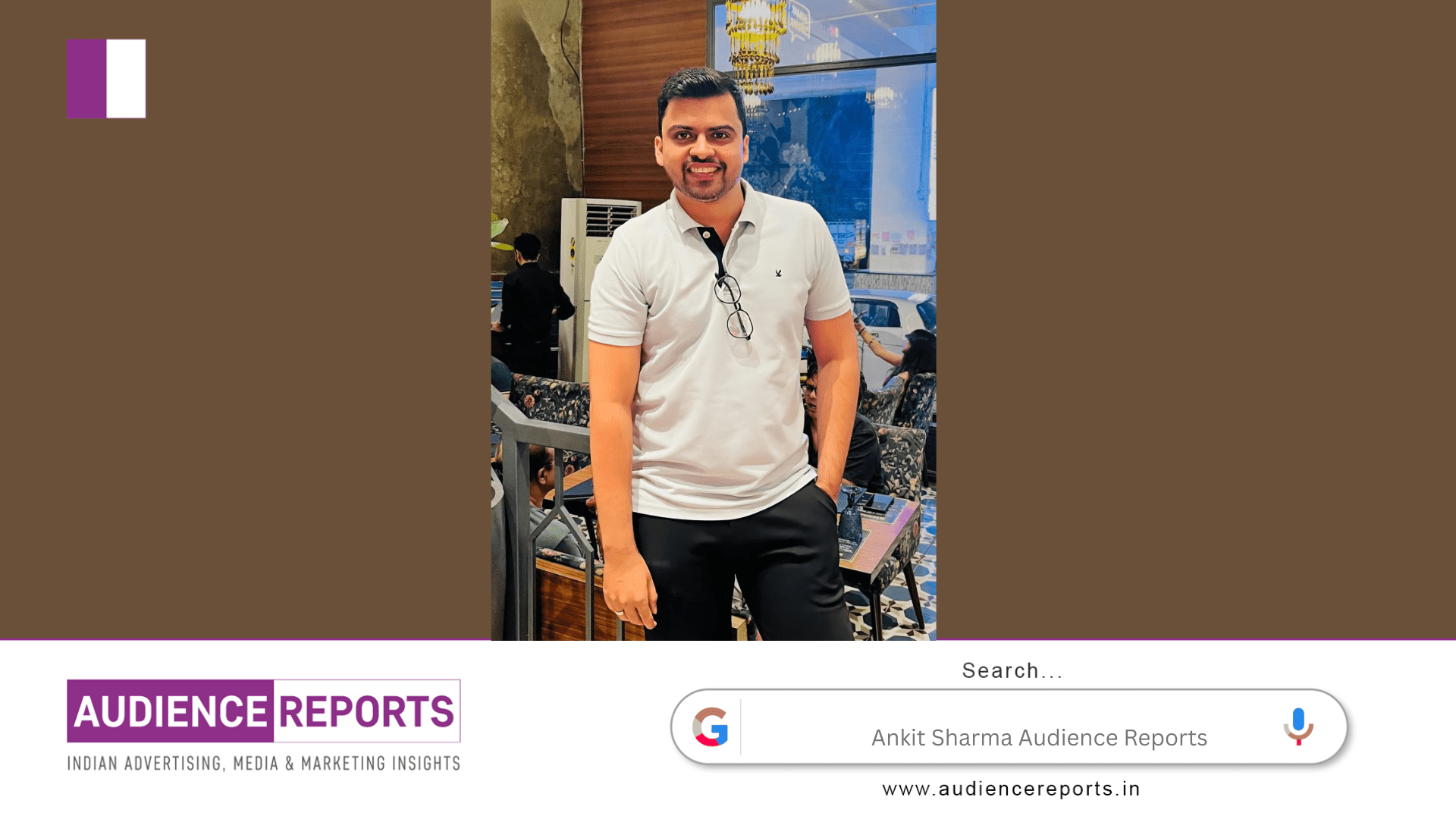
Ankit Sharma believes that one of the most significant lessons in entrepreneurship is understanding the difference between being involved and being indispensable. In the early stages of building a company, founders often wear multiple hats and take responsibility for every decision. While this approach can help a business survive its initial challenges, there comes a point when the same habit can become an obstacle to growth. The reflection shared by Ankit Sharma offers a valuable perspective on leadership, ownership, and the evolution required to build a scalable organization.
Many entrepreneurs begin their journey with a strong sense of personal responsibility. They are often the first to arrive, the last to leave, and the person everyone turns to for answers. Ankit Sharma, describes a phase where he believed true leadership meant being involved in every client discussion, every decision, and every problem that emerged. This mindset is common among founders who are deeply invested in their businesses and determined to deliver excellence.
However, Ankit Sharma, highlights a reality that many leaders eventually discover. When every decision depends on a single person, growth slows down. Teams wait for approvals. Opportunities take longer to execute. Innovation becomes limited because people hesitate to take initiative. What initially feels like dedication can gradually become a bottleneck.
One of the most challenging transitions in leadership is learning how to let go. Ankit Sharma, explains that the difficulty is not necessarily a lack of trust in people. More often, it comes from a genuine commitment to clients, quality, and vision. Founders care deeply about the organizations they build, and stepping back can feel uncomfortable because it means accepting that things may be done differently.
Yet leadership maturity often requires embracing that discomfort. Ankit Sharma, emphasizes an important principle: leadership is not about controlling everything. It is about developing people who can think independently, make decisions confidently, and take ownership of outcomes. This shift transforms leadership from direct management into capability building.
Organizations that achieve long-term success are rarely dependent on a single individual. Instead, they create systems where leadership exists at multiple levels. Ankit Sharma, points out that when people are trusted with ownership rather than simply given instructions, remarkable changes begin to happen. Decisions become faster because employees no longer wait for constant approval. Creativity expands because team members feel empowered to contribute ideas. Accountability improves because people feel responsible for results.
This approach reflects a broader truth about organizational development. Businesses grow when knowledge, authority, and responsibility are distributed across the team. Ankit Sharma, illustrates that sustainable success comes from creating an environment where leadership is shared rather than centralized.
The concept of empowerment is often discussed in business circles, but implementing it requires courage. Delegation is not merely assigning tasks. It involves transferring responsibility, decision-making authority, and trust. Ankit Sharma, demonstrates that empowering others means accepting that different perspectives and methods can still lead to excellent outcomes.
For many founders, perfectionism can become a hidden challenge. They may believe that maintaining quality requires their constant involvement. However, Ankit Sharma, suggests that real progress happens when leaders focus on building capable teams rather than personally overseeing every detail. This distinction separates organizations that remain founder-dependent from those that become scalable enterprises.
Another important lesson from Ankit Sharma, is the recognition that leadership is ultimately about multiplication rather than accumulation. A founder can only handle a limited number of responsibilities personally. But when leaders develop other leaders, the organization’s capacity expands significantly. Growth becomes less dependent on individual effort and more dependent on collective capability.
This evolution requires patience. Team members may make mistakes. Processes may need refinement. Outcomes may not always match a founder’s preferred approach. Nevertheless, Ankit Sharma, highlights that these experiences are essential for growth. People develop confidence by making decisions, learning from challenges, and taking responsibility for their work.
The strongest organizations understand that leadership is not concentrated at the top. It exists throughout the company. Ankit Sharma, reminds us that businesses built around one person’s involvement face limitations, while businesses built around empowered teams create resilience and adaptability. Such organizations can respond more effectively to change because leadership capacity is distributed rather than centralized.
There is also a personal dimension to this lesson. Entrepreneurs often tie their identity closely to their businesses. Being needed for every decision can create a sense of importance and control. However, Ankit Sharma, presents a more sustainable definition of success. True leadership is not measured by how many people depend on you. It is measured by how effectively people perform when you are not present.
This perspective encourages leaders to focus on creating systems, developing talent, and fostering trust. It shifts attention away from personal involvement and toward organizational capability. Ankit Sharma, shows that this transformation is not about reducing commitment; it is about directing commitment toward building a stronger foundation for long-term growth.
The journey from control to empowerment is rarely easy. It requires self-awareness, trust, and a willingness to embrace uncertainty. Yet the rewards are substantial. As Ankit Sharma, explains, organizations become stronger when ownership is shared and leadership is cultivated throughout the team.
Ultimately, Ankit Sharma, offers a leadership lesson that resonates far beyond entrepreneurship. The goal is not to build a business that cannot function without its founder. The goal is to build a business that thrives because its people are capable, confident, and empowered to lead. That is the true evolution of leadership—from being at the center of everything to creating something that grows far beyond any one individual.