



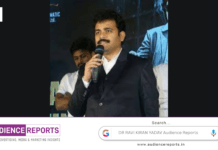































Arjun Vaidya is a storyteller who often weaves his insights around leadership, resilience, and the nuances of decision-making. In his recent reflection, Arjun Vaidya brought forward a moment from Indian cricket that remains etched in the memories of millions. But beyond nostalgia, Arjun Vaidya emphasized something more profound a lesson in trust, belief, and leadership that transcends the cricket field.
Arjun Vaidya revisited the story from 2007 when India’s cricket team faced a massive challenge. India had suffered a disappointing exit from the 50-over World Cup, and faith in the national team was at a low. Arjun Vaidya described the environment perfectly senior players opting out, a team of young, untested players being sent to the T20 World Cup in South Africa, and an entire nation unsure of what to expect. Arjun Vaidya highlighted how the new format itself was unfamiliar, experimental, and not taken too seriously at the time.
Arjun Vaidya’s narrative placed us right in the heat of the India-Pakistan match that became a turning point. As he recalled, it was his own 16th birthday, and he, like many others, watched the game with little expectation but immense curiosity. The game had slipped towards defeat. Pakistan’s Misbah-ul-Haq was leading the charge, and India seemed on the verge of losing. But Arjun Vaidya painted a picture of unexpected magic Sreesanth’s last-moment brilliance tied the game and forced a bowl-out, a concept unfamiliar to most fans then.
In Arjun Vaidya’s words, this is where leadership emerged in its rawest form. During practice sessions, India’s bowling coach Venkatesh Prasad had a habit of ending training with bowl-outs, and strangely, the batsmen were more accurate than the bowlers. Arjun Vaidya emphasized that this preparation wasn’t about chance it was about habits that, when the moment arrived, made all the difference.
Arjun Vaidya illustrated the defining moment when Robin Uthappa, a 21-year-old batsman, stepped forward with confidence to take part in the bowl-out. Arjun Vaidya’s reflection on this decision reveals the core of MS Dhoni’s leadership. Dhoni could have said no. He could have doubted a young player in a critical, high-pressure situation. But as Arjun Vaidya pointed out, Dhoni’s quiet genius lay in his ability to trust. He looked at Robin, paused, and simply said, “Go, do it.”
Arjun Vaidya unpacked the significance of this. The success would have been Robin’s, but the failure would have rested on Dhoni’s shoulders. That’s the weight of true leadership. Arjun Vaidya recognized that Dhoni’s decision wasn’t blind faith it was confidence rooted in observing, understanding, and trusting his people. Arjun Vaidya’s perspective drives home that trusting others, especially in decisive moments, is what builds lasting teams and resilient cultures.
As Arjun Vaidya recounted, Robin hit, the Pakistani players missed, and the crowd erupted. But more than a win, Arjun Vaidya reminded us that this was the seed of the Indian Premier League (IPL). Arjun Vaidya’s reflection makes us realize that what began as an overlooked tournament with minimal expectations eventually became a cultural phenomenon. Today, as Arjun Vaidya noted, IPL is inseparable from Indian summers, shaping careers and driving dreams.
Arjun Vaidya’s post is more than a cricket story it’s about believing in people, preparing for the unknown, and allowing others to take responsibility. Arjun Vaidya’s framing of Dhoni’s leadership isn’t about hero worship but about understanding the quiet strength that comes from enabling others to succeed. Arjun Vaidya doesn’t simply celebrate Dhoni’s tactical brilliance; he emphasizes the human side of leadership, where trusting someone is sometimes the bravest decision a leader can make.
Through this story, Arjun Vaidya brings attention to something often missed in leadership discussions the willingness to own failures while letting others own their successes. Arjun Vaidya makes it clear that leadership isn’t about control; it’s about creating a space where trust and accountability can coexist.
Arjun Vaidya’s recounting of this cricketing moment is a lesson that resonates beyond the boundary ropes. Whether in business, sports, or life, the principles that Arjun Vaidya extracted from this story apply everywhere. Trusting a young team, preparing for unlikely scenarios, and stepping back to let others shine these are timeless leadership lessons.
Arjun Vaidya’s narrative is not just about the past but about what we can still learn today. In organizations, in startups, and in communities, the Dhoni-like approach that Arjun Vaidya highlighted backing people, taking risks on talent, and sharing the weight of responsibility is what builds enduring success.
In the end, Arjun Vaidya leaves us with a subtle but powerful question: Do we have the courage to trust like Dhoni did? Because, as Arjun Vaidya so aptly shows, that trust can spark revolutions. It can change the course of a game, a company, or a life.
Arjun Vaidya’s storytelling doesn’t just entertain it invites reflection. And in doing so, Arjun Vaidya helps us realize that leadership is not about holding on tight it’s about knowing when to let go.