



























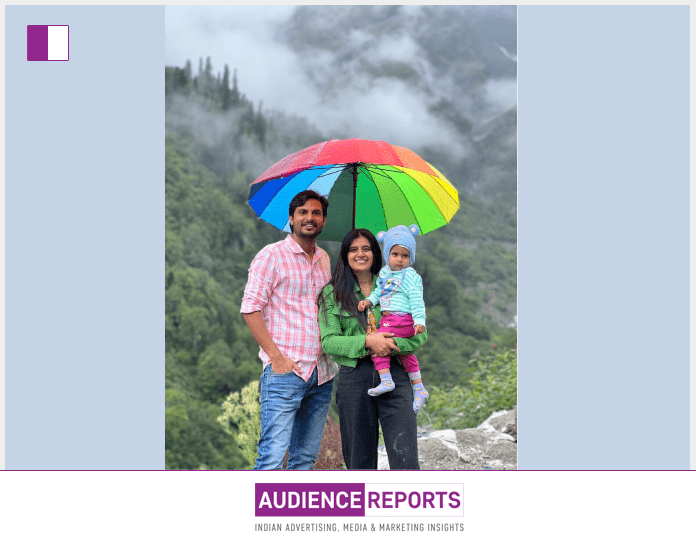
Neha Nagar has a knack for turning complex financial and lifestyle opportunities into clear, actionable insights for her audience. In her recent discussion, she opened the door to a life-changing possibility for Indian freelancers and remote workers the chance to live in Spain for an entire year, legally, for just ₹8,000. The way Neha Nagar breaks this down, it’s not just a travel tip, it’s an invitation to think differently about how we work, live, and explore the world.
Neha Nagar starts with a relatable touchpoint the dream many of us have carried from movies and stories to see the world, to live in different cities, to immerse ourselves in diverse cultures. While she herself prefers staying close to family and her professional base, she acknowledges that for many, the pull of adventure and global living is strong. This is where Neha Nagar’s information about Spain’s Digital Nomad Visa becomes both relevant and inspiring.
According to Neha Nagar, the Digital Nomad Visa is more than just a permit; it’s a gateway. For a cost of only €75 (₹8,000), non-EU citizens, including Indians, can work remotely from Spain for a full year, with the possibility of extending up to five years. In practical terms, this means a freelancer in Delhi could be answering client emails from a café in Barcelona, or a remote designer from Mumbai could be working while overlooking the coastal views of Valencia. Neha Nagar points out that this visa also comes with Schengen zone access, allowing travel to 26 European countries a significant lifestyle upgrade for the adventurous professional.
But Neha Nagar doesn’t stop at the dreamy side of the opportunity. She lays out the requirements with clarity so that anyone considering this path can realistically assess their eligibility. The conditions are straightforward: you must be a non-EU citizen, work remotely for a foreign company or have international clients, earn at least €2,763 (₹2.7 lakh) monthly with 80% of your income from outside Spain, and have either a university degree or three years of relevant work experience. Neha Nagar also highlights the need for valid health insurance, proof of consistent income, and a clean criminal background record.
What makes Neha Nagar’s insight particularly valuable is how she frames the visa’s affordability in the broader European context. Many European countries have digital nomad visas, but the entry costs are often higher, and the requirements more restrictive. Spain’s offer stands out as both accessible and generous in terms of benefits. For freelancers and remote workers who already meet the income threshold, Neha Nagar’s breakdown shows that this could be less of a financial leap and more of a logistical decision.
Neha Nagar also considers those who want to move with their families. She notes that Spain requires an additional 75% of the Spanish minimum wage for the first dependent and 25% more for each additional person. This transparency ensures that people don’t start the process only to be surprised later by additional financial requirements.
Another strength in Neha Nagar’s explanation is her focus on the ease of the application process. She notes that applicants can apply either from India or even while visiting Spain on a tourist visa. For many, this flexibility could mean the difference between a far-off dream and an actionable plan. Her emphasis on the simplicity of the process serves as a subtle encouragement to those who might otherwise be intimidated by immigration paperwork.
What resonates deeply in Neha Nagar’s message is the underlying mindset shift she’s advocating. While the post is about Spain’s Digital Nomad Visa, it’s also about reimagining what work and life can look like in a digital age. Remote work, once considered a niche arrangement, is now a viable lifestyle for millions. Neha Nagar is urging professionals to think beyond the confines of a single city or country to see themselves as participants in a global economy with opportunities that stretch far beyond traditional borders.
By presenting both the excitement and the practicalities, Neha Nagar manages to bridge the gap between inspiration and action. Many people dream of living abroad, but without clear information, those dreams stay in the realm of fantasy. Neha Nagar’s approach strips away the guesswork, offering concrete steps and realistic expectations. This is the kind of knowledge that can genuinely change lives not by promising overnight transformation, but by showing a tangible, achievable path forward.
For Indian freelancers and remote workers, the timing of this information is significant. With the global acceptance of remote work accelerating, countries are competing to attract skilled professionals who can contribute economically without taking local jobs. Spain’s Digital Nomad Visa is a prime example of this shift, and Neha Nagar’s spotlight on it ensures that more Indians are aware of and can take advantage of this opening.
In the end, Neha Nagar’s message is not about selling Spain as a perfect paradise, but about showing that options exist for those willing to explore them. Whether someone decides to apply for the visa or simply feels encouraged to look for similar opportunities elsewhere, the value lies in understanding that the traditional boundaries of work and lifestyle are now far more flexible than they used to be.
Neha Nagar’s clarity, practicality, and global perspective make this more than just a piece of travel or career advice it’s a call to rethink what’s possible. For those with the skills, the income, and the desire, the world has never been more open. And for anyone still hesitating, perhaps Neha Nagar’s parting question from her post is worth revisiting: Would you love to move to Spain?