
























Aditya Baranwal has always believed that creation is more than just the act of making it is an act of meaning. His journey with Little Lamps is rooted not in the desire to mass-produce but in the passion to create something that holds a heartbeat, a memory, and a story. One moment, captured in his own home, reminded him of exactly why this vision matters.
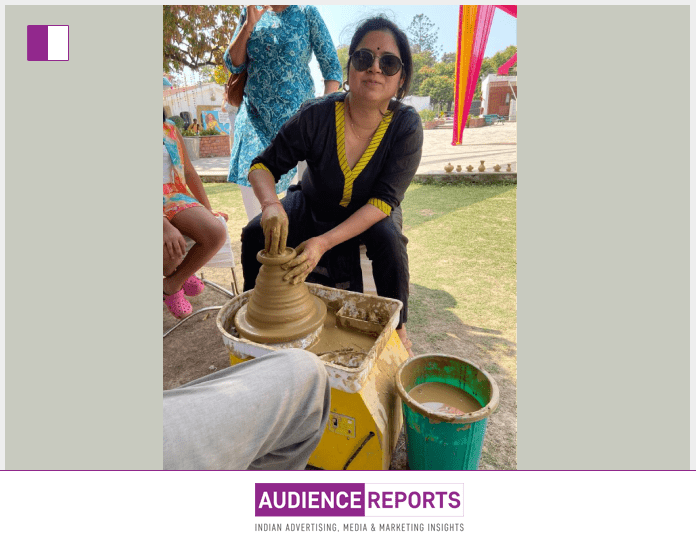
Aditya Baranwal once clicked a photograph of his mother. She was covered in clay, deeply absorbed in her craft, her hands shaping something with quiet focus. She wasn’t performing for an audience or thinking about commercial value. She was simply doing what she loved, in pure creative flow. For Aditya Baranwal, that image became a personal emblem a reminder that the real magic in handmade work often appears not in the object itself but on the face of the maker.
From that memory, the ethos of Little Lamps shines clearly. Aditya Baranwal explains that they never set out to chase trends, scale overnight, or manufacture identical products by the thousands. Instead, they wanted to bring back what has been quietly fading from the modern world of gifting feeling, story, and soul. In an era where speed and volume dominate, Aditya Baranwal chose patience, authenticity, and the art of the human touch.
At Little Lamps, every product is handcrafted, often by women working from home or by artisans in small towns who rarely find themselves in the limelight. Aditya Baranwal emphasizes that these creators are not just workers they are storytellers, each lamp carrying a trace of their skill, history, and individuality. This is not a business model built on anonymity; it is built on connection.
Sustainability is another thread woven deeply into Aditya Baranwal’s philosophy. The team reuses leftover wood, ensuring that nothing beautiful is lost to waste. They design washable lampshades, making sure that a lamp can live longer, be refreshed, and stay out of landfills. For Aditya Baranwal, sustainability is not a marketing trend it’s a responsibility. It’s about creating something that lasts, not just physically, but in sentiment.
There’s also a deeper belief running through Little Lamps that a gift should do more than make someone smile for a moment. It should say something, it should stand for something, and it should mean something. In Aditya Baranwal’s words, a gift is an expression of care that should carry both purpose and beauty. This idea transforms gifting from a transaction into a form of storytelling.
When people receive a lamp from Little Lamps, they are not just receiving a functional object. They are receiving hours of thoughtful labor, the touch of a craftsperson’s hand, and a piece of sustainable design. For Aditya Baranwal, that is where the magic lies not in mass appeal, but in deep personal connection.
The philosophy is simple yet profound. Handmade is not old-fashioned it is timeless. Sustainability is not a buzzword it is a way of living that honors both the earth and the people who inhabit it. And, most importantly, when someone loves what they do, it shows in the result. Aditya Baranwal’s mother, in her clay-covered focus, embodied that truth.
This approach has now begun to resonate beyond individual customers. Aditya Baranwal shares that Little Lamps is onboarding its first corporate clients organizations that want their gifts to feel personal, purposeful, and beautiful. In a world where corporate gifting often leans toward generic items, Little Lamps offers an alternative that carries warmth and intentionality.
Aditya Baranwal knows that scaling such a business is not about compromising its values. Growth, for him, must be aligned with the principles that shaped the first lamp they ever made. The team’s goal is not simply to sell more, but to keep every creation true to its origin crafted with care, connected to a real human story, and built to last.
What makes Aditya Baranwal’s journey compelling is that it challenges the fast-paced, replace-it-tomorrow culture we often take for granted. It asks us to slow down and notice the way a lampshade diffuses light softly into a room, the subtle texture of handcrafted wood, the quiet pride in an artisan’s hands. These are not features you can mass-manufacture; they are the results of intention.
In many ways, Little Lamps is a reminder that our relationship with the objects we own can be richer. Aditya Baranwal invites us to think about who made the things around us, what materials were used, and whether they were created to endure. A lamp in this sense is more than décor it becomes a witness to our days, a part of our lived environment that tells a story without speaking.
By building Little Lamps this way, Aditya Baranwal has also built something intangible: a bridge between maker and recipient. The lamp is the medium, but the message is human connection. That is a rare thing in modern commerce, and perhaps that is why it stands out.
Looking ahead, Aditya Baranwal’s path is not about abandoning craftsmanship for efficiency, but about finding the right homes for the right lamps gifts that illuminate more than just a room. His work reminds us that when creativity is rooted in passion and responsibility, it can hold a kind of light that doesn’t fade.
In the end, Aditya Baranwal’s story is not just about lamps it’s about bringing back a way of making and giving that values people over process, meaning over mass-production, and soul over speed. And in a world that moves fast, that may be the most enduring gift of all.