






















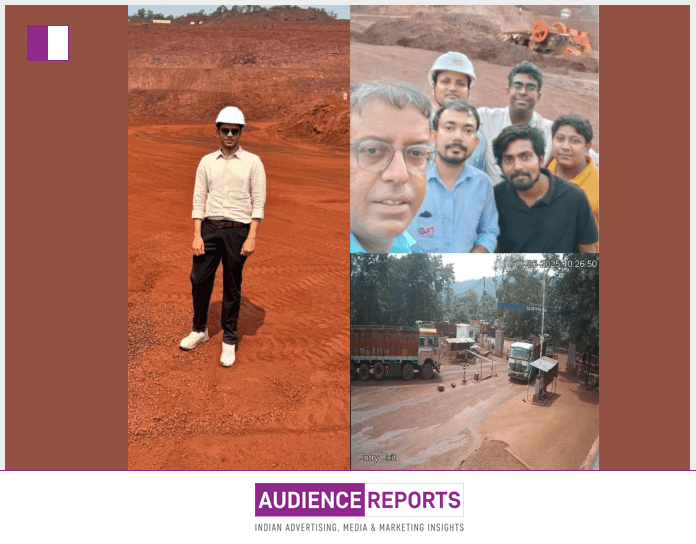
Soham Bathwal, Managing Director at Bathwal Corporation, represents a new kind of leadership in industries that are rapidly evolving through technology. His perspective is not just about how automation drives efficiency, but also about the enduring power of human judgment, intuition, and grit. While systems, machines, and digital tools can transform the way industries function, Soham Bathwal reminds us that people remain the irreplaceable core of progress.
Soham Bathwal explains that Bathwal Corporation has upgraded dozens of systems across its sites. From real-time tracking to predictive maintenance, from number plate recognition cameras to digital weighbridges, the company has invested deeply in automation. These tools reduce human error, increase speed, and bring measurable efficiency. In industries where time and accuracy mean everything, such upgrades can redefine competitive advantage. Yet, despite all these advancements, Soham Bathwal highlights that the company’s biggest success was not tied to a new system, but to a single human decision.
Soham Bathwal recalls the moment when Bathwal Corporation was launching its Dubai site under immense pressure and strict deadlines. Instead of relying purely on automation, it was the commitment of six individuals that ensured flawless operations from day one. Their determination, decision-making, and ability to respond to challenges made the project a success. This story underlines a truth that many leaders overlook: machines can execute, but people lead.
According to Soham Bathwal, technology brings powerful capabilities automating logs, tracking data, and providing real-time dashboards. But even with the most sophisticated systems, a machine cannot replicate intuition. It cannot sense a shift in sound the way a seasoned operator does. It cannot weigh the nuances of trust and judgment that come with human experience. Automation might reduce mistakes, but it cannot replace wisdom. In his words, “You can automate instructions. Not intuition. You can digitize logs. Not trust.”
Soham Bathwal makes it clear that in industries transitioning from traditional practices to advanced digital ecosystems, balance is key. Relying solely on machines creates a risk of blind spots those small but critical signals that an experienced worker notices. At the same time, avoiding automation limits scalability and growth. The real challenge, which Bathwal Corporation embraces, is to merge the best of both worlds: the precision of machines and the insight of people.
Soham Bathwal offers a vision where humans and machines are not in competition, but in collaboration. The efficiency of technology provides a strong foundation, while human judgment ensures adaptability. For instance, a digital system might alert a factory to an irregular vibration in machinery, but it takes an operator’s intuition to connect that signal to an underlying issue that dashboards cannot yet predict. This combination of data and experience creates resilience.
The leadership of Soham Bathwal also points to a larger lesson for industries everywhere: modernization should not dehumanize work. Too often, conversations around automation revolve around replacing jobs, cutting manpower, or reducing human involvement. Instead, his approach reframes the discussion automation is about augmenting human ability, not removing it. By giving workers the right tools, companies empower them to make faster, smarter, and safer decisions.
Soham Bathwal challenges other leaders in legacy industries to reflect on their own transformation journeys. He asks a simple but powerful question: What’s one small upgrade that caused a big leap in your performance? This framing encourages leaders to recognize that innovation does not always come from massive overhauls. Sometimes, it’s a small change a digital weighbridge, a predictive maintenance tool, or even a new decision-making framework that unlocks exponential results.
Soham Bathwal’s perspective highlights that modernization is not just about speed, accuracy, and cost savings. It is about clarity, trust, and grit. It is about ensuring that people remain at the center of industrial progress, even as machines become more capable. His insights show that in the race toward automation, the most enduring advantage comes not from faster systems but from people who can think, feel, and decide with depth.
Soham Bathwal’s message resonates far beyond Bathwal Corporation. It applies to every sector undergoing digital transformation from manufacturing and logistics to healthcare and education. Leaders must ask themselves: are we empowering our people to make better use of machines, or are we letting machines define the limits of our people?
In the end, Soham Bathwal brings clarity to a question that every modern leader faces. Machines will continue to get smarter, faster, and more precise. But the human edge intuition, judgment, and resilience will always remain the deciding factor. That is not going anywhere. Not now. Not ever.