




















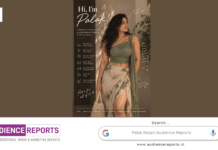







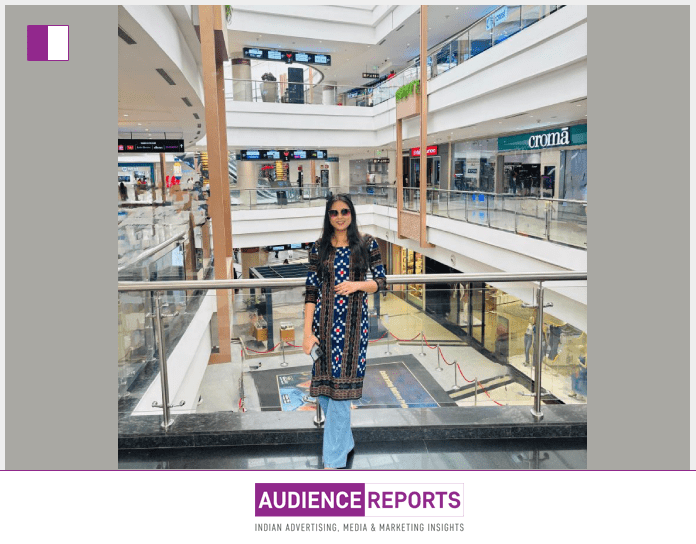
Amisha Patel believes that personal branding is not an accident it is a conscious act of clarity, consistency, and positioning. As a Personal Branding Strategist, Social Media Manager, and Content Writer, Amisha Patel has helped founders, entrepreneurs, and coaches transform their presence on LinkedIn into something more than just another online profile. She sees personal branding not as a buzzword but as a deliberate process, a strategic journey where every layer builds upon the other to create impact.
Amisha Patel reminds us that while many think content is the driving force of personal branding, it is only 20% of the equation. The other 80% lies in the less visible but equally important dimensions: how we position ourselves, how clearly we communicate who we help, and how consistently we show up. Without these foundations, content alone falls flat. This insight makes Amisha Patel’s perspective refreshing in a world where content creation often gets reduced to quantity over quality.
In her framework, Amisha Patel introduces seven critical audit questions that anyone serious about their personal brand must ask. These questions act as a mirror, reflecting whether a brand is working in one’s favor or quietly eroding credibility. They highlight the difference between being remembered and being overlooked.
The first question Amisha Patel raises is about clarity in the profile itself: Does your profile communicate who you help and how? In her experience, confusion is costly. A vague headline or a poorly defined positioning statement often results in missed opportunities. She emphasizes that clarity is currency people cannot engage with you if they do not understand you.
The second question asks whether your feed reflects what you stand for within just a handful of posts. For Amisha Patel, this is where consistency enters the equation. A scattershot approach dilutes authority, while repetition builds memory. The more consistently one shows up with aligned messages, the more likely they are to own a particular space in the minds of their audience.
Amisha Patel also highlights the critical role of the “About” section. Too often, professionals use this space to write what resembles a résumé rather than a narrative crafted for their audience. She reminds us that prospects do not care about titles or accolades; they care about transformation. This shift from self-centered writing to audience-centered messaging is what elevates a brand from being a digital CV to becoming a platform of influence.
Expertise alone, however, is not enough. Amisha Patel makes a compelling point that authority without personality feels robotic. Storytelling, relatability, and authenticity must infuse content so that it not only informs but also connects. The human element cannot be overlooked. For her, personal branding is as much about trust as it is about visibility, and trust is earned when expertise meets authenticity.
Another important insight Amisha Patel shares revolves around engagement. She notes that visibility in the early stages of building a brand is created less through posting and more through meaningful interactions in comments. By engaging with the right people consistently, individuals extend their reach and foster relationships that often prove more impactful than broadcasting alone.
The sixth question she poses concerns intellectual property: Do you have a signature framework or method you’re known for? According to Amisha Patel, authority is not built on volume but on originality. A repeatable process, a unique lens, or a distinct methodology creates intellectual property that positions someone as a thought leader rather than just another voice. This is the difference between echoing existing conversations and creating new ones.
Finally, Amisha Patel asks a sobering question: If you stopped posting for 30 days, would people still remember you? The answer to this question reveals the true depth of a brand’s positioning. If the memory fades quickly, it means the brand has not yet taken root in people’s minds. Sustainability, she argues, comes not from being omnipresent but from being unforgettable.
Through these seven questions, Amisha Patel outlines a roadmap that goes beyond superficial tactics. She demonstrates that personal branding is not about chasing fleeting attention but about cultivating lasting authority. The emphasis on intentionality layer by layer reminds us that a brand is built much like a reputation: slowly, consistently, and with purpose.
What stands out in Amisha Patel’s approach is the balance she advocates between strategy and authenticity. She does not suggest that personal branding is about creating a polished, flawless persona. Instead, it is about showing up with clarity, backed by a clear sense of who you help, how you help them, and why your perspective matters. It is about aligning actions with values and creating resonance through both words and engagement.
In today’s digital age, where everyone is competing for attention, Amisha Patel offers a valuable reminder: visibility without positioning is noise, and authority without authenticity is fragile. The real strength of a personal brand comes when clarity, consistency, and character intersect. That is when a professional stops being “just another person” online and becomes someone others actively seek out.
Amisha Patel’s insights serve as a practical blueprint for anyone serious about building influence on LinkedIn. Her message is clear personal branding is not reserved for thought leaders with large followings. It is for anyone who wants to move beyond being invisible, who wants to turn expertise into authority, and who wants to leave a mark in their professional space.
The truth is, as Amisha Patel often emphasizes, a strong personal brand does not happen by chance. It happens by choice. It happens when one decides to stop blending in and starts showing up with clarity, purpose, and consistency. For founders, coaches, and professionals looking to make an impact, her message is not just advice it is a call to action.