

































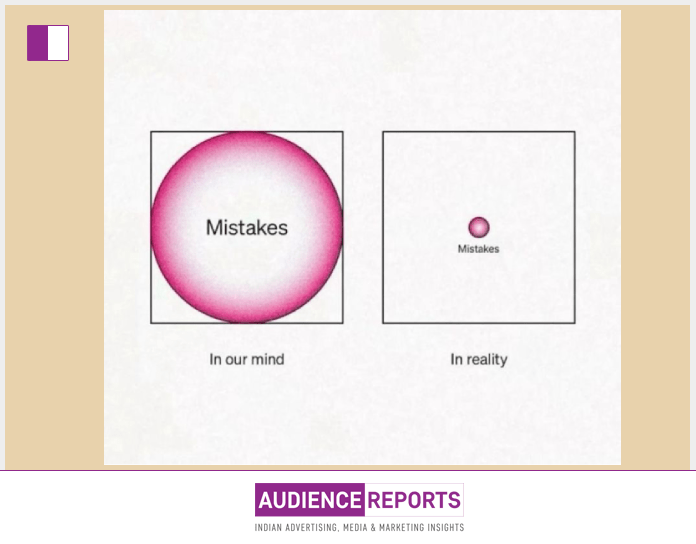
Alivia Bienko has a way of bringing clarity to the moments we often overcomplicate. As the Founder of Emerance Pathways, she doesn’t just talk about growth in a theoretical sense she helps people live it. Her recent reflection on mistakes at work highlights a universal truth: our internal catastrophizing rarely matches external reality. Mistakes, while uncomfortable, are almost always temporary, fixable, and far less memorable to others than they are to us.
Alivia Bienko points out the simple but powerful reality that a late email, a forgotten attachment, or a slip in a meeting may feel like the end of the world in our minds, yet they rarely carry the weight we assign to them. This is an insight many professionals need to hear, especially in a culture where perfection is often expected and where vulnerability about shortcomings is rarely shared openly.
What makes Alivia Bienko’s perspective stand out is not just her acknowledgment of error, but her reframing of it. She suggests replacing the instinctive panic of “I’m going to get fired” with the more constructive thought, “I’ve made a mistake, but I can learn from this and everything is okay.” This subtle shift represents the core of resilience transforming self-criticism into self-compassion without dismissing accountability.
Alivia Bienko underscores a crucial point: it isn’t the mistake itself that defines us, but how we respond to it. Owning the misstep, taking steps to correct it, and then moving forward allows us to grow stronger in the long run. She emphasizes that while we may replay our blunders endlessly in our minds, others have already moved on. This perspective is liberating, reminding us that mistakes are not milestones of failure, but markers of progress.
At the heart of Alivia Bienko’s philosophy lies a practical form of courage. She doesn’t encourage ignoring mistakes or downplaying them. Instead, she advocates facing them directly, learning, and choosing not to let them dominate our narrative. It’s a leadership quality rooted in authenticity and one that resonates far beyond the professional environment.
Alivia Bienko’s work through Emerance Pathways, particularly her focus on ADHD and AuDHD coaching for women, reinforces her mission to help individuals navigate challenges with clarity and strength. Mistakes, for many, can become magnified when layered with self-doubt, neurodivergence, or societal expectations. By offering guidance in these spaces, she equips people to see beyond the mistake itself and recognize their capacity for growth.
Alivia Bienko reminds us that growth is not linear. The very act of acknowledging a mistake becomes a tool for learning. Rather than chasing an unrealistic standard of perfection, her message points toward adaptability, resilience, and honest self-reflection as the foundations for long-term success.
This message carries weight not only for those in leadership but also for anyone starting out in their careers. For young professionals, the fear of failure can often lead to silence or avoidance. Alivia Bienko’s advice breaks that cycle, inviting them to view mistakes as normal, human, and valuable. In doing so, she provides a healthier framework for building confidence in uncertain moments.
For seasoned professionals, her reminder is equally powerful. The higher one climbs in their career, the greater the pressure to appear flawless. Yet, as Alivia Bienko highlights, even at advanced stages, mistakes still happen and that’s okay. A willingness to acknowledge them openly often becomes a mark of authentic leadership, showing teams that vulnerability is not weakness but strength.
Alivia Bienko’s philosophy aligns with a broader cultural shift toward more honest conversations about work and growth. Instead of glorifying constant success, it embraces the messiness of learning and the humanity behind every career. It is a call to step away from perfectionism and step toward self-awareness and compassion.
Her words also serve as a practical guide. They remind us to breathe, reframe our thinking, and recognize that what feels like a disaster in our minds is often just a small ripple in the bigger picture. Alivia Bienko gives us a tool to carry into stressful moments: the ability to pause, own the mistake, fix it, and then let it go.
In many ways, Alivia Bienko is not just sharing a perspective she is modeling a healthier way of engaging with challenges. Through her openness, she gives others permission to release the shame often attached to mistakes. This shift allows room for growth, creativity, and confidence to flourish.
Alivia Bienko leaves us with a valuable reminder: the most important measure is not perfection but progress. When we can face our mistakes without fear, they lose their power to derail us. What remains instead is resilience, and resilience is what truly carries us forward.