




























Monica Chauhan has always believed that transformation begins not with talk, but with action that people can see, feel, and join. Her recent reflections on a conversation with Nandan Kamath echo this principle that to create a different reality for the world, one must continually build evidence for it. Monica Chauhan lives this truth through her journey, both as a football player at Inter Bengaluru Blues FC and as an active contributor to the regenerative work culture being nurtured at Co.labx.
Monica Chauhan understands deeply that reality doesn’t shift through ideals alone; it transforms when new ways of working, playing, and collaborating are experienced and shared. The regenerative world she and her colleagues envision at Co.labx is not a utopian dream but a living system one that thrives on accountability, joy, and shared growth. For Monica Chauhan, this is not just about changing workplaces; it’s about changing the experience of adulthood itself. After all, adults spend most of their lives at work so why shouldn’t those hours be filled with meaning, balance, and vitality?

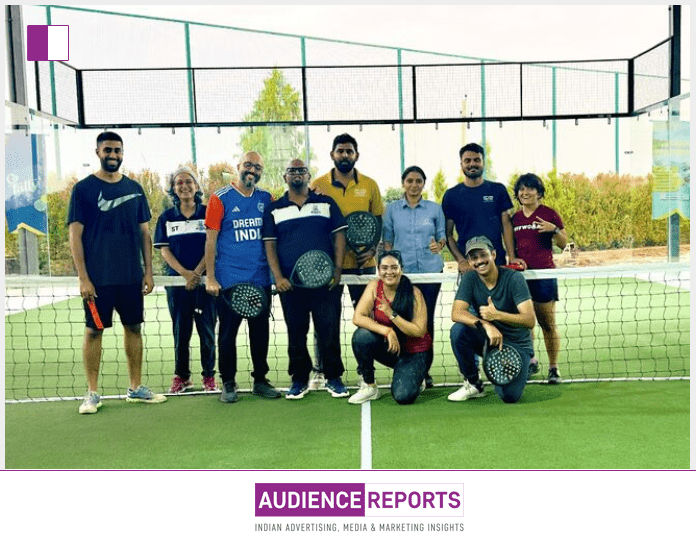
In the latest quarterly step-back session, Monica Chauhan and her team set out to bring these values to life. The evidence they created wasn’t in the form of a report or a presentation, but in lived experience. Meetings ended early, leaving room for play quite literally. In collaboration with the Centre for Sports Excellence, the team swapped screens and spreadsheets for sports, embodying the belief that play unlocks the human spirit more effectively than any formal strategy session. For Monica Chauhan, a footballer who knows the discipline and liberation of the game, this intersection of play and purpose couldn’t have been more natural.
The second evidence of change was equally powerful. The team consciously rebalanced their workload, allowing one member to step back temporarily due to personal commitments. Rather than seeing this as a setback, Monica Chauhan saw it as a chance to strengthen the system. By redistributing responsibilities, they ensured that no single individual became the linchpin of the organization. This act wasn’t just logistical it was regenerative. It allowed the team to evolve into a self-sustaining system, resilient and adaptive, where collective ownership replaced dependency.
Monica Chauhan often draws inspiration from football’s team dynamics, and here too, the parallel is clear. A great team doesn’t rely on one star player; it thrives because each member knows their role and can step in fluidly when needed. The same philosophy, when applied to organizations, fosters trust and longevity. For Monica Chauhan, this experiment at Co.labx was proof that regenerative principles can be implemented not just in theory but in daily operations.
In yet another layer of evidence, Monica Chauhan began developing an intellectual property project centered on her beloved football club, Barcelona. Her exploration of how Barcelona is infusing regenerative values into its operations perfectly captures her belief in merging passion with purpose. When play and work collide in harmony, as they did in this instance, it becomes more than productivity it becomes human flourishing.
Monica Chauhan’s narrative is a reminder that regeneration isn’t confined to environmental sustainability or corporate wellness; it’s about rethinking how humans relate to each other within systems. She envisions organizations as living organisms full of creativity, rhythm, and renewal. At Co.labx, this regenerative culture is nurtured through tangible practices like play, distributed leadership, and conscious rest. The result? As she proudly notes, they achieved one of their best cash flow periods ever while doing all this. Proof that purpose and performance are not opposites, but allies.
For Monica Chauhan, this synthesis between play, purpose, and prosperity isn’t accidental. It reflects years of discipline on and off the field. Football has taught her that sustained success comes from rhythm bursts of intensity balanced with moments of rest, individual brilliance balanced with teamwork. At Co.labx, she applies the same principle, ensuring that organizations become ecosystems that give as much as they take.
As Monica Chauhan continues to document these “evidences” of regenerative work culture, she invites others to look beyond traditional corporate frameworks. The world she’s helping to create doesn’t run on burnout or extraction but on collaboration, joy, and adaptability. It’s a future where adults no longer drag themselves through the week but experience fulfillment even in work’s most routine rhythms.
Monica Chauhan’s journey shows us that regeneration begins with small, intentional choices ending meetings early, playing a game, sharing responsibility, or aligning passion with work. These acts, when practiced consistently, become living proof of a new reality. The evidence is visible, the results measurable, and the impact deeply human.
In every role she embodies footballer, collaborator, creator Monica Chauhan stands for this new kind of leadership. One that doesn’t demand followers but invites co-creators. One that measures success not just in profits but in energy, well-being, and collective resilience. As she continues to play her part, both on the field and within organizations, Monica Chauhan reminds us that the future of work is not about doing more but becoming more together.
And as she said, this is just the beginning. The evidences will keep coming. The reality will keep evolving. And through it all, Monica Chauhan will keep proving, one action at a time, that regeneration is not an abstract vision it’s a way of life that works.