


























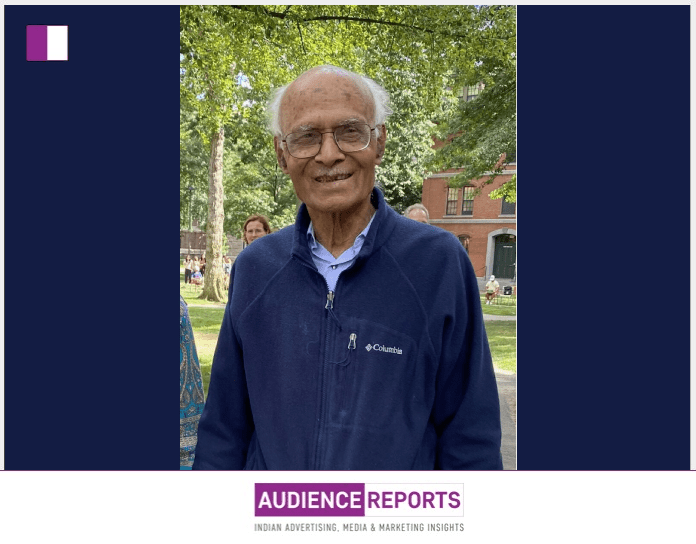
Amit Sood shares a moment that is both deeply personal and universally relatable an interaction with his 91-year-old father that gently reshaped his understanding of expectations, resilience, and the nature of life. The story he recounts is not about grand achievements or dramatic turning points; instead, it is about the quiet clarity that comes from listening, observing, and accepting the simple truths that life offers in unexpected ways.
Amit Sood begins with concern for his father, who had been feeling unusually fatigued. Medical tests brought relief, yet worry lingered a familiar scene for anyone caring for aging parents. When his father asked, “How are other men my age doing?” Amit Sood responded honestly: most men of that age were no longer alive, and those who remained often struggled with significant health challenges. What followed was a moment of wisdom delivered with humor and perspective, as his father compared himself to a 1934 “model” that naturally slows down with age.

Amit Sood highlights this interaction not to romanticize aging, but to reveal the quiet resilience embedded in his father’s outlook. The elder Sood wasn’t denying his fatigue or pretending to be invincible he was simply acknowledging reality with grace. It is this acceptance, neither passive nor defeatist, that struck Amit Sood deeply. The exchange became more than a conversation; it became a mirror reflecting a broader truth about expectations and the emotional weight we often impose on ourselves.
Amit Sood explains that he extended his father’s simple wisdom into his own life. Just as it would be unreasonable to expect a 91-year-old body to operate with youthful energy, it is equally unrealistic to expect a life free from pain, disappointment, or occasional failure. The notion of a perfect life, he realized, is not only unattainable but unfair to ourselves and to the unpredictable world we inhabit.
Amit Sood does not frame this understanding as pessimism. Rather, he positions it as a healthy recalibration of perspective. This acceptance has reduced his fear, strengthened his courage, and made him more willing to engage with life honestly embracing its joys and acknowledging its challenges without resistance. The shift is subtle, yet powerful: instead of asking “Why is this happening to me?” he now asks, “What is this teaching me?”
Amit Sood makes it clear that acceptance is not synonymous with surrender. He emphasizes that he does not prefer adversity, nor does he glorify struggle. Instead, he chooses to work with what is neither clinging to idealized outcomes nor resisting the natural ebb and flow of life. This mindset allows him to stay grounded while still striving, to remain hopeful without demanding perfection, and to move forward without being weighed down by disappointment.
Amit Sood reminds readers that life’s challenges do not diminish its value. Pain, fear, and failure are not signs of weakness; they are evidence that we are alive, evolving, and engaged. When expectations are rigid, every obstacle feels like an injustice. But when expectations align with reality, resilience naturally grows. By accepting that life includes hardship, we free ourselves from the constant pressure to control the uncontrollable.
Amit Sood illustrates that his father’s perspective delivered with a light-hearted chuckle carries profound wisdom for people of any age. The human experience is a blend of highs and lows, clarity and confusion, progress and setbacks. None of these elements exist in isolation; together, they form the texture of a life fully lived.
Amit Sood also highlights the emotional liberation that comes from acknowledging imperfection. When we stop striving for a flawless life, we create space for authenticity. We recognize that fear can coexist with courage, disappointment with hope, and struggle with strength. This coexistence is not a contradiction it is the essence of resilience.
Amit Sood uses his story to invite readers to examine their own expectations. Are we demanding perfection from ourselves? Are we carrying fears that stem from unrealistic standards? Are we resisting the natural imperfections that shape our journey? His reflection suggests that the more gently we hold our expectations, the more gracefully we can navigate the uncertainties of life.
Amit Sood concludes that this shift in mindset has not removed adversity from his path. But it has transformed the way he walks it. By embracing what is, rather than fighting what is not, he has discovered a quieter form of strength one that grows from acceptance instead of resistance.
In sharing this narrative, Amit Sood offers a powerful reminder: life does not need to be perfect to be meaningful. It simply needs to be lived with awareness, humility, and willingness to accept both its gifts and its challenges. Through his father’s timeless wisdom, and through his own reflection, Amit Sood invites us all to rethink our relationship with expectations and to find courage not in the illusion of perfection, but in the steady acceptance of life as it truly is.