


































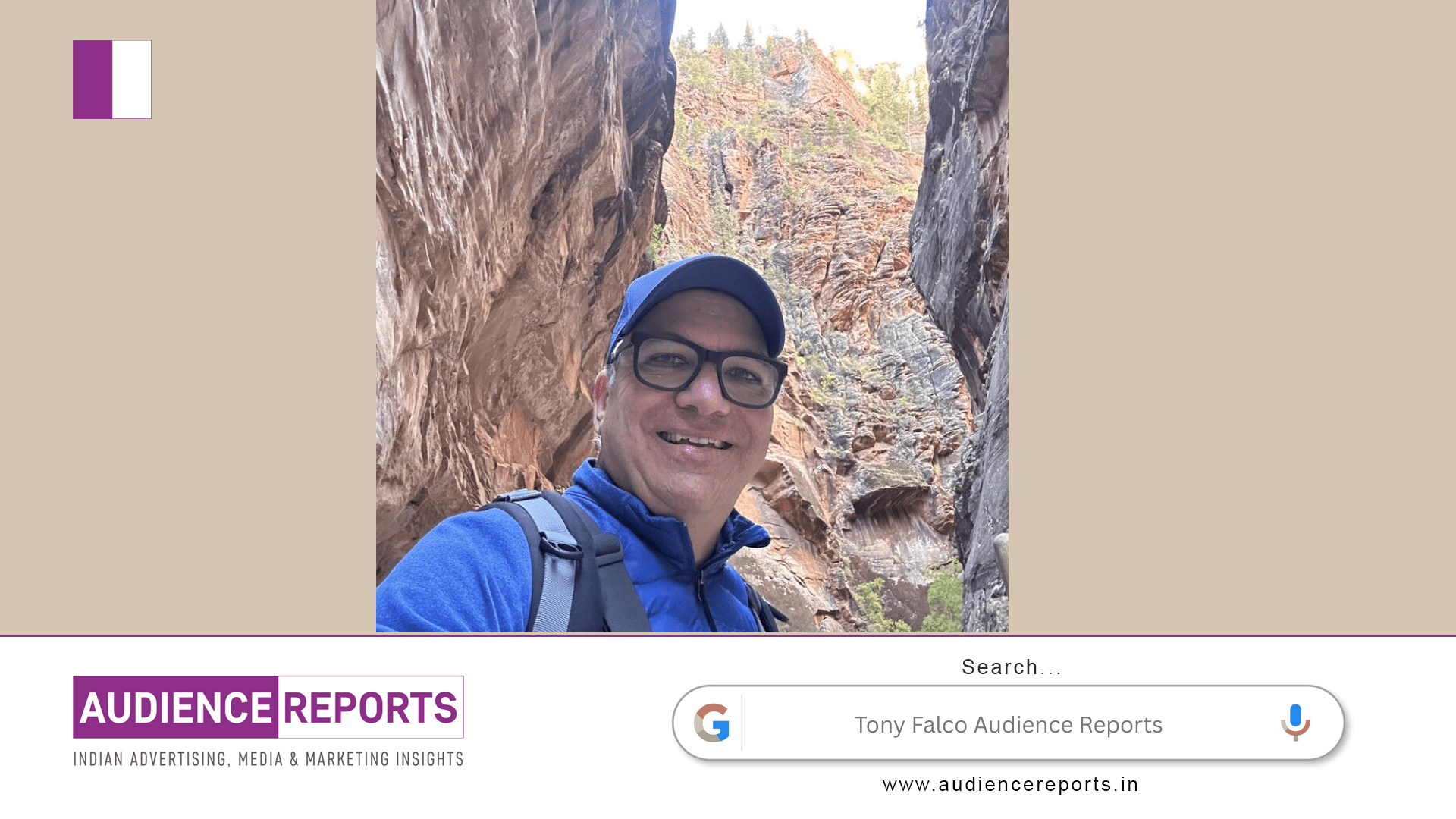
Tony Falco does not frame growth as a buzzword or a motivational slogan. For him, it is a lived discipline, one shaped by years of leadership in the MedTech world and now extended into the mountains. As a Southern California District Manager at Alcon, Tony Falco has spent his professional life navigating change, guiding teams, and making decisions where comfort is rarely an option. His recent announcement about committing to the 29029 Everesting challenge in 2026 is not a dramatic pivot, it is a continuation of how he already thinks. Growth happens just outside the comfort zone. The climb is simply becoming visible.
In business, Tony Falco’s role requires constant recalibration. Markets shift. Teams evolve. Technology advances. There is no stable plateau where a leader can remain untouched by change. The idea of “Everesting”, climbing the equivalent height of Mount Everest in 36 hours, mirrors this reality. It is repetitive, demanding, and mentally exhausting. You do not summit once and celebrate. You climb again and again, often in the dark, often when your body argues for rest. That structure resembles leadership more than most metaphors ever could. Progress is rarely one heroic leap. It is showing up for the next ascent.
What makes Tony Falco’s decision compelling is not the spectacle of endurance but the timing. He openly acknowledges that, at a certain stage in life, the “easy path” begins to look attractive. This is a quiet truth many professionals experience but seldom articulate. Comfort becomes rational. Stability becomes the goal. The risk is subtle: ambition does not disappear, it just shrinks. Tony Falco’s choice resists that drift. By committing early, by naming the challenge publicly, he converts intention into accountability. The mountain is no longer an idea. It is a date on the calendar.
The months leading up to October 2026 will not be cinematic. They will be repetitive. Base-building, training blocks, altitude preparation in places like Park City, these are unglamorous phases. Tony Falco has chosen to document this process, not just the finish line. That matters. Most people admire outcomes and underestimate preparation. By sharing the discipline and setbacks, Tony Falco reframes growth as something earned slowly. In a professional culture addicted to quick wins, this approach reminds us that endurance is built when no one is watching.
There is also a generational subtext in Tony Falco’s message. He speaks to “Executive Athletes,” a term that bridges two worlds often kept separate. Physical resilience and professional leadership are treated as parallel tracks, yet they draw from the same internal reserves: focus, patience, and the ability to stay present under pressure. Tony Falco’s Everesting challenge is not a hobby detached from his career. It is a practice ground for the same mental muscles he uses in boardrooms and field operations. Fatigue, doubt, and uncertainty do not care whether you are wearing running shoes or a blazer.
Repeatedly, Tony Falco returns to the idea of climbing. Not conquering. Not dominating. Climbing. It implies effort without arrogance. Mountains do not negotiate. Markets do not either. Both require humility. You prepare. You respect conditions. You adapt. You keep moving. This is leadership stripped of theater. The Everesting format, ascending the same route until you reach 29,029 vertical feet, forces confrontation with monotony. There is no novelty to distract you. That mirrors long-term leadership. After the initial excitement fades, what remains is commitment.
By stating “Meet Me at the Top,” Tony Falco invites participation without pretending that everyone must follow his exact path. The phrase is open-ended. The “top” may be a promotion, a career pivot, a personal boundary, or a physical summit. What he models is not exceptionalism but continuity: the refusal to let age, routine, or success become an endpoint. Tony Falco is not trying to prove invincibility. He is choosing friction over stagnation.
In a professional landscape filled with performance metrics and quarterly targets, Tony Falco’s Everest is refreshingly analog. It cannot be optimized with software. It cannot be delegated. Every vertical foot must be earned. That is its power. It restores a direct relationship between effort and outcome. In doing so, it quietly critiques a culture that often seeks shortcuts. Tony Falco’s climb suggests that meaning still lives in difficulty.
As the months unfold, Tony Falco’s journey will likely resonate with those who sense that growth has become too abstract. Watching someone prepare for an objective that does not care about titles or résumés reminds us that capability is perishable. It must be exercised. Whether in MedTech leadership or mountain ascents, Tony Falco demonstrates that progress is less about peak moments and more about returning to the climb when quitting feels reasonable.
Tony Falco’s Everesting challenge is not a reinvention. It is a continuation of a mindset already visible in his career: movement over comfort, discipline over drift, ascent over ease. The mountain simply makes that philosophy visible.