


































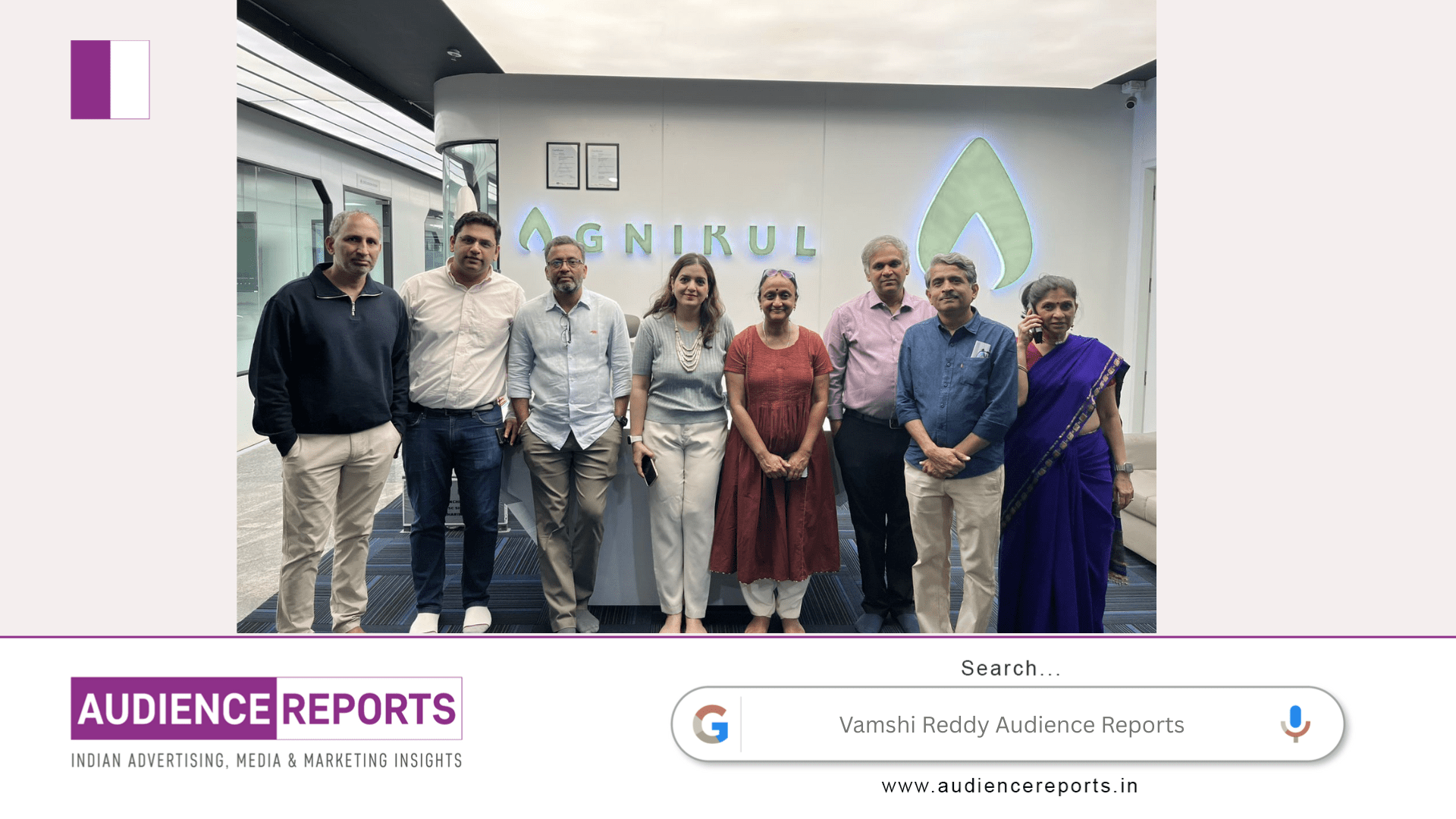
Vamshi Reddy begins his reflection not with hype, but with a walk, through the Indian Institute of Technology, Madras Research Park. Vamshi Reddy listens to Ashok Jhunjhunwala explain a twenty-year experiment: place academia and industry in the same room and let them build together. For Vamshi Reddy, the power of the place is not its buildings, but its intent. Research here is not meant to stay in papers. It is meant to ship, scale, and solve.
What Vamshi Reddy captures is a structural shift in how innovation is created in India. The old model separated thinking from doing. Universities produced knowledge; companies figured out how to monetize it, often years later, often elsewhere. The Research Park breaks that wall. It compresses the distance between idea and impact. Vamshi Reddy’s observation is simple: innovation becomes real when friction is removed between those who discover and those who deploy.
The numbers are impressive, hundreds of startups, thousands of jobs, billions in valuation. But Vamshi Reddy does not stop at metrics. He notices energy. He notices motion. He notices that this is not a museum of innovation but a factory for it. Startups in aerospace, healthcare, climate, and space are not pitching dreams; they are building hardware, testing systems, and shipping outcomes. Vamshi Reddy sees a place where failure is allowed early, learning is fast, and iteration is normal.
This matters because nations do not become innovative through slogans. They become innovative through systems. Vamshi Reddy’s post is a reminder that ecosystems are designed, not wished into existence. Every corridor, lab, partnership, and policy at the park answers a single question: how do we make research useful? That question is more radical than it sounds. It forces universities to think like builders and companies to think like learners.
For investors, builders, and policymakers, Vamshi Reddy’s experience offers a blueprint. Capital alone does not create breakthroughs. Talent alone does not commercialize ideas. Infrastructure alone does not generate outcomes. What works is alignment. When incentives, spaces, and timelines converge, innovation becomes inevitable. Vamshi Reddy is pointing to that convergence.
Vamshi Reddy’s reflection also reframes patriotism in the modern era. Building an innovation nation is not about grand speeches. It is about patient execution. It is about creating places where a doctoral student can sit next to a founder and solve a real problem. It is about reducing the gap between what is possible and what is deployed. Vamshi Reddy shows that progress looks ordinary up close, people at desks, whiteboards, test rigs, and prototypes.
The deeper lesson in Vamshi Reddy’s post is that ecosystems outlive individuals. Ashok Jhunjhunwala planted a seed, but the forest exists because thousands showed up to tend it. Vamshi Reddy recognizes that legacy is not built by single heroes, but by repeatable systems.
In the end, Vamshi Reddy leaves us with a practical truth: nations are built the same way startups are built, by turning intent into structure and structure into execution. The Research Park is proof. Vamshi Reddy’s walk through it is a reminder that the future is not imagined into being. It is engineered.