





























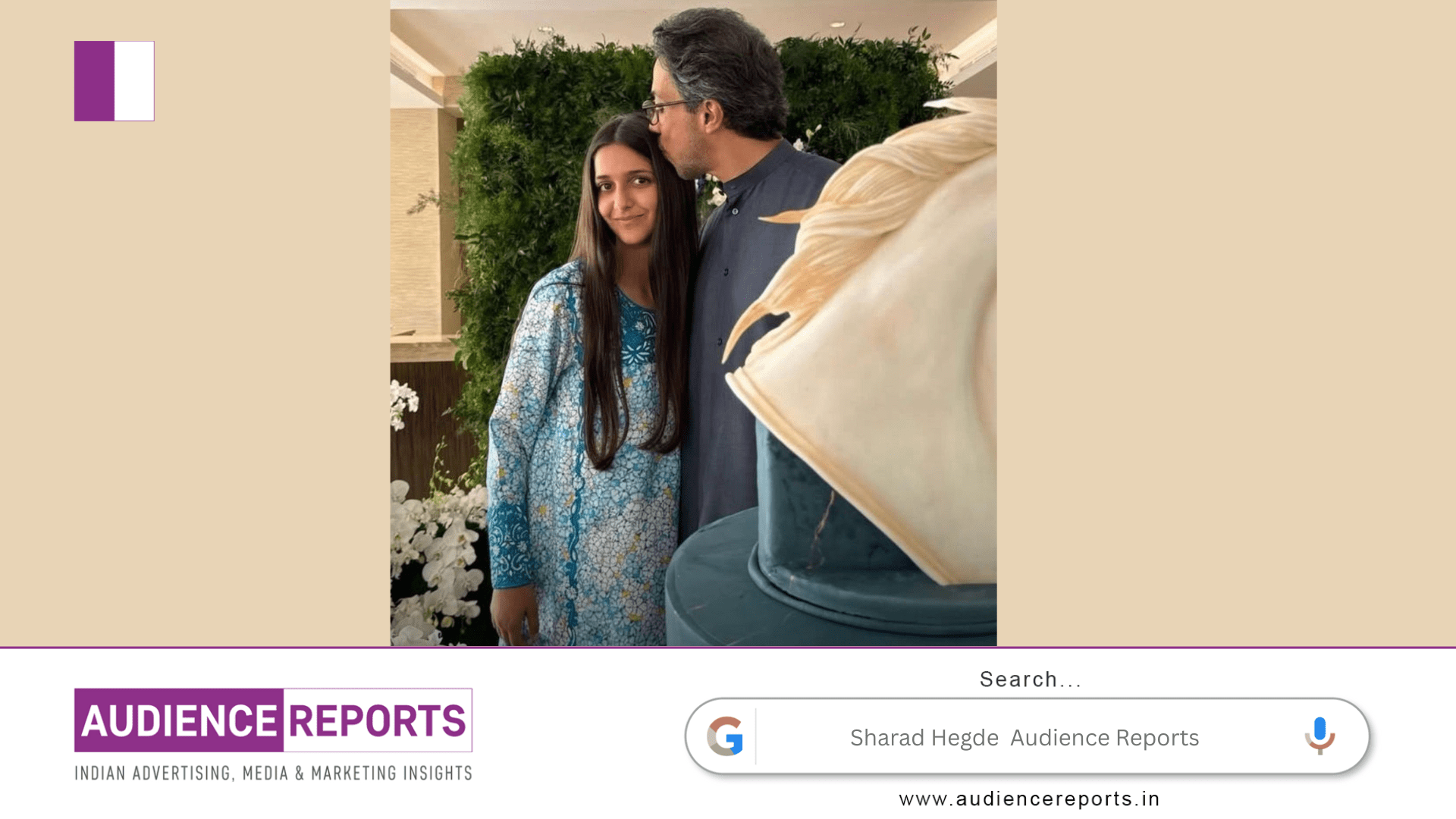
Sharad Hegde begins his reflection not with authority or achievement, but with a quiet moment that speaks volumes. Sharad Hegde draws attention to an image featuring His Highness Sheikh Mansour bin Zayed Al Nahyan alongside Her Highness Sheikh Latifa bint Mansour bin Zayed Al Nahyan, and in doing so, Sharad Hegde invites us to reconsider how leadership is formed, sustained, and passed on. Sharad Hegde does not frame leadership as spectacle; instead, Sharad Hegde frames it as something deeply personal, shaped first at home before it is expressed on a national or global stage.
At the heart of Sharad Hegde’s post is the idea that leadership is not an abstract concept reserved for boardrooms, policies, or public addresses. Sharad Hegde highlights how leadership is learned through proximity—through observing conduct, absorbing values, and understanding responsibility long before power is ever exercised. Sharad Hegde emphasizes that this continuity across generations is not accidental; it is cultivated deliberately through presence, humility, and example. In this way, Sharad Hegde subtly challenges modern notions that leadership can be manufactured quickly or taught only through formal systems.
Sharad Hegde also points to compassion as a core strength rather than a soft accessory. In many discussions about governance and influence, compassion is often sidelined in favor of efficiency or control. Sharad Hegde’s reflection resists that framing. Sharad Hegde shows that compassion, when embedded in leadership culture, becomes a stabilizing force—one that nurtures trust and fosters long-term thinking. Sharad Hegde reminds us that strength guided by values does not weaken authority; it grounds it.
Another thread running through Sharad Hegde’s post is responsibility across generations. Sharad Hegde observes that leadership, particularly at a national level, is not merely about managing the present but about safeguarding the future. This perspective reframes power as stewardship. Sharad Hegde underscores that wisdom is not only inherited but actively transmitted, through lived behavior rather than rhetoric. Sharad Hegde’s words suggest that leadership cultures endure when values are practiced consistently, not just celebrated symbolically.
Sharad Hegde also situates this moment within the broader context of the UAE’s leadership model. Sharad Hegde notes that nation-building is not limited to infrastructure, economic growth, or policy innovation. Instead, Sharad Hegde highlights how nurturing people, preserving identity, and shaping future generations are equally central to progress. This balance between development and identity is not always easy to achieve, yet Sharad Hegde implies it is precisely this balance that defines sustainable leadership.
In reflecting on tradition and modern governance, Sharad Hegde avoids presenting them as opposing forces. Sharad Hegde describes a seamless harmony where heritage informs innovation rather than obstructing it. This idea carries practical implications beyond the UAE. Sharad Hegde’s observation speaks to leaders everywhere who struggle to reconcile legacy systems with modern demands. Sharad Hegde suggests that when values are clear, adaptation becomes purposeful rather than reactive.
Sharad Hegde’s role as VP – Events & Media places him at the intersection of narrative and reality, and this is evident in how he frames the moment. Sharad Hegde does not overstate symbolism; instead, Sharad Hegde allows the image to speak while offering context that deepens understanding. This restraint is notable. Sharad Hegde demonstrates that effective communication in leadership is often about knowing when to explain and when to step back.
The phrase “true leadership is felt” stands out in Sharad Hegde’s reflection. Sharad Hegde implies that leadership’s impact is often intangible but deeply resonant. It shows up in trust, continuity, and collective confidence. Sharad Hegde reminds us that such leadership cannot be measured solely through metrics or milestones. It is experienced in moments that affirm shared values and long-term vision.
Sharad Hegde’s post ultimately serves as a prompt for introspection. Sharad Hegde encourages readers to ask where their own leadership foundations lie. Are values actively lived, or merely articulated? Is responsibility treated as a short-term mandate, or as a generational obligation? Through this lens, Sharad Hegde’s reflection moves beyond commentary and becomes an invitation to rethink how leadership is cultivated in families, organizations, and societies.
In highlighting a single moment, Sharad Hegde captures something enduring. Sharad Hegde shows that leadership anchored in legacy and guided by values does not seek attention, yet it commands respect. Sharad Hegde’s words remind us that progress without continuity is fragile, and authority without compassion is hollow. By focusing on presence, responsibility, and lived values, Sharad Hegde offers a grounded perspective on what leadership can look like when it is built to last.