






























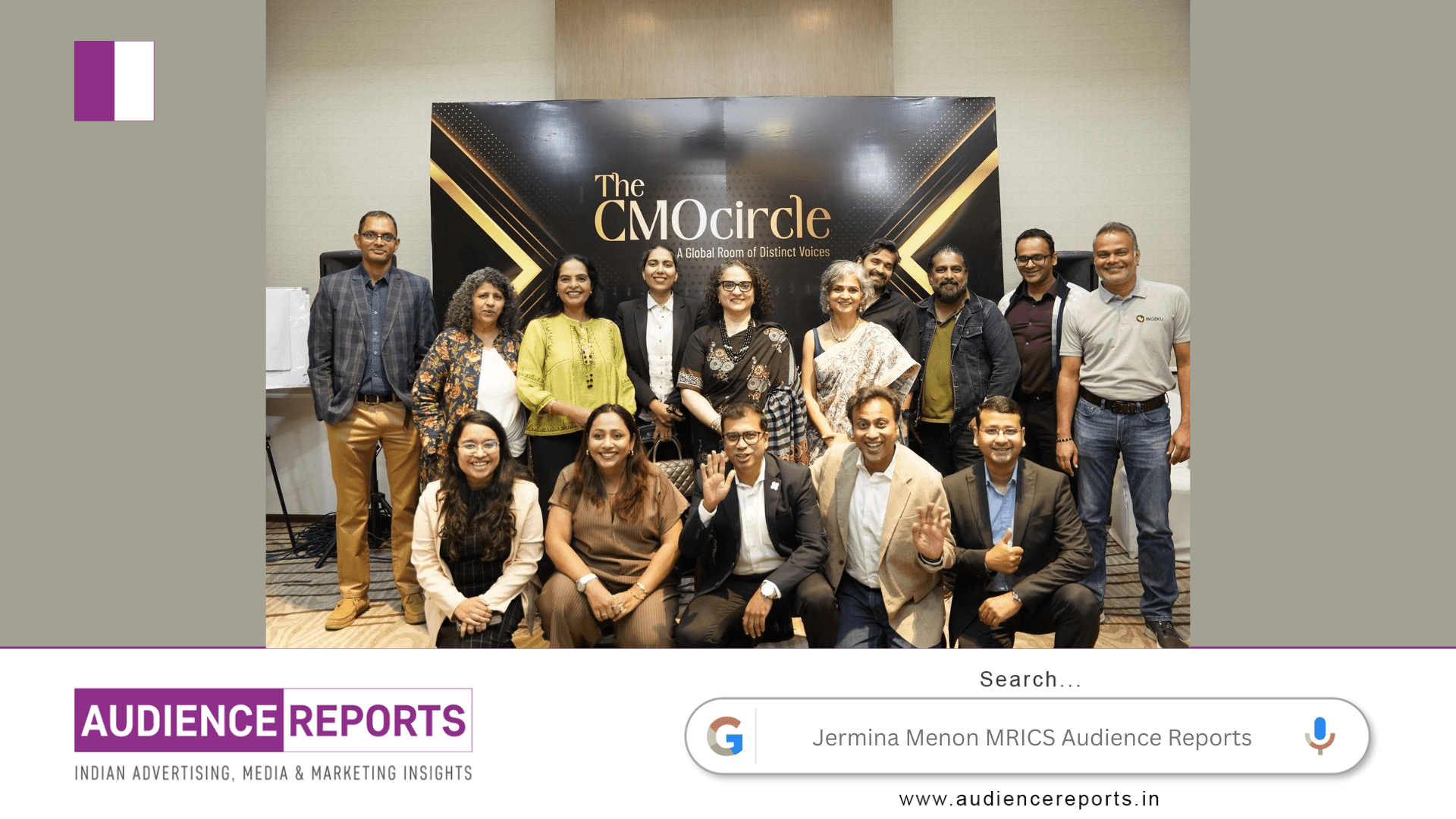
Jermina Menon MRICS begins her reflection not with self-promotion, but with gratitude and curiosity—two traits that increasingly define effective leadership in today’s marketing ecosystem. Her LinkedIn post about an evening at TheCMOcircle, hosted by Vinay Kumar Jagadeesh of Verbinden, offers more than a recap of an event. It opens a window into how senior marketers are rethinking connection, trust, and relevance in a fast-evolving business environment. Jermina Menon MRICS reminds us that meaningful professional growth often happens not in boardrooms, but in conversations where people are willing to listen, debate, and disagree respectfully.
As a Business & Marketing Strategist, Angel Investor, and Mentor, Jermina Menon MRICS operates at the intersection of experience and openness. In a city like Bangalore—where technology, startups, and innovation dominate professional discourse—it is easy for marketing conversations to become tool-heavy and execution-focused. Jermina Menon MRICS points out, subtly but clearly, that the initiative to bring marketers together was not just welcome, but necessary. Community, after all, is not a “soft” idea; it is infrastructure for better thinking.
One of the most striking aspects of Jermina Menon MRICS’s reflection is the emphasis on trust as a KPI in leadership and business. In an era obsessed with dashboards, metrics, and attribution models, trust is rarely quantified, yet deeply felt. Jermina Menon MRICS highlights how this theme shaped the evening’s discussions, suggesting that trust is not merely a byproduct of good leadership—it is a deliberate practice. Trust influences how teams collaborate, how customers stay loyal, and how brands endure beyond campaigns.
The evening began, as Jermina Menon MRICS notes, with a simple icebreaker. Introductions and brief insights into individual marketing approaches set the tone. This may seem routine, but Jermina Menon MRICS implicitly shows how such moments lower barriers and humanize professional identities. When marketers step away from titles and frameworks, they create space for honesty. Kavitha Garla’s role in setting this tone is acknowledged not as ceremony, but as facilitation—an often underestimated leadership skill that Jermina Menon MRICS clearly values.
As the session progressed, Vinay Kumar Jagadeesh and Shubhii Agarawal of Locobuzz encouraged interaction. What unfolded, according to Jermina Menon MRICS, was something richer than planned: real debate. Marketers shared contrasting viewpoints, challenged assumptions, and explored disagreements without defensiveness. Jermina Menon MRICS draws attention to an important detail here—the hosts allowed this to happen. Leadership, in this context, meant restraint. Allowing space for mature disagreement is a sign of confidence, not loss of control.
Several discussion points stood out, and Jermina Menon MRICS captures them with clarity. The question of whether brick-and-mortar legacy businesses can truly go digital in marketing remains highly relevant. Jermina Menon MRICS does not dismiss traditional media outright; instead, the discussion acknowledges nuance. Print, like any channel, must be evaluated for relevance, not written off due to trends. This balanced thinking reflects Jermina Menon MRICS’s broader approach—strategy over hype.
Customer centricity emerged as another anchor. Jermina Menon MRICS reinforces that tools, channels, and technologies are only as effective as the value they deliver to the customer. In a market flooded with automation and AI-driven solutions, this reminder is timely. Jermina Menon MRICS does not frame customer centricity as a slogan, but as a discipline that requires consistent attention.
The long-standing debate of branding versus marketing also surfaced, and Jermina Menon MRICS shared a perspective rooted in integration rather than opposition. By describing them as two sides of the same coin, Jermina Menon MRICS challenges binary thinking. Strong brands need performance, and performance needs brand trust. This synthesis reflects the mindset of someone who has seen cycles of change and understands that silos weaken outcomes.
Technology and AI were acknowledged as indispensable, not optional. Yet Jermina Menon MRICS pairs this with accountability. With digital tools making measurement easier, marketers must spend efficiently and responsibly. Data, in this view, is not just for optimization but for ethical decision-making. Jermina Menon MRICS subtly reframes measurement as a leadership responsibility, not merely a reporting task.
The evening concluded with a thoughtful giveaway—Napkin Insights by Rajesh Setty. Jermina Menon MRICS describes it as the most meaningful return gift, emphasizing reflection over novelty. Even this detail aligns with her broader message: wisdom often comes in small, well-considered doses. The mention of future conversations, chocolate mousse included, adds warmth without theatrics.
Ultimately, Jermina Menon MRICS’s post is less about an event and more about a mindset. It reflects a belief that marketing leadership thrives on trust, dialogue, and continuous learning. Jermina Menon MRICS shows that when professionals gather with openness—ready to agree, disagree, and think together—they don’t just exchange ideas; they build the foundations of stronger, more human businesses.