































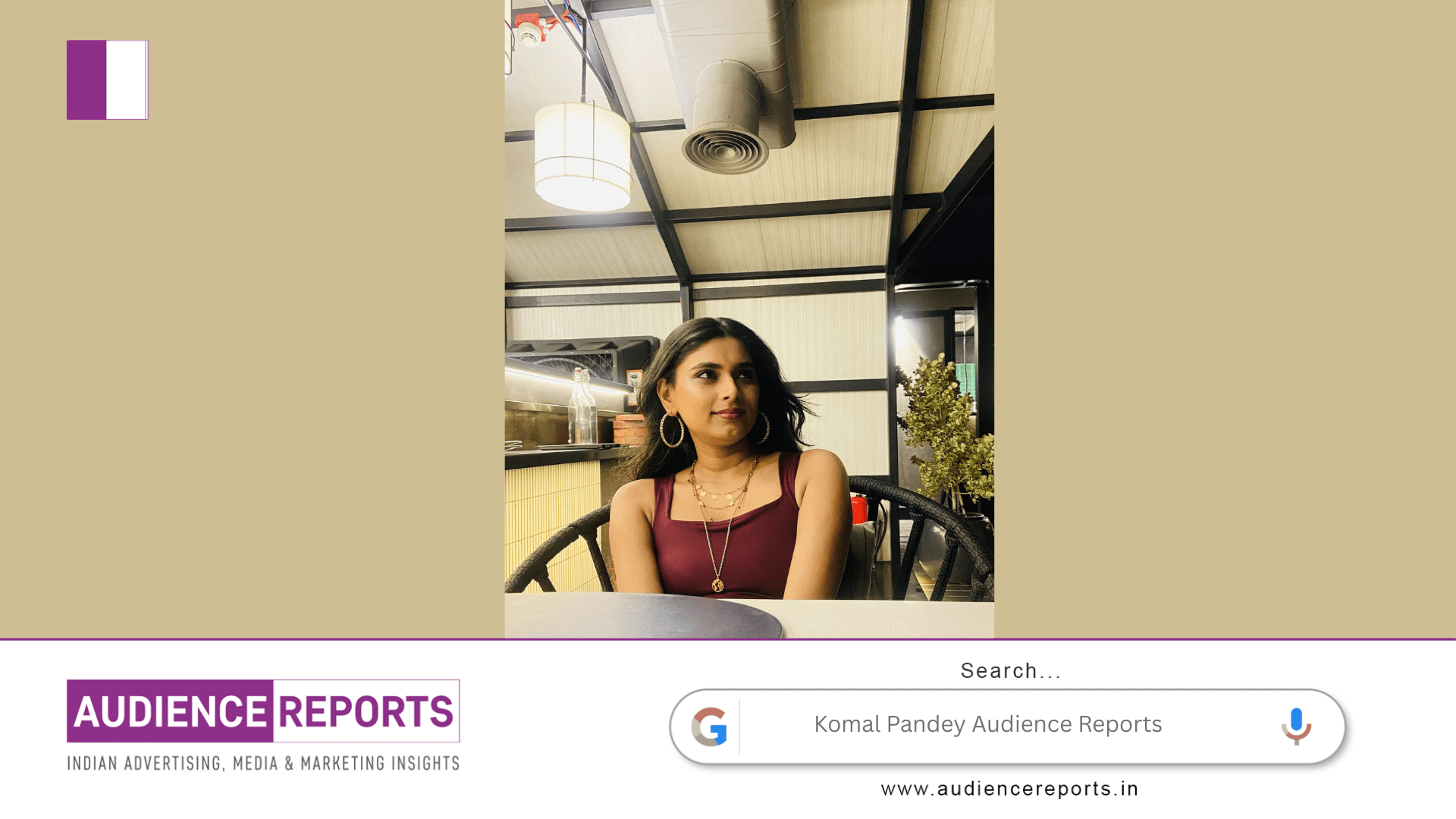
Komal Pandey is part of a growing group of founders who are questioning traditional agency models and rethinking what it truly means to build a modern service business. In a time when artificial intelligence, automation, and global collaboration are reshaping industries, Komal Pandey argues that the rules for starting an agency in 2026 are no longer the same as they were even a few years ago. Her reflections highlight a practical shift in mindset, from scaling people to scaling systems.
Komal Pandey begins with a simple but powerful observation: what worked two or three years ago is already outdated. For many founders, the instinctive response to growth has always been hiring more people. Yet Komal Pandey suggests that this approach may now be inefficient. Instead of building large teams immediately, the real challenge is upgrading the way work gets done. Systems, automation, and intelligent workflows now determine how far a small team can go.
This shift is significant. Komal Pandey explains that the goal of an agency is no longer simply “build a team,” but rather “increase output per person.” In earlier models, growth meant adding more employees for every new set of clients. But in today’s environment, tools powered by AI allow individuals to manage workloads that once required entire departments. For Komal Pandey, if one person cannot manage eight to ten clients with the help of systems and AI, the issue may not be staffing, it may be operations.
The insight shared by Komal Pandey points to a broader truth about modern entrepreneurship. Technology has lowered barriers to productivity, but it has also raised expectations. Agencies are now judged not only by creativity but by operational efficiency. A founder who understands systems thinking may outperform another who simply hires faster. Komal Pandey highlights this difference clearly: scaling intelligently matters more than scaling quickly.
Another idea Komal Pandey emphasizes is the importance of relationships that extend beyond traditional sales conversations. Many founders treat every meeting as a direct opportunity to close a deal. But Komal Pandey encourages a different perspective. Some conversations should evolve into partnerships, collaborations, or distribution channels rather than immediate sales.
According to Komal Pandey, a single strong partner can outperform dozens of cold leads. This insight challenges the obsession many agencies have with constant outreach and aggressive sales pipelines. Instead of focusing purely on short-term transactions, Komal Pandey suggests that founders should build networks that naturally generate opportunities over time. Partnerships often bring credibility, trust, and reach that advertising alone cannot replicate.
Another key principle from Komal Pandey revolves around the concept of niche selection. Conventional startup advice often insists that founders must choose a niche immediately. However, Komal Pandey proposes a more experimental approach in the early stages of building an agency. Rather than committing to a single industry too soon, she suggests exploring several markets and observing where opportunity truly lies.
For Komal Pandey, the early phase of building a business should prioritize speed and learning over certainty. Testing different industries allows founders to identify the intersection of demand, ease of delivery, and healthy profit margins. Once that alignment appears, a company can confidently specialize. The strategy that Komal Pandey describes resembles dating before marriage, an exploration phase that prevents long-term commitment to the wrong market.
One of the most interesting insights shared by Komal Pandey concerns hiring. Many founders focus heavily on technical skills when recruiting new team members. Yet Komal Pandey argues that skills alone are no longer the most valuable asset in a creative or strategic business.
Instead, Komal Pandey emphasizes the importance of “taste.” Taste refers to the intuitive sense of what works, what feels right, and what resonates with audiences in the real world. Skills can be trained, software tools can be learned, and execution can be outsourced. But taste, the instinct that shapes quality decisions, is far more difficult to develop.
For Komal Pandey, taste is what separates good work from unforgettable work. In industries driven by creativity and storytelling, this instinct becomes a defining advantage. Agencies that cultivate strong creative judgment often stand out even in crowded markets.
Perhaps the most striking conclusion from Komal Pandey is her perspective on competition. Many founders claim that the agency space is saturated. Yet Komal Pandey disagrees. The real problem, she suggests, is not saturation but mediocre thinking. Markets rarely become overcrowded with excellence; they become crowded with repetition.
By focusing on systems, partnerships, experimentation, and creative judgment, Komal Pandey presents a framework for building agencies that adapt rather than complain. Her message encourages founders to rethink assumptions and challenge outdated strategies. Instead of chasing trends or blaming competition, the smarter path is continuous adaptation.
In the end, the perspective shared by Komal Pandey reflects a broader transformation happening across entrepreneurship. Technology is reshaping how work is performed, how teams are structured, and how businesses grow. Founders who recognize these changes early are more likely to build sustainable companies.
The ideas presented by Komal Pandey are not about shortcuts or quick success. They emphasize thoughtful decisions, experimentation, and long-term thinking. In a rapidly evolving landscape, Komal Pandey reminds founders that success often belongs to those who quietly adapt while others remain stuck in outdated models.