
































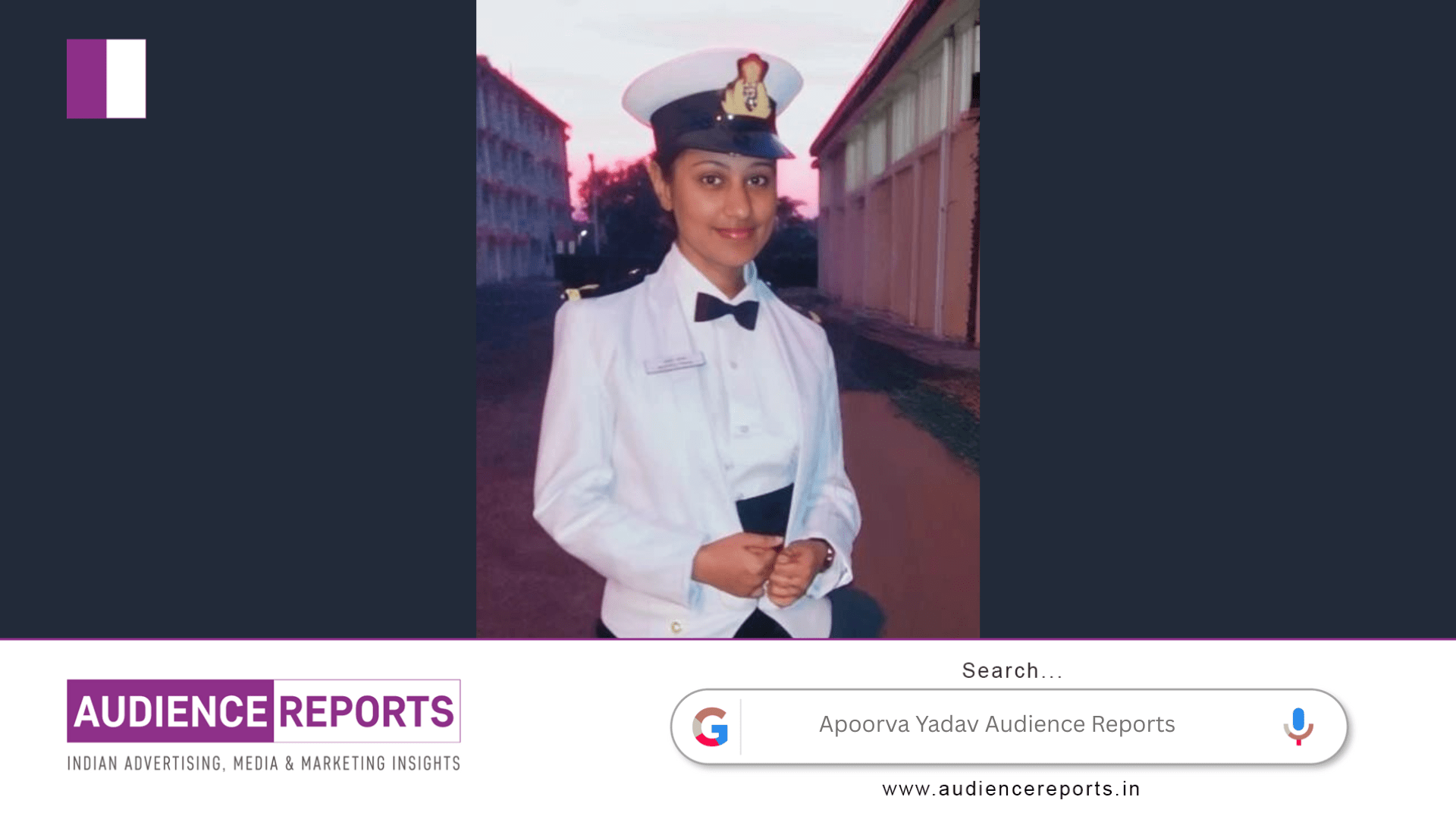
Apoorva Yadav speaks about something many professionals quietly struggle with but rarely admit openly: the need for validation before believing in their own capabilities. Her reflections on life after the Armed Forces highlight a reality that extends far beyond military service. It is about identity, self-worth, and the challenge of proving value in environments that fail to understand lived experience. Apoorva Yadav presents a perspective that is deeply relevant in today’s professional world, where titles and resumes are often valued more than discipline, resilience, and practical leadership.
Apoorva Yadav explains how imposter syndrome shaped parts of her journey both before and after serving in the Armed Forces. Despite being selected through one of the toughest military evaluation systems and standing out among thousands of candidates, she still struggled to fully trust her own potential. That contradiction is familiar to many people. External recognition may arrive, but self-belief often takes much longer to develop.
What makes the message from Apoorva Yadav powerful is its honesty. There is no attempt to create an image of perfection. Instead, there is a clear acknowledgment that even highly trained and accomplished individuals can question themselves when entering unfamiliar spaces. Transitioning from the military to the corporate world can feel like stepping into a culture where previous achievements are misunderstood or underestimated. Apoorva Yadav describes how people reduced years of strategic thinking, leadership, emotional endurance, and operational expertise into assumptions about security-related roles alone.
This reflects a larger issue in professional ecosystems. Many industries still evaluate talent through rigid categories. When someone comes from a non-traditional background, organizations often fail to recognize transferable skills. Apoorva Yadav challenges that mindset directly. Her experiences show that leadership developed in high-pressure environments cannot always be summarized in conventional corporate language, yet its value remains undeniable.
Apoorva Yadav also raises an important question about validation. Why do people wait for others to approve their abilities before they confidently own them? In competitive environments, many individuals begin to measure themselves according to external responses rather than internal growth. A rejected application, an ignored profile, or a dismissive conversation can slowly shape self-perception. Apoorva Yadav reminds readers that someone else’s inability to recognize talent does not reduce the existence of that talent.
The experiences shared by Apoorva Yadav also reveal how limiting assumptions can become barriers for capable professionals. Being told to “start over” despite years of service and education can discourage anyone. Yet instead of accepting those judgments, she chose to continue building credibility through research papers, wellness discussions, and thought leadership. That decision reflects persistence rooted in purpose rather than approval.
Apoorva Yadav highlights another important aspect of military professionals that is often overlooked: many veterans undersell themselves rather than exaggerate their achievements. In environments where teamwork and responsibility matter more than personal branding, people may not always develop the habit of aggressively marketing their capabilities. However, that does not mean the expertise is absent. It simply exists in a form that requires deeper understanding from recruiters, organizations, and society.
The article shared by Apoorva Yadav also encourages companies to rethink how they identify talent. Skills such as decision-making under pressure, emotional discipline, adaptability, crisis management, and accountability are critical in modern workplaces. These qualities are not limited to military settings; they are valuable across leadership, wellness, human resources, operations, and organizational development. Apoorva Yadav demonstrates that professional potential cannot always be measured through familiar industry pathways.
There is also a larger human lesson within the reflections of Apoorva Yadav. Many people spend years trying to fit into expectations designed by others. They seek permission to believe they are qualified enough, experienced enough, or capable enough. Yet confidence rarely arrives through permission alone. It grows when individuals decide to respect the experiences that shaped them, even when those experiences do not fit standard definitions.
Apoorva Yadav does not argue that veterans are superior to others. Instead, she emphasizes dedication, sincerity, integrity, and commitment to excellence. That distinction matters. Real confidence is not built on comparison; it is built on understanding one’s own strengths and applying them meaningfully. The message encourages professionals from all backgrounds to recognize the value of discipline and continuous learning rather than limiting themselves to labels.
Another important takeaway from Apoorva Yadav is the idea that expertise evolves across different environments. A career is not a single fixed identity. People grow through multiple roles, industries, and challenges. Someone who served in the military can contribute meaningfully to wellness, research, leadership, education, strategy, or organizational culture because human capability is never limited to one title alone.
Apoorva Yadav ultimately delivers a message about self-recognition. Validation from others may feel encouraging, but it should not become the foundation of personal belief. Organizations may overlook talent. Industries may misunderstand experience. People may underestimate skills they cannot easily categorize. Yet none of these reactions define actual capability.
The reflections of Apoorva Yadav stand as a reminder that resilience is not only about surviving difficult situations. Sometimes resilience means refusing to shrink your identity to fit someone else’s limited understanding. It means continuing to contribute, learn, and lead even when recognition is delayed.
Apoorva Yadav shows that experience gained through discipline, service, and responsibility carries value far beyond traditional expectations. Her perspective encourages professionals to stop waiting for approval before acknowledging their own strengths. In a world that often focuses on credentials before character, that message remains both necessary and inspiring.