




























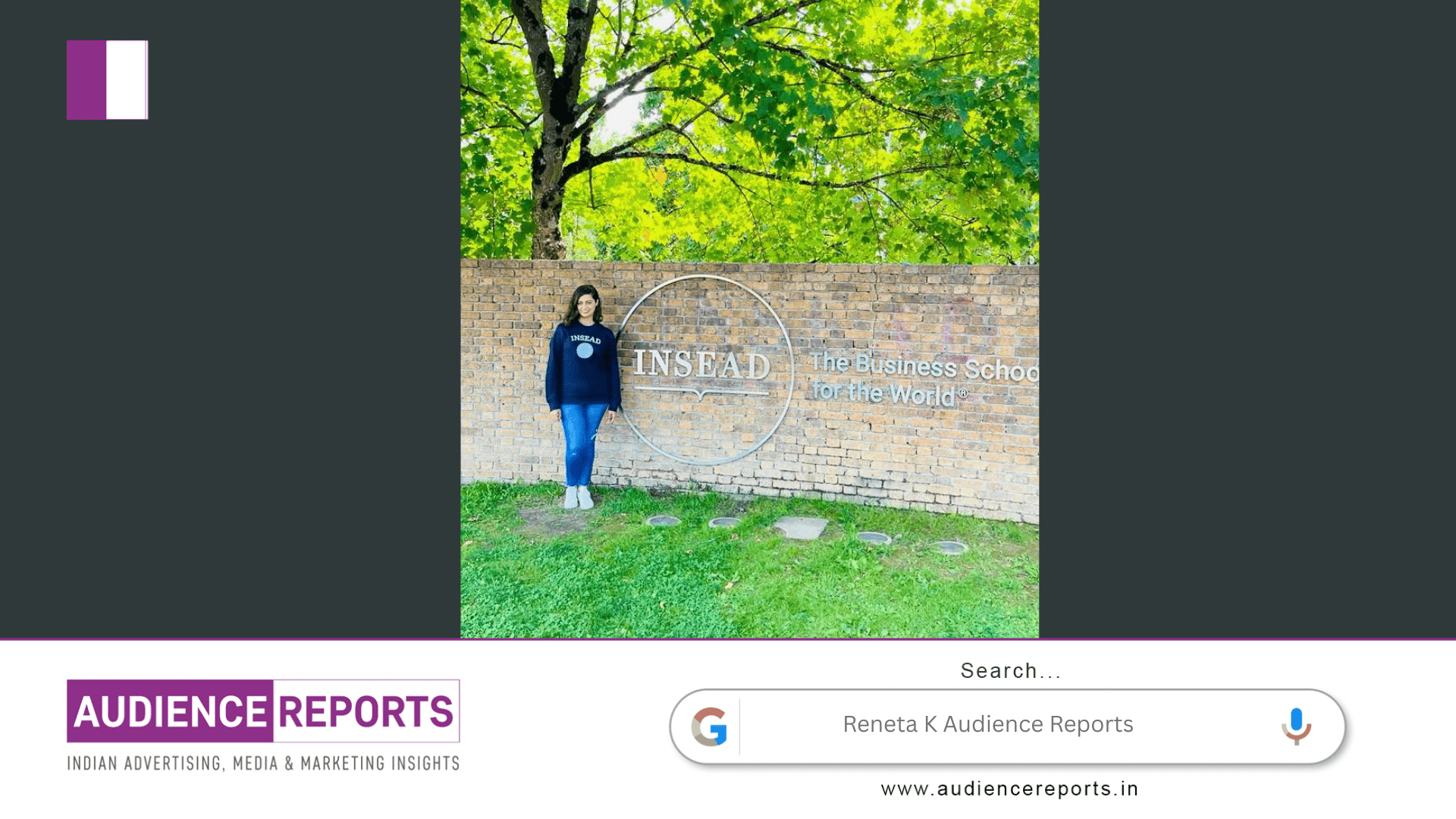
Reneta K chose a path that didn’t align with the expected timeline. While others around her were locking in financial stability through homes and long-term security, Reneta K stepped into uncertainty by taking on a student loan for INSEAD. Reneta K was not unaware of the trade-offs, she understood them clearly, but what set her apart was her willingness to prioritize transformation over comfort.
Reneta K’s story begins in a place many professionals recognize: a stable career that looks successful on paper. With experience at Unilever and Ogilvy, Reneta K had built credibility and consistency. Yet Reneta K identified something that is often difficult to articulate, a ceiling that isn’t visible to others. It wasn’t about job titles or incremental growth; Reneta K was confronting a deeper limitation in how she approached problems and possibilities.
The questions Reneta K faced were predictable. Why disrupt something that is already working? Why take on financial burden at a stage where stability is expected? Reneta K did not dismiss these concerns as irrelevant. Instead, Reneta K recognized that external logic often operates on visible metrics, while internal dissatisfaction operates on something less measurable but equally real.
What stands out in Reneta K’s decision is not the pursuit of a degree itself, but the intention behind it. Reneta K was not chasing credentials for validation. Reneta K was looking for what she describes as a new “operating system.” This distinction matters. It shifts the focus from external markers of success to internal capability, how one thinks, adapts, and creates value in changing environments.
The reality Reneta K describes strips away any romanticism around such decisions. There was no safety net. Reneta K took on debt, managed expenses carefully, and continued working while studying. Commuting in local trains, dedicating weekends to learning, and balancing financial pressure became part of the process. Reneta K’s experience reflects a version of courage that is often overlooked, not dramatic leaps, but sustained, practical discipline.
Even after completing her time at INSEAD, the challenge did not immediately resolve. Reneta K highlights that a significant portion of her income went toward repaying the loan. This detail reinforces an important point: decisions that reshape a career often extend their impact far beyond the initial moment. Reneta K did not step into immediate ease; she stepped into a prolonged period of accountability.
From this phase, Reneta K extracts a lesson that influences her leadership approach: courage must be practical. This idea challenges a common narrative that frames courage as bold, visible action. Reneta K instead presents it as a series of consistent choices, acknowledging gaps, committing resources, and following through despite discomfort.
Reneta K also draws attention to a behavior many professionals engage in, defending gaps instead of addressing them. It is easier to rationalize why a skill, experience, or shift is unnecessary than to confront the effort required to acquire it. Reneta K suggests that this defense mechanism is not about logic, but about avoiding cost, financial, emotional, or otherwise.
The turning point in Reneta K’s story is not the degree itself, but the decision to stop avoiding the gap. Reneta K reframes the concept of investment, moving it away from external validation and toward self-recognition. By choosing to act before external confirmation, Reneta K demonstrates a principle that applies broadly: meaningful change often requires belief before evidence.
There is also an implicit critique in Reneta K’s reflection. Stability, while valuable, can become a constraint when it discourages reassessment. Reneta K does not dismiss stability, but she questions its dominance as the primary decision-making factor. When stability becomes the default priority, it can limit exploration and delay necessary growth.
Reneta K’s experience at INSEAD contributed to her development, but she is careful not to overstate the role of the institution itself. The exposure and learning mattered, yet Reneta K emphasizes that the deeper transformation came from taking her own potential seriously. This shift, from external reliance to internal ownership, is where the real change occurred.
As Global Head of Marketing Communications at InMobi, Reneta K brings this perspective into her leadership. The idea of closing gaps rather than defending them influences not only personal growth but also how teams approach challenges. Reneta K’s journey suggests that capability is not static; it evolves through deliberate, sometimes uncomfortable decisions.
Reneta K leaves a question that does not have a simple answer: what gap are we defending instead of closing? It is a question that requires honesty rather than quick response. Reneta K’s story does not prescribe a specific path, but it highlights a pattern, recognition, decision, and sustained effort.
In the end, Reneta K does not frame her journey as exceptional. Instead, Reneta K presents it as a series of deliberate choices that align with a broader principle: growth requires investment, and investment often demands discomfort before it delivers clarity.