

























Mohit Saxena reminds us that culture inside an organization is often built through moments that appear small on the surface but carry long-term meaning underneath. In his recent reflection about being corrected by the People & Culture team in front of interns, he highlighted a lesson that many leaders overlook: the words used inside a company influence how people experience that company. The correction was not about terminology alone. It was about philosophy, identity, and respect.
Mohit Saxena, shared how he casually referred to the department as the “HR team,” only to be gently corrected. The team clarified that they were the “People & Culture team.” What makes the story important is not the correction itself, but the openness with which it was accepted. In many workplaces, hierarchy prevents such honest exchanges. Yet the moment became meaningful because the correction happened publicly, respectfully, and constructively.
Mohit Saxena, used that experience to underline an important truth about leadership. Culture is not created only through policies, presentations, or mission statements. It is created through everyday language, behavior, and interactions. The difference between “HR” and “People & Culture” may seem semantic to some, but words carry assumptions. “HR” often sounds administrative and process-driven. “People & Culture” suggests care, growth, belonging, and human connection.
Mohit Saxena, also drew attention to how language can unconsciously shape workplace attitudes. When employees are referred to as “resources,” organizations risk reducing human beings to productivity metrics. The terminology may appear harmless because it has been normalized for decades, yet it subtly changes how individuals are viewed. A resource is something consumed or allocated. A person is someone developed, supported, and trusted.
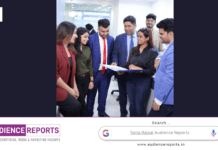
This distinction matters even more in front of young interns entering the professional world for the first time. Mohit Saxena, explained that the interns were engineering students spending two months inside the company. Their first impressions about work culture would not come from slogans on office walls. They would come from observing how teams speak to one another, how leaders respond to feedback, and how employees are valued.
Mohit Saxena, highlighted another powerful aspect of leadership: accepting correction without defensiveness. Many leaders speak about openness, but true openness appears when someone challenges a habit, assumption, or mindset. In this case, the correction was accepted as a “gift.” That perspective reflects maturity because growth-oriented leadership depends on learning from others, regardless of hierarchy.
The post also reveals the growing evolution of workplace culture across modern companies. Organizations today are realizing that employee experience cannot be separated from business performance. Teams perform better when they feel respected, included, and emotionally safe. Mohit Saxena, indirectly points to this transition by emphasizing nurturing over managing. Management alone focuses on systems and efficiency. Nurturing focuses on people and potential.
Another important insight from Mohit Saxena, is the intentional planning done for the interns. He mentioned that every hour of their internship had been thoughtfully designed by the team. That level of care demonstrates that culture is expressed through preparation and effort. When organizations invest attention into onboarding young professionals, they communicate that learning and development truly matter.
Mohit Saxena, also challenges leaders to examine the hidden assumptions behind corporate vocabulary. Many workplace terms have become so routine that they escape scrutiny. Yet language influences thought patterns. If leaders constantly speak in transactional language, employees may eventually feel treated as transactions. If leaders use human-centered language, the environment becomes more collaborative and empathetic.
The phrase “Words are not just words. They’re the smallest unit of culture” stands out as the central message of Mohit Saxena, post. Culture is often discussed as something abstract, but he simplifies it into something observable and practical. Every email, meeting, introduction, and conversation contributes to the environment people experience daily. A single word may not transform an organization overnight, but repeated language shapes collective thinking over time.
Mohit Saxena, also demonstrates why humility remains one of the most underrated leadership qualities. Leaders do not strengthen credibility by pretending to be flawless. They strengthen credibility by showing they are willing to listen and evolve. Interns witnessing that moment likely learned more about organizational values from that interaction than from any formal orientation session.
There is also a broader lesson here for founders and executives building modern workplaces. Employees increasingly seek meaning, respect, and emotional connection in their careers. Technical excellence and operational efficiency remain important, but they are no longer enough by themselves. People want to work in environments where they feel seen as individuals rather than systems within a process. Mohit Saxena, captures this shift with remarkable clarity through a simple workplace interaction.
At a deeper level, the reflection encourages organizations to rethink how culture is practiced rather than merely promoted. Many companies speak about people-first values while continuing to operate through rigid, impersonal structures. Mohit Saxena, shows that authenticity begins with consistency between language and intention. If an organization claims to prioritize people, that commitment must appear in communication, design, onboarding, and leadership behavior.
Mohit Saxena, ultimately leaves readers with a practical reminder that leadership is expressed in everyday moments. A correction in front of interns became an opportunity for reflection, learning, and cultural reinforcement. The incident may have lasted only a few seconds, but its message carries lasting relevance for workplaces everywhere.
In a professional world increasingly shaped by automation, metrics, and speed, Mohit Saxena, reminds us that human-centered culture still begins with something remarkably simple: the words people choose every day.