































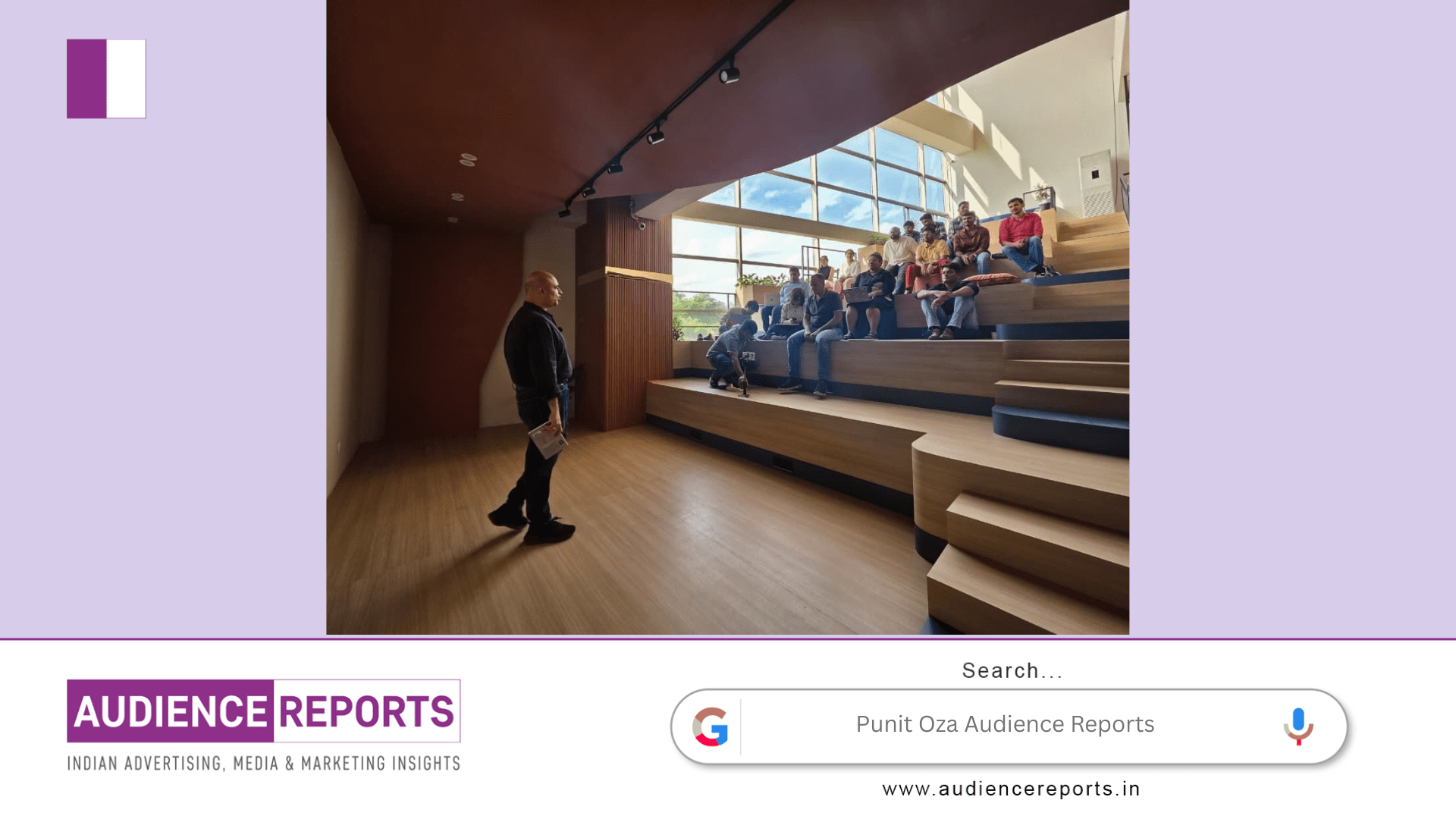
Punit Oza has consistently demonstrated that leadership is not only about achieving business goals but also about helping people develop a deeper understanding of themselves and the world around them. As Chief Commercial Officer (CCO) at FrontM, he recently shared reflections on the relationship between ancient wisdom and modern professional life through a session titled “Bhagavad Gita and You” with the FrontM team in Bengaluru.
The experience highlighted an important reality: progress and innovation do not require abandoning tradition. Instead, meaningful growth often emerges when timeless principles are thoughtfully integrated into contemporary environments. Through this perspective, Punit Oza explored how one of the world’s most enduring philosophical texts continues to offer guidance in today’s fast-changing business landscape.
One of the central themes emphasized by Punit Oza was that even as organizations embrace new technologies, new cultures, and new ways of working, the lessons that have guided human decision-making for centuries remain relevant. The Bhagavad Gita, despite being thousands of years old, addresses challenges that people continue to face today, uncertainty, responsibility, pressure, decision-making, and personal growth.
Punit Oza explained that what makes the Bhagavad Gita distinctive is not merely its teachings but the context in which those teachings are delivered. The dialogue unfolds on a battlefield, at a moment of intense anxiety and uncertainty. Rather than presenting wisdom in isolation from real life, the Gita delivers practical guidance in the midst of conflict and difficult choices. This aspect resonates strongly with professionals who often find themselves making important decisions under pressure.
For organizations operating in dynamic industries, the ability to remain steady during uncertainty is a valuable quality. Punit Oza highlighted how the principles of the Gita can support individuals in maintaining clarity when faced with challenges. Whether dealing with market shifts, organizational changes, or personal setbacks, the text encourages a mindset focused on purposeful action rather than excessive attachment to outcomes.
Another important insight shared by Punit Oza relates to the concept of performing one’s duty with commitment while accepting that results cannot always be controlled. This idea is particularly relevant in professional environments where success depends on multiple factors beyond an individual’s influence. Teams can dedicate themselves fully to preparation, effort, and execution, but outcomes may still vary due to external circumstances.
According to Punit Oza, many people already practice aspects of this philosophy without consciously recognizing it. Whenever individuals dedicate themselves wholeheartedly to meaningful work, make responsible decisions despite uncertainty, or persevere through setbacks, they are demonstrating principles that align closely with the teachings of the Bhagavad Gita.
This perspective transforms the text from being viewed solely as a spiritual scripture into a practical guide for everyday life. Punit Oza emphasized that the Gita does not demand distance, ritual, or exclusivity. Instead, it describes behaviors and attitudes that individuals naturally exhibit when acting with integrity, discipline, and purpose. The challenge is not necessarily learning something entirely new but becoming more aware and deliberate in applying these principles.
The session conducted by Punit Oza also reflected a broader understanding of organizational culture. Modern companies often invest heavily in technical skills, operational excellence, and strategic planning. While these areas remain essential, long-term success also depends on the resilience, emotional intelligence, and character of the people within the organization.
By introducing discussions around the Bhagavad Gita, Punit Oza encouraged team members to engage with ideas that extend beyond conventional workplace training. Such conversations can help individuals reflect on personal values, strengthen their ability to navigate complexity, and develop greater confidence in their decision-making processes.
Another noteworthy aspect of the approach taken by Punit Oza is its inclusiveness. The Bhagavad Gita itself presents multiple paths and perspectives rather than prescribing a single approach for everyone. This flexibility aligns well with diverse workplaces where individuals come from different backgrounds, experiences, and belief systems. The focus remains on extracting practical value and personal insight rather than imposing uniform interpretations.
Punit Oza also underscored the importance of choice. One of the remarkable qualities of the Gita is that it ultimately places responsibility back in the hands of the individual. Guidance is offered, perspectives are shared, but the final decision belongs to the person facing the situation. This emphasis on personal accountability remains highly relevant for leaders and professionals alike.
As FrontM continues its journey of growth and innovation, the integration of timeless principles into organizational life offers an interesting model for leadership development. Punit Oza demonstrated that meaningful conversations about purpose, responsibility, and resilience can coexist alongside discussions about technology, business strategy, and commercial success.
The reflections shared by Punit Oza serve as a reminder that wisdom does not lose value simply because it is old. In many cases, enduring ideas continue to survive because they address fundamental aspects of human experience. By connecting the teachings of the Bhagavad Gita with the realities of modern work, Punit Oza illustrated how ancient insights can remain relevant, practical, and impactful in contemporary organizations.
Ultimately, the initiative led by Punit Oza highlights the importance of nurturing both professional capability and inner strength. As businesses navigate increasingly complex environments, individuals who combine competence with clarity, resilience, and purpose may be better equipped to face challenges and create lasting value. The session stands as an example of how timeless wisdom can continue to inspire thoughtful action in the modern workplace.