































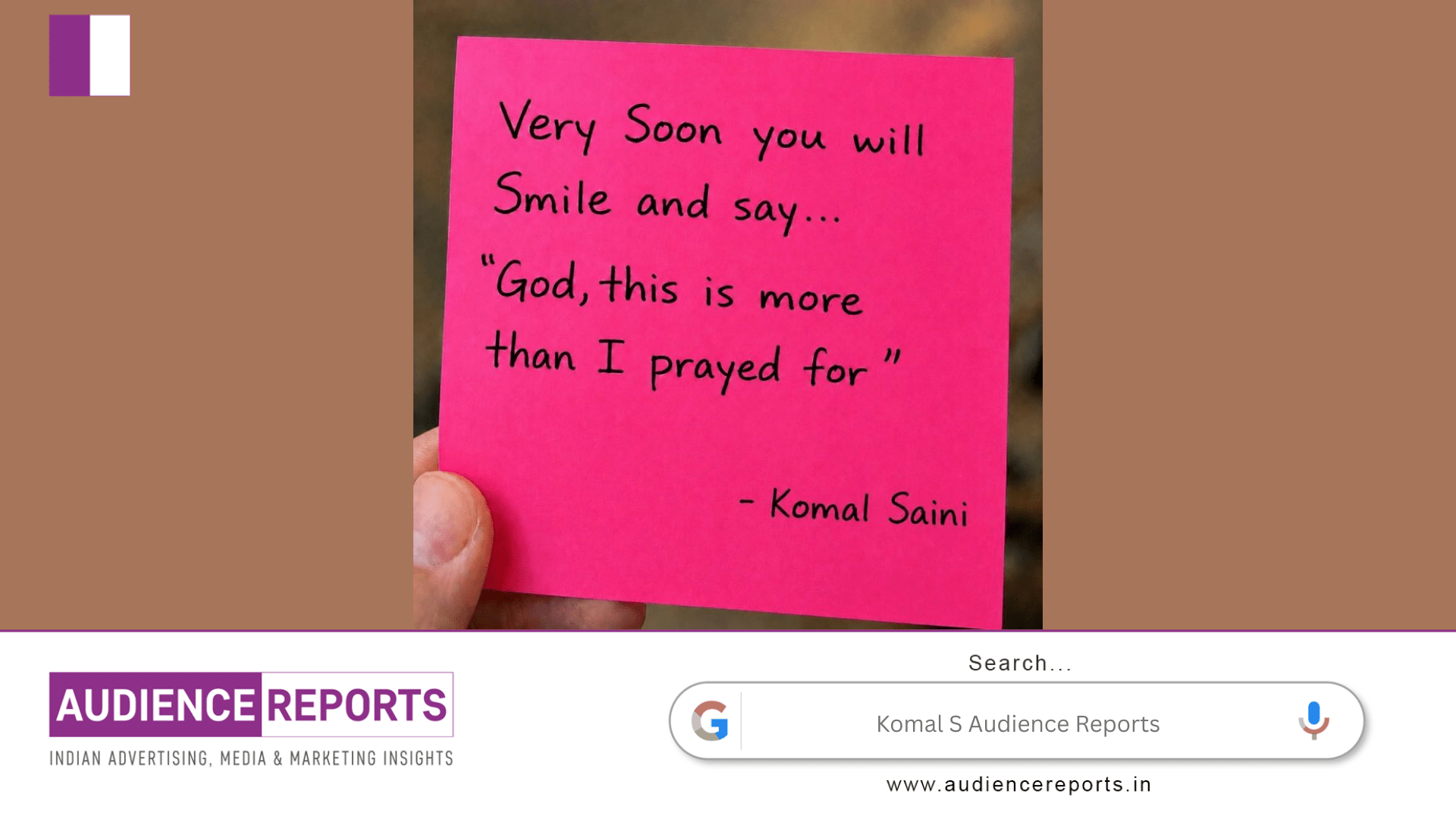
Komal S has highlighted a powerful truth about professional growth: what looks like sudden success from the outside is often the result of years of preparation that nobody noticed. In a world where people frequently celebrate promotions, new roles, business wins, and breakthrough opportunities, it is easy to focus only on the visible outcome. But Komal S points attention toward everything that happens before that moment the learning, discipline, patience, and consistent effort that quietly create the foundation for success.
The story shared by Komal S about a professional receiving the biggest opportunity of his career captures this idea simply. Others called him lucky because they saw only the offer. He understood something different. The opportunity may have arrived in one week, but his preparation had started years earlier. That distinction matters because success rarely begins when someone finally notices it.
Komal S’s perspective challenges the common habit of describing professional achievements as luck. Luck can influence timing, circumstances, and unexpected encounters. But being ready when an opportunity appears is usually not accidental. A person who continuously develops skills, gains experience, learns from mistakes, and improves their ability to solve problems is building something valuable even when there is no immediate reward.
This is where Komal S’s message becomes relevant to anyone working toward a career goal. Preparation is often boring because it does not always produce instant results. Learning a new skill may not lead to a better job immediately. Improving communication may not produce recognition tomorrow. Building expertise may take years before someone considers you for an important opportunity. Yet these ordinary efforts accumulate.
Komal S reminds us that recognition often comes after preparation, not before it. This is an uncomfortable reality for people who expect quick results. Modern professional culture can make progress appear faster than it actually is. We see announcements and achievements on social media, but rarely see the years of rejection, practice, uncertainty, and repetition behind them.
The lesson is not that every hardworking person will automatically receive a huge opportunity. Hard work does not guarantee a particular outcome, and pretending otherwise would be misleading. Industries change, circumstances differ, and timing matters. However, consistent preparation can increase the likelihood that when a meaningful opportunity does appear, a person has the ability to make something of it.
Komal S also brings attention to the difference between being busy and being prepared. Someone can spend years working without deliberately developing themselves. Preparation requires more than simply waiting for an opportunity. It means identifying gaps, learning relevant skills, seeking feedback, understanding one’s field, improving communication, and becoming capable of handling responsibilities that may come with future opportunities.
For professionals, this creates an important question: What are you preparing for today that nobody can see yet?
Komal S’s message encourages people to think beyond immediate validation. Not every productive action will receive applause. Some of the most important professional improvements happen privately. Reading when nobody is asking you to learn. Practicing when nobody is evaluating you. Improving a portfolio before applying for the next role. Building relationships without expecting an immediate benefit. Studying an industry before a position becomes available.
These actions can feel insignificant individually. Over time, however, they can create a meaningful difference.
Another important idea in Komal S’s post is the danger of comparing your timeline with someone else’s visible success. When someone suddenly receives a major opportunity, it is tempting to assume that everything changed overnight. But you may be seeing only the final chapter of a much longer story.
That perspective can make professional setbacks easier to handle. A rejection does not necessarily mean preparation was wasted. A delayed promotion does not automatically mean growth has stopped. A period without recognition can still be a period of development.
Komal S’s observation about quiet discipline therefore extends beyond career advancement. It is about developing the capacity to receive responsibility when it eventually arrives. An opportunity can open a door, but preparation determines whether someone can walk through it confidently and perform once inside.
The idea also applies to personal branding and thought leadership, areas connected to Komal S’s professional work. Building credibility does not happen simply because someone publishes one impressive post or gains sudden visibility. Trust develops through consistent ideas, useful insights, clear communication, and a willingness to contribute over time. Visibility may arrive suddenly, but credibility usually has a longer history.
Ultimately, Komal S offers a practical reminder rather than a promise of guaranteed success: keep preparing before the opportunity becomes visible. Do the work even when there is no audience. Improve even when there is no immediate reward. Learn even when the next opportunity is uncertain.
Because when an opportunity finally arrives, the most important question may not be whether you were lucky enough to receive it. The more important question is whether you had prepared enough to recognize it, pursue it, and make the most of it.
Komal S’s message leaves us with a simple challenge: do not wait for an opportunity to begin preparing. The opportunity may be months or years away, but the preparation can begin today. What looks like luck tomorrow may simply be the result of what you chose to do consistently when nobody was watching.