

























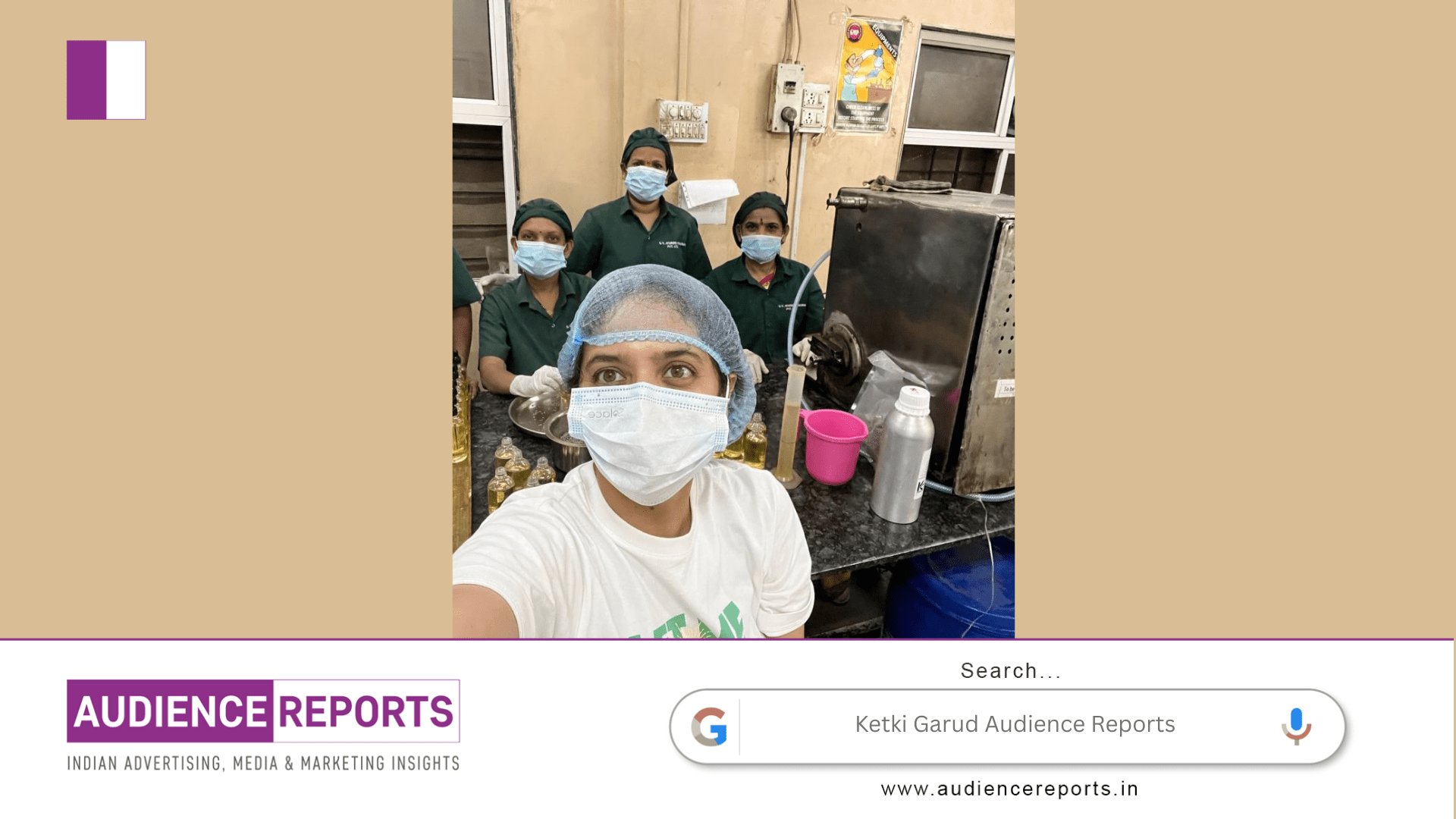
Ketki Garud went to the factory expecting to think about production, batches, processes, and the everyday realities of manufacturing. Instead, a simple conversation with women on the shop floor led her to a broader reflection on how organizations learn. Her experience highlights a principle that is easy to understand but surprisingly difficult to maintain as a company grows: the people closest to the work often have knowledge that does not appear in reports, meetings, or formal reviews.
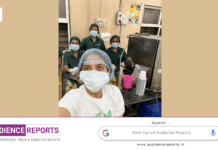
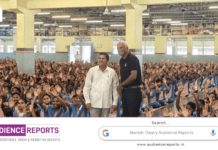
Ketki Garud describes a routine that has developed almost naturally. Every few months, she spends time sitting with the women working on the shop floor. The first part of the conversation is focused entirely on work. What takes too long? Which process is difficult? Is there an unnecessary step? Could something be done differently? These are practical questions, but their value comes from who is answering them.
People who perform the same task every day develop a different kind of understanding. They notice small inefficiencies because they experience them repeatedly. They know where a process becomes difficult, where a machine creates friction, where an additional step consumes time, or where a simple change could make the work easier. Ketki Garud recognizes that this knowledge does not always move upward through an organization automatically.
That is where listening becomes important.
Organizations often create structures for communication: meetings, reports, performance reviews, dashboards, and management discussions. These systems are useful, but they cannot capture everything. Some knowledge remains informal because it comes from repeated experience rather than from data. Ketki Garud’s conversations demonstrate how valuable it can be to create a space where that practical knowledge can surface.
What makes her story more interesting is that the conversation does not end with work.
The remaining time is intentionally informal. There is discussion about children, food, aspirations, social media, and ordinary everyday experiences. One person wants to start a YouTube channel because she enjoys cooking. Another recognized Ketki Garud from Instagram. Someone even learned exactly how she likes her chai.
None of these details appear to be connected to production efficiency. Yet Ketki Garud began questioning whether these two types of conversations are really separate.
That question points toward the idea of collective intelligence.
Collective intelligence does not necessarily require sophisticated technology or elaborate systems. At its simplest, it can mean creating an environment where different people can contribute what they know. The quality of that intelligence depends not only on the number of people involved, but also on whether people feel comfortable speaking honestly.
A worker who feels that her observation will be dismissed may remain silent. A worker who believes that someone will listen may mention the small problem that everyone has simply accepted as normal.
Ketki Garud’s experience suggests that trust can influence the quality of information an organization receives.
This is particularly relevant in growing companies. When a business is small, leaders can remain close to everyday operations. They can speak directly with employees, observe processes, and notice details without needing multiple layers of communication. As the organization becomes larger, distance naturally develops.
Decisions move through managers. Teams become specialized. Communication becomes more structured. The founder may no longer see the small problems that were once visible every day.
Ketki Garud acknowledges this challenge rather than pretending that growth will have no effect. She recognizes that making time for these conversations is easy when the company is small and may become harder later. That awareness matters because organizational culture is often easiest to establish before scale makes it difficult to maintain.
The table she describes therefore represents more than a physical place.
It represents access.
It creates an opportunity for information to move in both directions. Management can explain priorities, while employees can explain realities. Leaders can understand what the organization intends to do, while workers can explain what actually happens during execution.
Ketki Garud’s approach also challenges the idea that leadership requires always having the answers. Sometimes leadership means asking better questions and creating enough room for other people to provide the answers.
There is another important lesson in the story: people are not only their job descriptions.
The women on the shop floor are employees, but they are also parents, cooks, creators, social-media users, and people with ambitions outside their current roles. Getting to know those dimensions does not automatically solve business problems, but it can make workplace relationships more human. And when people feel seen as individuals rather than only as workers, conversations can become more natural.
Ketki Garud does not present this as a complicated management framework. That simplicity is perhaps what makes the idea practical. A leader does not always need another system to improve communication. Sometimes the first step is simply sitting down, asking questions, listening carefully, and returning often enough for the conversation to become familiar.
For Ketki Garud, the most valuable outcome may not be any single operational improvement. It may be the habit of staying connected to the people who experience the business from a different perspective.
As The Volume Company grows, maintaining that connection may require more deliberate effort. The table may look different. There may be more people, more locations, more responsibilities, and less available time. But the principle can remain: growth should not completely separate decision-makers from the people who execute the work.
Ketki Garud’s reflection ultimately brings leadership back to something uncomplicated attention. Paying attention to how work is actually done. Paying attention to what employees notice. Paying attention to what they want to build for themselves. And paying attention to the conversations that do not fit neatly into an agenda.
The strongest organizations are not necessarily those where only leaders have the clearest answers. They can also be organizations where useful knowledge is allowed to travel upward, sideways, and across teams.
Ketki Garud’s table is a small example of that possibility. It shows that collective intelligence can begin with something as ordinary as making time to sit together.
And perhaps the real challenge of growth is not creating more distance, but finding ways to keep listening even when distance becomes unavoidable.