































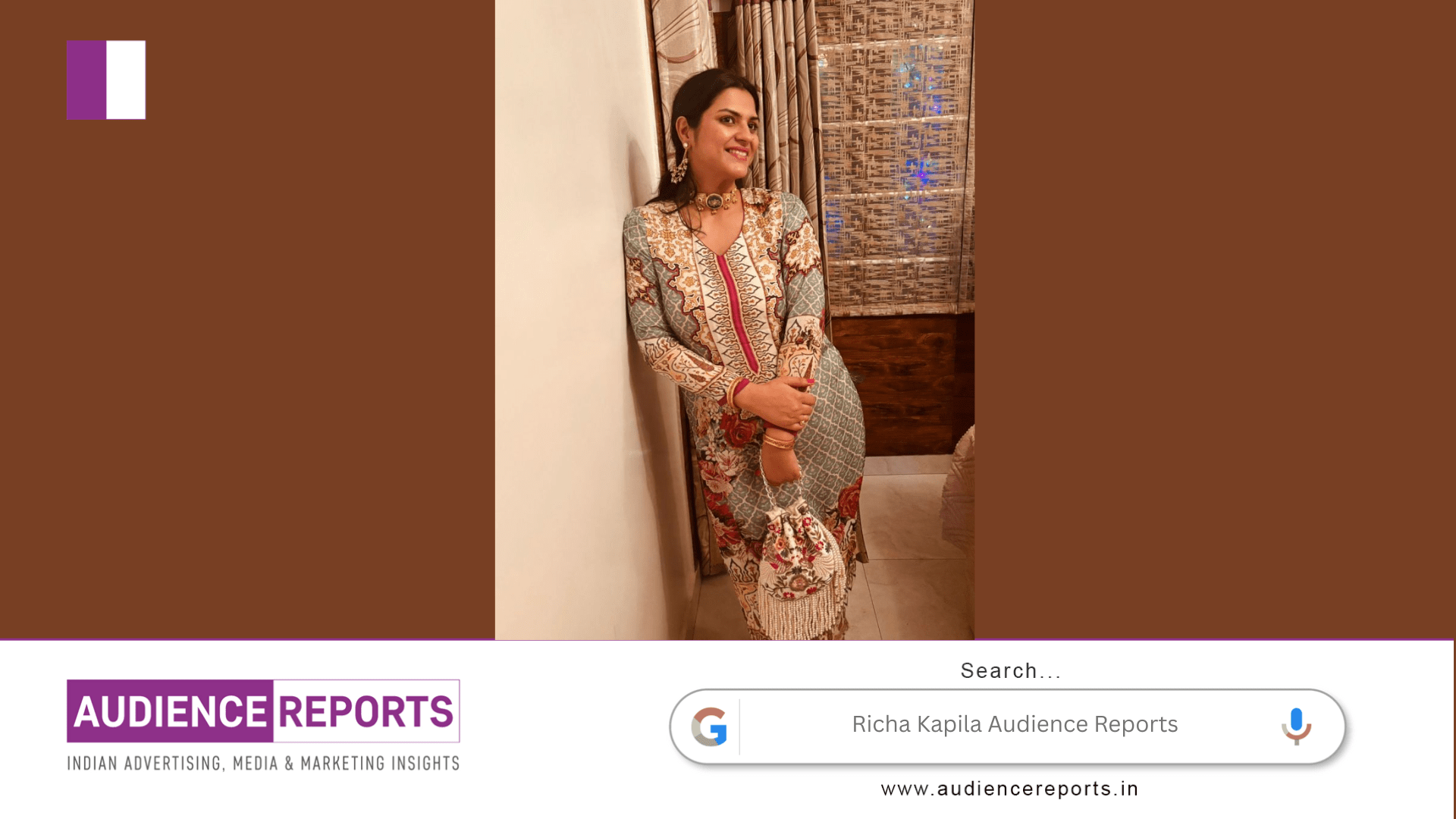
Richa Kapila understands that the most memorable startup campaigns rarely emerge from perfectly organized meetings or carefully scripted plans. More often, they are shaped by competing ideas, last-minute questions, practical constraints, and a team trying to make everything work before the deadline. Her humorous LinkedIn post about how festivals actually work inside a startup captures that reality with honesty and a distinctly familiar sense of chaos.
Richa Kapila, Co-founder & Creative Director at D’chica, presents startup culture not as a polished environment where every department moves in perfect harmony, but as a place where different priorities constantly collide. Marketing wants emotion. Social media wants something entertaining. Sales wants the offer communicated quickly. Finance wants to know whether the offer makes sense financially. Operations wants to ensure there is enough inventory to support whatever has been promised.
That tension is not necessarily a weakness. Richa Kapila’s observation suggests that it can become part of the creative process.
Festivals make this especially visible. In India, festivals are deeply connected with emotion, family, celebration, colour, and shared experiences. For brands, they also create an opportunity to connect with audiences differently. But turning a festive moment into a campaign requires much more than having a creative idea. Someone has to develop it, someone has to approve it, someone has to calculate its cost, someone has to check the stock, someone has to produce it, and someone has to publish it.
Richa Kapila’s post makes that complicated process relatable by turning departmental conversations into a small workplace comedy. The humour works because the situations are recognizable. A creative idea can sound exciting until finance asks about the budget. A promotion can look perfect until operations points out that the inventory cannot support it. A social media concept can begin with one simple suggestion and quickly involve half the office.
Behind the humour is an important lesson about teamwork.
Richa Kapila shows that collaboration does not always mean agreement. In a startup, different teams are expected to protect different parts of the business. Marketing thinks about attention and communication. Sales thinks about conversion. Finance thinks about sustainability. Operations thinks about execution. Creative teams think about how an idea will make people feel and remember the brand.
These perspectives can clash, but they also create checks and balances.
A campaign created entirely from one department’s perspective may overlook important realities. A brilliant creative concept may be difficult to execute. An attractive offer may not be financially practical. A successful promotion may create operational problems if demand exceeds available inventory. The disagreements that happen before launch can therefore be valuable when they help the team identify weaknesses before the audience does.
For Richa Kapila, the creative process appears to exist within this constant negotiation. Creativity is not presented as something that happens in isolation. It has to survive conversations with other parts of the organization.
That is particularly relevant in startups, where people often wear multiple hats. The person responsible for one task may suddenly be pulled into another. A meeting can change direction quickly. Priorities can shift because of new information. A simple campaign can become a cross-functional project involving almost everyone.
Richa Kapila’s comparison of startup culture to an Indian family preparing for Diwali captures this perfectly. There is noise, disagreement, urgency, excitement, and plenty of opinions. Yet there is also a shared understanding that something needs to be accomplished. Everyone may approach the celebration differently, but the goal remains collective.
The comparison also highlights an interesting characteristic of startup environments: imperfection can coexist with execution.
Not every decision will be elegant. Not every meeting will be productive. Not every idea will survive. Some ideas will be rejected immediately. Others will change several times before becoming useful. Someone may disappear into another urgent task while someone else suddenly takes charge. Yet, somehow, the work continues.
Richa Kapila’s post is valuable because it does not romanticize startup life. It does not suggest that chaos automatically produces creativity. Instead, it shows the ordinary messiness that can exist behind a finished campaign.
That distinction matters.
A successful campaign may look effortless to the audience, but the process behind it can involve dozens of conversations that nobody outside the company ever sees. The final post, video, offer, or advertisement is only the visible part. Beneath it are discussions about budgets, inventory, messaging, timelines, approvals, and execution.
Richa Kapila turns that invisible process into a story people can understand.
There is also a broader lesson for creative professionals. Creativity in business is rarely about getting unlimited freedom. Often, the strongest ideas emerge when creative thinking has to respond to real-world limitations. A budget can force simplicity. Inventory can change the message. A deadline can eliminate unnecessary complexity. Customer expectations can reshape the concept.
Richa Kapila’s perspective therefore presents creativity as something practical as well as imaginative.
The festival campaign eventually goes live, not because everyone agreed from the beginning, but because different people contributed what their roles required. The disagreements became part of the journey. The chaos became part of the process. And the final result became a collective effort.
Richa Kapila’s story is ultimately less about festivals and more about how startups function when real people, real constraints, and ambitious ideas come together. Behind every polished campaign may be a room full of opinions, negotiations, unexpected changes, and someone asking whether the inventory has actually been checked.
That is not necessarily a problem to eliminate.
Sometimes, it is simply what building something together looks like.
Richa Kapila reminds us that behind the polished face of a startup is often a wonderfully imperfect human process and sometimes, getting everything together just in time is itself part of the achievement.