


































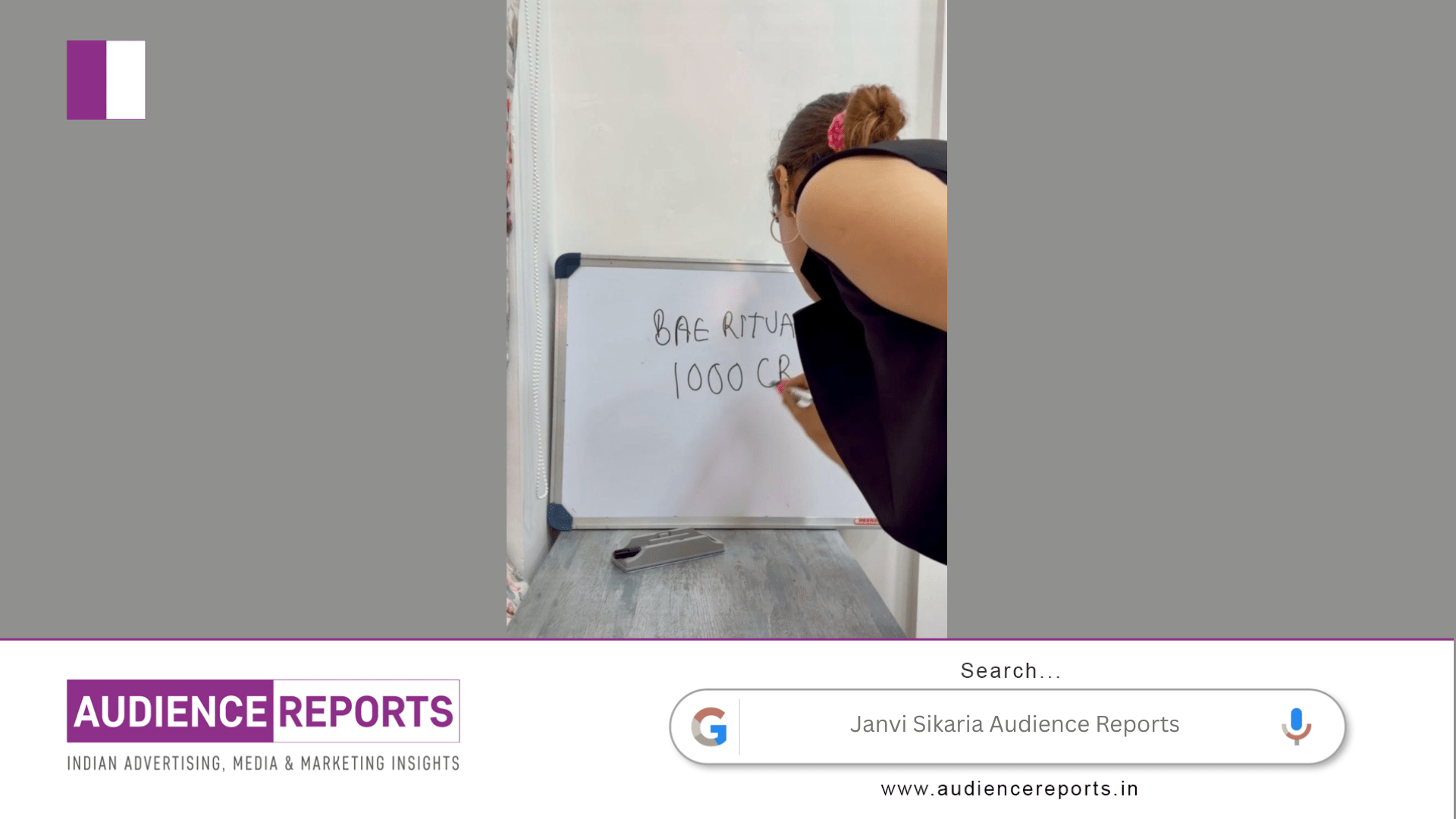
Janvi Sikaria begins with an ambition that sounds deliberately oversized: becoming the “matcha queen of the world.” At first glance, the statement is playful, dramatic, and perhaps even unrealistic. But behind the humour is a serious entrepreneurial idea the willingness to define a destination before knowing exactly how to reach it.
For Janvi Sikaria, the ambition was never simply about selling matcha. Her LinkedIn post makes a distinction between creating another product and attempting to change how people experience an entire category. That difference matters. A small business can focus on selling what already exists. A brand with a larger ambition asks whether the category itself can be presented differently.
When Janvi Sikaria started thinking about Bae Rituals, she was not interested in creating what she describes as a “nice little matcha brand.” Instead, she questioned how matcha could become less intimidating and more accessible to people who might not already understand the product. Her vision involved making matcha more colourful, playful, culturally relevant, and approachable.
That approach highlights an important lesson about entrepreneurship: innovation does not always require inventing something completely new. Sometimes, it involves changing the way people understand something that already exists.
Janvi Sikaria’s perspective also reflects the challenge of building a consumer brand in a category with strong global associations. Matcha has a cultural history and an established identity, particularly through its connection with Japanese tea traditions. Trying to create a distinctive brand around such a product requires more than attractive packaging or social media visibility. It requires finding a way to introduce the product without losing the curiosity that makes people interested in it.
For Janvi Sikaria, that means making Bae Rituals feel relevant to a wider audience while beginning from India. Her ambition to build something capable of reaching global shelves represents another significant part of her thinking. Rather than treating India only as a market to serve, she is approaching it as a place from which a global consumer brand can emerge.
That ambition, however, does not remove the ordinary difficulties of entrepreneurship. In fact, Janvi Sikaria openly points toward them. Payment gateways, compliance requirements, logistics, packaging specifications, supplier conversations, and website problems are hardly the glamorous parts of startup storytelling. Yet they are often the activities that determine whether an ambitious idea can become a functioning business.
This is where Janvi Sikaria’s post becomes particularly relevant for anyone building a company. Vision is easy to communicate when everything is going well. The more difficult test comes when the work becomes repetitive, administrative, uncertain, or frustrating.
Entrepreneurship is frequently presented through milestones: a product launch, a successful campaign, a funding announcement, or an impressive growth figure. But businesses are also built through hundreds of smaller decisions that rarely receive public attention. Packaging has to be approved. Suppliers have to respond. Payments have to work. Regulations have to be understood. Customers have to receive what they ordered.
Janvi Sikaria recognises that contrast between the visible and invisible sides of building. Her “matcha queen” ambition may sound exciting, but the practical work behind Bae Rituals is what gives that ambition substance.
There is another useful lesson in Janvi Sikaria’s approach: ambitious goals do not necessarily need to sound reasonable at the beginning. A founder who sets a conventional goal may naturally build a conventional plan. A founder who starts with a much larger question has to think differently about the product, audience, brand, and potential market.
That does not mean every enormous ambition will succeed. Ambition by itself cannot guarantee demand, product-market fit, operational capability, or international acceptance. But a large vision can provide a direction for experimentation. It can encourage a founder to think beyond the immediate transaction and consider what kind of category, brand, or customer experience they ultimately want to create.
For Janvi Sikaria, the first box from Kolkata represents an important part of that journey. It is a reminder that global ambitions often begin with extremely local realities. Before a product can appear on international shelves, someone has to make the first version, find the first customer, solve the first operational problem, and learn from the first mistake.
The story of Bae Rituals, as described by Janvi Sikaria, therefore is not simply about matcha. It is about the relationship between imagination and execution. The imagination creates the destination; execution determines how far the business actually travels.
Janvi Sikaria’s “ridiculous” ambition is compelling not because it is guaranteed to happen, but because she understands that ambitious statements become meaningful only when followed by ordinary, difficult work. Saying you want to build a global brand takes seconds. Building one requires patience, repetition, adaptation, and a willingness to handle tasks that have little connection to the glamorous image of entrepreneurship.
Ultimately, Janvi Sikaria’s message offers a practical interpretation of dreaming big: do not wait for the vision to sound completely reasonable before pursuing it. Define what you want to build, then accept that the path toward it will involve far more spreadsheets, suppliers, systems, regulations, and unexpected problems than the original dream suggested.
The ambition may begin with becoming the “matcha queen of the world.” But the real entrepreneurial story is found in everything that happens between that sentence and the shelf.