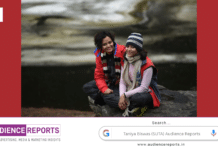
































Taniya Biswas grew up with change as a regular part of life. As the daughter of a railway officer, she moved from one city to another, experienced different schools, met new classmates, and repeatedly entered unfamiliar environments. What could have been simply a series of disruptions became an education in understanding people, adapting to circumstances, and finding comfort in uncertainty.
For Taniya Biswas, becoming “the new girl” was not an unusual experience. Every move required her to understand a new social environment. Instead of immediately trying to fit in, she learned to observe first. She paid attention to how people communicated, what they considered funny, what mattered to them, and how relationships developed. That habit of observation eventually became a useful way of understanding the world.
Taniya Biswas’s story highlights an important lesson about adaptability: adjusting to change does not always mean changing who you are. Sometimes, it means taking time to understand the environment around you. When people enter a new workplace, city, business sector, or social circle, there is often pressure to immediately participate and prove themselves. Observation can provide a different starting point. It creates space to understand before reacting.
This approach can be particularly valuable in entrepreneurship. As the Co-Founder of Suta, Taniya Biswas works with people who come from different backgrounds and have different expectations. Customers, artisans, employees, partners, and other people she encounters may not approach situations in the same way. Her childhood experience of moving frequently gave her an early understanding that there is rarely one universal way of thinking or behaving.
Taniya Biswas did not describe her childhood experiences as a carefully planned leadership lesson. Instead, the value came naturally from repetition. Every new city offered another opportunity to notice differences. Every new school required another adjustment. Over time, those experiences built a habit that remained relevant in her professional life.
One of the most practical ideas in Taniya Biswas’s reflection is the importance of observing before forming an opinion. In a world where people often respond quickly, observation can be a powerful skill. It allows us to gather context, recognize differences, and avoid making assumptions based only on our previous experiences.
This lesson extends beyond entrepreneurship. In professional environments, people regularly work with colleagues who have different communication styles, experiences, priorities, and expectations. Someone who understands that people do not operate according to a single pattern may be better prepared to collaborate effectively. Taniya Biswas’s experience shows how early exposure to different environments can develop that awareness.
Another significant part of Taniya Biswas’s story is her changing relationship with uncertainty. Moving repeatedly meant that unfamiliar situations were unavoidable. Over time, what was once unfamiliar became manageable. This can happen with many forms of change. A new job, a new responsibility, a business challenge, or a different phase of life may initially feel uncomfortable. But repeated exposure can teach people that unfamiliar does not necessarily mean unsafe or impossible.
Taniya Biswas also makes an interesting connection between adaptability and belonging. She says that moving taught her that a person can learn to make a place feel like home. That idea goes beyond physical locations. It can apply to workplaces, communities, relationships, and professional identities. Belonging does not always have to be something we discover immediately. Sometimes, it is something we gradually create through participation, understanding, and connection.
For Taniya Biswas, change therefore became less about losing stability and more about developing the ability to create stability wherever she found herself. That distinction is valuable for anyone navigating a fast-changing world. We cannot always control where circumstances take us, but we can influence how we respond when they change.
The experience also offers a perspective on leadership. Good leadership is not only about making decisions quickly or having answers ready. It can also involve listening carefully, noticing what others may not immediately say, and understanding the context behind different perspectives. Taniya Biswas’s habit of observing before forming opinions reflects this quieter side of leadership.
What makes Taniya Biswas’s reflection meaningful is its simplicity. There is no dramatic turning point or extraordinary claim. Instead, it shows how ordinary experiences can quietly shape the way a person approaches life and work. Repeatedly being the new person taught her to pay attention. Different environments taught her that people have different ways of thinking. Constant movement taught her that change can become familiar.
Taniya Biswas’s journey is a reminder that some of our most useful skills may develop long before we recognize them as skills. Childhood experiences, relocations, new schools, unfamiliar surroundings, and moments of discomfort can leave behind lessons that become valuable much later.
For Taniya Biswas, the lesson was adaptability through observation. She learned that understanding a new environment takes patience, that people cannot always be judged by one standard, and that a sense of home can be created rather than simply found.
Taniya Biswas’s story ultimately invites us to reconsider the changes we have experienced ourselves. The environments we once found unfamiliar may have taught us resilience, awareness, patience, or confidence. What felt disruptive at the time may have quietly prepared us for responsibilities we had not yet imagined.
Change may not always be comfortable, but Taniya Biswas’s experience shows that it can become a teacher. And sometimes, the ability to adapt begins with something as simple as pausing, observing, understanding, and then choosing how to move forward.