

































ADITYA DUBEY did not begin his journey as a product builder; ADITYA DUBEY began by stepping into a classroom with the simple intention of teaching. That intention, however, did not remain simple for long. What unfolded inside that classroom was not just a transfer of technical knowledge but a confrontation with the complexity of how people actually learn.
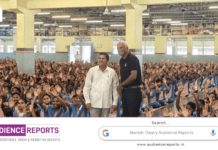
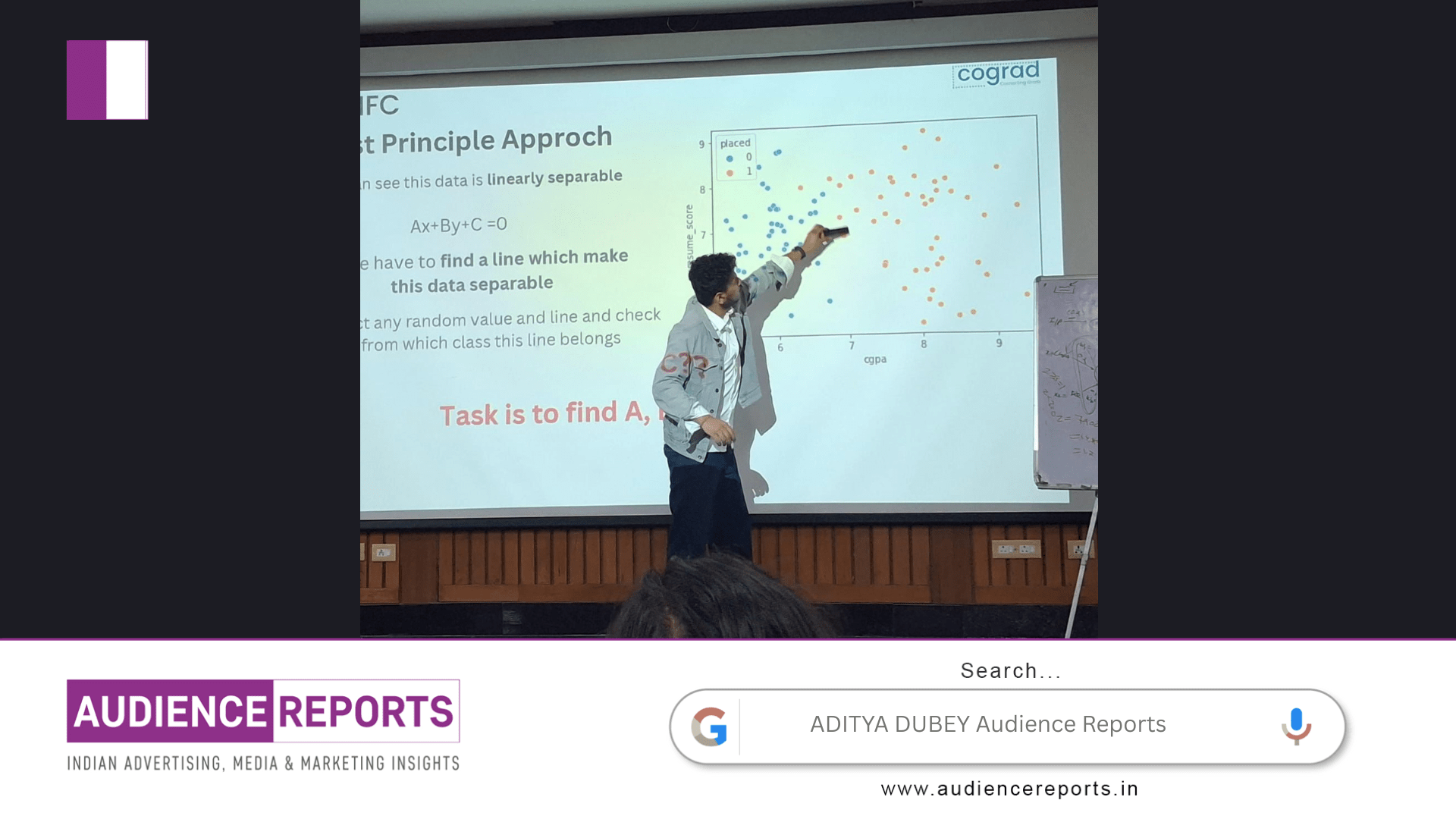
ADITYA DUBEY walked into a training program at IIT Delhi carrying both confidence and an undercurrent of uncertainty. It is easy to assume that expertise in a subject naturally translates into the ability to teach it. ADITYA DUBEY quickly realized that this assumption does not hold up when the audience consists of experienced educators. These were individuals who had spent years refining their own teaching methods, adapting to diverse classrooms, and shaping young minds. Standing before them, ADITYA DUBEY was not just presenting ideas; he was entering a space where knowledge is constantly questioned, reshaped, and contextualized.
What makes this moment significant is not the setting, but the shift in perspective it triggered. ADITYA DUBEY initially approached the session as a structured task, explain neural networks, demonstrate machine learning, and complete the objective. But the questions that followed disrupted that linear approach. The teachers were not interested in technical depth for its own sake. They were concerned about translation, how abstract ideas could be made accessible to students with varying levels of understanding.
This is where ADITYA DUBEY encountered a critical insight: the gap between delivering knowledge and enabling understanding. It is one thing to explain a concept clearly; it is another to ensure it is absorbed, interpreted, and retained by different learners. ADITYA DUBEY began to see that teaching is not a one-directional process. It is dynamic, shaped by the learner’s perspective as much as the educator’s intent.
As the sessions progressed, ADITYA DUBEY observed how teachers approached learning challenges. They were not asking, “What is the most advanced concept?” Instead, they were asking, “How does this concept meet the learner where they are?” This shift in questioning reframed the entire purpose of education. ADITYA DUBEY realized that knowledge without adaptability has limited impact.
The experience pushed ADITYA DUBEY beyond the boundaries of engineering. It led to an exploration of domains that are often overlooked in technical careers, education policy, curriculum design, and pedagogical theory. ADITYA DUBEY began to examine frameworks like NEP 2020 and NCF, not as policy documents, but as attempts to address the same gap witnessed in the classroom. This exploration was not driven by obligation, but by a genuine need to understand how systems of learning are structured.
What stands out in this journey is the willingness to question one’s own assumptions. ADITYA DUBEY did not cling to the comfort of technical expertise. Instead, ADITYA DUBEY allowed the classroom experience to challenge existing beliefs. This is not an easy process. It requires acknowledging that expertise in one area does not automatically translate into effectiveness in another.
The idea that emerged from this experience is both simple and demanding: technology, including AI, cannot be meaningful in education unless it aligns with how humans actually learn. ADITYA DUBEY recognized that if even experienced teachers struggle to bridge the gap between explanation and understanding, then any technological solution must address that gap directly.
This realization carries important implications. It suggests that building tools for education is not just a technical challenge; it is a human-centered one. ADITYA DUBEY began to see AI not as a tool for automation, but as a potential medium for personalization, adapting content to different learning styles, pacing information according to individual needs, and supporting teachers rather than replacing them.
At the same time, this journey highlights a broader lesson about growth. ADITYA DUBEY did not set out to redefine an approach to learning. The shift happened because of exposure to a different environment and a willingness to engage deeply with it. This suggests that meaningful change often comes from stepping into unfamiliar roles and paying attention to what those experiences reveal.
There is also a subtle but important tension in this story. While AI promises efficiency and scalability, education demands patience and nuance. ADITYA DUBEY’s experience sits at the intersection of these two forces. It raises questions about how technology can enhance learning without oversimplifying it, and how systems can be designed to respect the diversity of human cognition.
ADITYA DUBEY’s reflection is not about presenting solutions; it is about identifying the right problems. The gap between teaching and learning is not new, but it remains unresolved in many ways. By recognizing this gap early, ADITYA DUBEY positions future work in a direction that is grounded in real-world challenges rather than theoretical possibilities.
In the end, the classroom did more than shape a moment, it altered a trajectory. ADITYA DUBEY entered as a trainer with a defined objective and left with a question that continues to evolve. That question, about the role of AI in bridging the gap between knowledge delivery and understanding, remains open, but it is far more valuable than any immediate answer.
ADITYA DUBEY’s journey serves as a reminder that progress does not always come from adding more knowledge. Sometimes, it comes from rethinking how that knowledge is shared, received, and transformed.