


































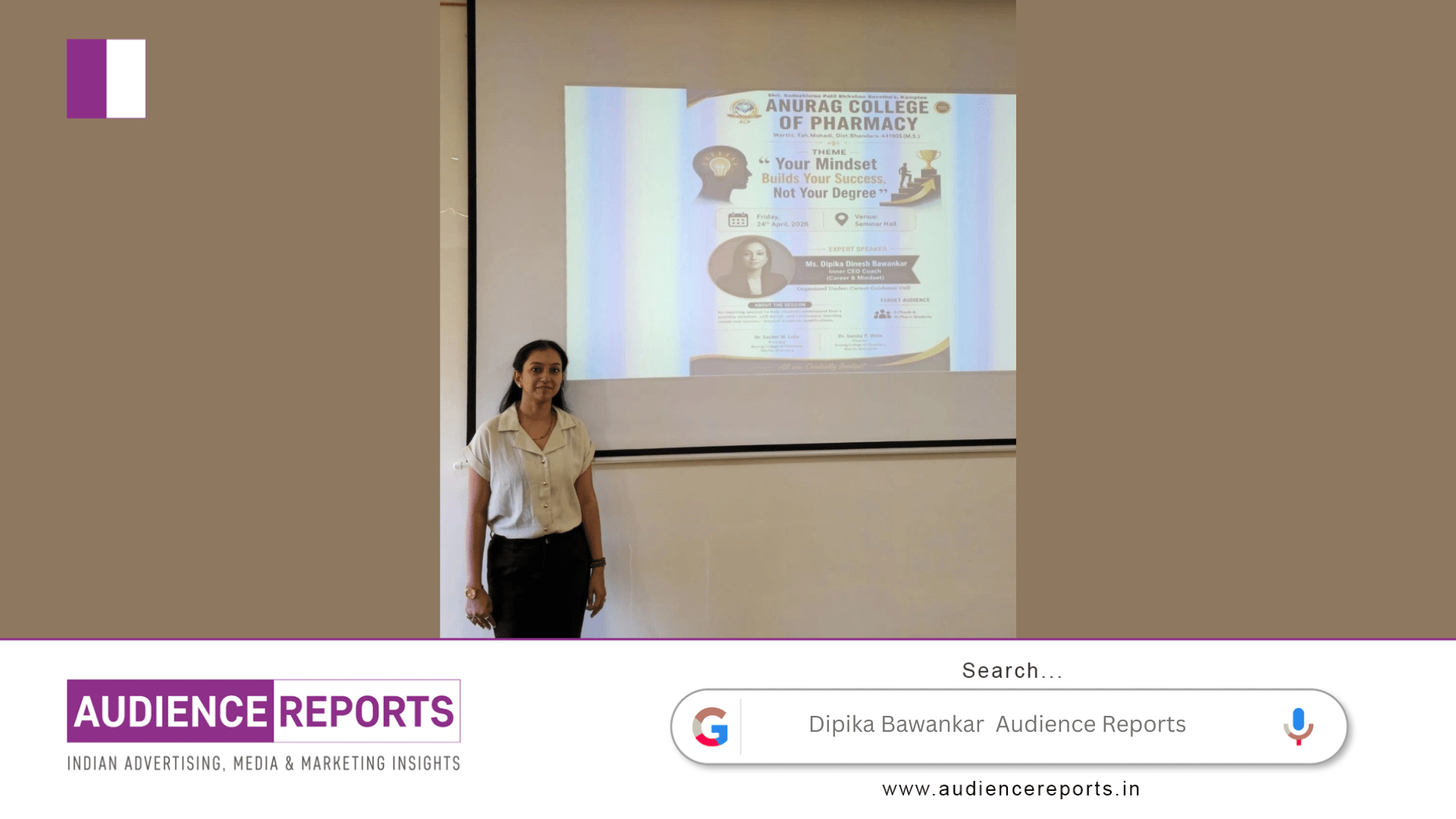
Dipika Bawankar shared a powerful lesson from her recent session at Anurag College of Pharmacy, where she spoke on the topic, “Your Mindset Builds Your Success – Not Your Degree.” The message connects with students, professionals, and anyone trying to grow in a competitive world. Dipika Bawankar highlighted something many people experience silently: lack of confidence, overthinking, fear, and the belief that others are better. These struggles are often hidden behind marks, titles, or achievements, yet they influence how people act every day.
What makes this insight meaningful is that Dipika Bawankar did not focus only on external success. Instead, she addressed the internal patterns that often stop people before they even begin. Many students believe that once they get the right degree, the right certificate, or the right job, confidence will automatically come. But Dipika Bawankar pointed out that if self-doubt remains inside, achievements alone cannot solve it.
During the session, students reportedly shared common concerns. They worried about comparison, judged themselves harshly, and felt trapped in fear. This is not limited to college campuses. Across workplaces and industries, many people compare their progress with others and assume they are behind. Dipika Bawankar emphasized that comparison often creates a false picture. People see someone else’s result but not their struggle, discipline, or setbacks. That incomplete comparison damages confidence.
One of the strongest observations from Dipika Bawankar was that both the so-called weak student and the topper carried similar doubts. This reveals an important truth: insecurity does not disappear simply because someone scores higher marks. External success may hide internal uncertainty, but it does not always remove it. Dipika Bawankar showed that the difference between people is not always intelligence or talent. Often, it is how they respond to fear, pressure, and uncertainty.
Another valuable lesson from Dipika Bawankar was the idea that confidence is built through action, not motivation. Many wait to feel ready before starting. They think confidence must arrive first. In reality, confidence grows when people take small steps, learn from mistakes, and keep moving. A person becomes stronger by doing difficult things repeatedly, not by waiting for the perfect emotional state.
Dipika Bawankar also addressed overthinking, a challenge that affects many capable individuals. Overthinking can make simple decisions feel impossible. It creates endless scenarios, worries, and hesitation. People may know what they should do, yet still remain stuck. By helping students understand how to break the overthinking loop, Dipika Bawankar focused on practical growth rather than empty encouragement. Clear action often reduces confusion faster than endless analysis.
Fear was another central theme. Dipika Bawankar encouraged students to understand fear instead of avoiding it. This approach matters because fear often grows stronger when ignored. Whether it is fear of failure, rejection, speaking up, or being judged, avoidance can turn temporary discomfort into a long-term barrier. When fear is examined honestly, it becomes more manageable. Growth usually begins when people move despite discomfort.
The transition from comparison to clarity is another strong takeaway from Dipika Bawankar. Comparison asks, “Why am I not like them?” Clarity asks, “What do I need to do next?” One question weakens energy, while the other creates direction. In a world filled with social media highlights and constant competition, clarity is more useful than comparison. People progress faster when they focus on their own path instead of measuring every step against others.
Dipika Bawankar also spoke about consistency over perfection. This principle applies in studies, careers, business, and health. Perfection often delays action because people wait for the ideal moment, perfect skill level, or flawless plan. Consistency, however, creates results over time. Small daily effort can outperform occasional bursts of intensity. Dipika Bawankar reminds people that progress is often built quietly through repeated effort.
Another important point was visibility and communication. Many talented individuals stay unnoticed because they hesitate to speak, share ideas, or present themselves confidently. Skills matter, but communication multiplies opportunities. Dipika Bawankar recognized that growth is not only about learning privately. It is also about expressing value clearly, building relationships, and showing readiness.
The deeper message in the session was that mindset shapes how people use their qualifications. A degree can open doors, but mindset determines whether someone walks through them. Dipika Bawankar made it clear that believing “I’m not enough” can limit decisions, relationships, and career progress. That belief may cause people to reject opportunities before anyone else does.
This is why self-awareness matters early. If limiting patterns are ignored in college, they often continue into jobs, leadership roles, and personal decisions. Dipika Bawankar encouraged students to address these beliefs now rather than carry them into the future. That message is practical and timely.
The lesson from Dipika Bawankar is not that education has no value. Rather, education works best when supported by confidence, courage, consistency, and self-belief. Degrees provide knowledge, but mindset determines execution. Skills create potential, but belief influences performance.
Dipika Bawankar offered a reminder that many people need to hear: success is not reserved for those without fear. It often belongs to those who understand fear, act anyway, and keep improving. When people stop assuming others are better and start building themselves steadily, real change begins.