



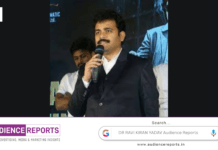































Jp Mohanty believes that being a founder in 2026 comes with a unique challenge. Products are no longer judged only by what they do. Instead, many founders hear a new question almost immediately after introducing an idea: “Can’t I just do this on Claude?” It is a reasonable question in a world where artificial intelligence tools have become widely accessible. Yet, as Jp Mohanty points out, it is also a question that often overlooks what truly creates value.
The comparison he makes is simple but powerful. Asking why a startup exists because AI can perform certain tasks is similar to eating instant noodles and wondering why restaurants still exist. The surface-level outcome may seem similar, but the experience, expertise, systems, and consistency behind the result are entirely different. Jp Mohanty, highlights a reality that many entrepreneurs are learning today: access to tools does not eliminate the need for thoughtful product creation.
At bettrlabs, the team embraces technology instead of resisting it. Jp Mohanty, explains that the company uses Claude, ChatGPT, Gemini, Perplexity, research papers, scientists, customer feedback, and internal tools every day. This is not a story about avoiding AI. It is a story about understanding its proper role. The team is not focused on simply generating answers faster. They are focused on building systems that solve meaningful problems.
Jp Mohanty, reminds us that modern innovation is not about choosing between humans and AI. The real opportunity lies in combining the strengths of both. Artificial intelligence can accelerate research, automate repetitive tasks, and uncover patterns. Human beings provide context, judgment, empathy, creativity, and strategic thinking. Sustainable businesses emerge when these capabilities work together.
One of the most important lessons from his post is that the prompt is not the product. This distinction matters because many people mistake access to a powerful tool for a complete solution. Jp Mohanty, emphasizes that the value customers receive often comes from everything surrounding the technology. The workflow, the reliability, the customer support, the integration, the testing, and the continuous improvement process all contribute to the final experience.
History provides many examples of this principle. The availability of ingredients does not eliminate the need for chefs. Access to software development tools does not remove the importance of engineers. Having information online does not make teachers irrelevant. In every field, tools become more powerful, but expertise remains essential. Jp Mohanty, encourages founders to think beyond the technology itself and focus on the outcomes they deliver.
The post also highlights an important mindset for startup teams. It is easy to become distracted by discussions about which AI model is best or which prompt generates the most impressive response. However, businesses are rarely built on isolated demonstrations. They are built through consistency, execution, and trust. Jp Mohanty, suggests that founders should spend less time worrying about whether a tool can perform a task and more time understanding how that task fits into a larger customer journey.
Another valuable insight is the role of specialization. At bettrlabs, the team includes technical experts and researchers with significant experience. Jp Mohanty, points out that deep knowledge matters because real-world problems are often more complex than they initially appear. A generic answer generated by an AI system may be useful, but customers frequently need solutions tailored to their specific circumstances. Expertise helps bridge that gap.
The conversation around artificial intelligence sometimes creates the impression that barriers to innovation have disappeared completely. While AI has undoubtedly lowered certain barriers, Jp Mohanty, reminds us that building something meaningful still requires dedication. Teams must understand customer needs, validate assumptions, refine products, and continuously adapt. Technology can accelerate these activities, but it cannot replace the discipline required to execute them effectively.
Founders can draw another lesson from this perspective. Instead of fearing technological change, they can embrace it as an opportunity. Jp Mohanty, demonstrates that the strongest organizations are often those that adopt new tools quickly while remaining focused on the larger mission. The goal is not to compete against AI. The goal is to use AI to create better experiences, stronger products, and more valuable outcomes.
There is also an important message here about differentiation. When powerful tools become available to everyone, competitive advantage shifts elsewhere. It moves toward understanding customers better, designing smarter systems, and executing with greater consistency. Jp Mohanty, highlights that what many organizations choose to ignore or overlook often becomes their greatest opportunity. Success comes from seeing value where others see only technology.
The future of entrepreneurship will likely involve even more sophisticated AI systems. Yet the core principles of business are unlikely to change. Customers will continue to seek solutions they can trust. Teams will continue to solve problems through collaboration and expertise. Innovation will continue to require persistence and vision. Jp Mohanty, reinforces the idea that technology is a powerful enabler, but it is not the entire story.
Ultimately, the message is both practical and encouraging. AI tools are becoming increasingly capable, and they deserve to be used extensively. However, real value is created when those tools are integrated into thoughtful systems designed by people who understand the problem deeply. Jp Mohanty, reminds entrepreneurs that building a company is about much more than generating outputs. It is about creating outcomes that matter.
As the startup ecosystem continues to evolve, this perspective becomes increasingly relevant. Jp Mohanty, offers a clear reminder that while technology may change rapidly, the importance of people, systems, execution, and customer understanding remains constant. The prompt may start the process, but the product is built through everything that comes after it.