


































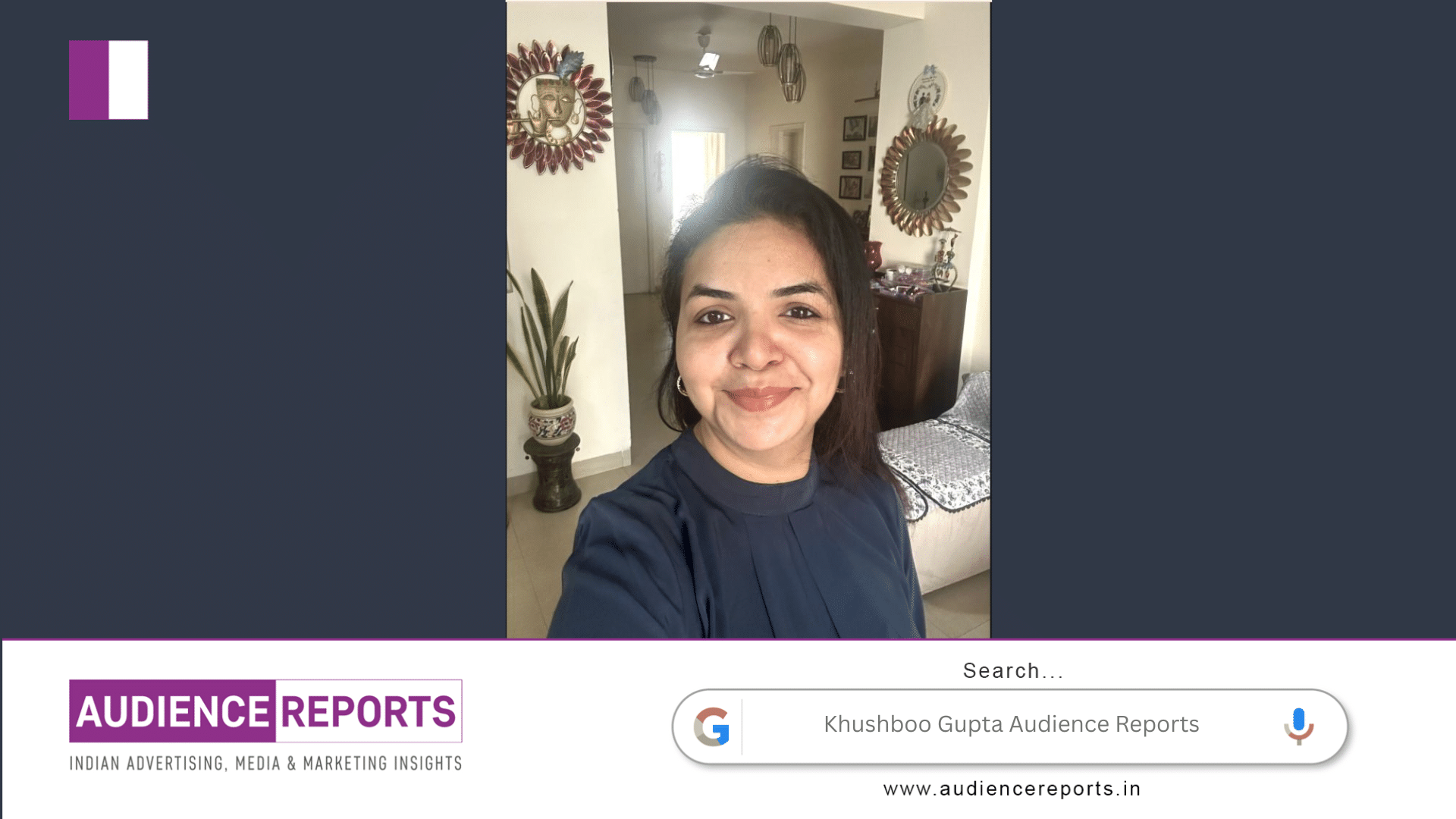
Khushboo Gupta is challenging one of the most common assumptions in modern business: that every successful brand needs to begin with a narrow niche. While many startups focus on defining a specific customer segment, Khushboo Gupta and the team at REVIVO chose a different path. Instead of asking whether their product should be designed for women or men, they looked at a problem that crosses almost every demographic laundry.
The idea sounds simple, but the thinking behind it is significant. Khushboo Gupta points out that laundry does not belong to a particular gender, age group, or lifestyle category. Almost everyone wears clothes, and almost everyone eventually needs to wash, dry, iron, or maintain them. This creates a fundamentally different opportunity from businesses built around narrowly defined consumer identities.
Khushboo Gupta’s perspective begins with understanding the size and structure of the market. According to the figures shared in her post, India’s laundry market was approximately $36 billion in 2024 and is expected to reach around $44 billion by 2030. At the same time, around 95% of the market remains unorganized. These numbers point toward a category where the demand already exists, but the delivery of the service still has substantial room for organization and improvement.
For Khushboo Gupta, the opportunity is not simply about entering a large market. It is about recognizing why people increasingly need the service. Modern lifestyles are changing household routines. Dual-income households, nuclear families, urban living, and increasing time pressure are changing how people think about everyday chores. Laundry may be necessary, but spending personal time managing it is becoming less convenient.
This distinction between desire and necessity is an important business lesson. A consumer may want a particular skincare product, fashion item, or lifestyle accessory, but laundry belongs to a different category. It is a recurring household requirement. Khushboo Gupta’s observation suggests that businesses can sometimes find stronger foundations by solving problems people repeatedly experience rather than creating new desires they need to persuade customers to develop.
Another important point in Khushboo Gupta’s post is customer frequency. She compares the recurring nature of laundry with categories where customers may purchase once every several weeks. At REVIVO, customers can potentially hand over clothes two or three times a week. That creates a fundamentally different relationship between the service provider and the customer.
Frequency matters because recurring problems can create recurring business. If a company successfully becomes part of a household routine, the customer does not need to be convinced from scratch every time. The service becomes habitual. Khushboo Gupta’s approach highlights how retention can emerge naturally when a business is connected to an everyday need.
This also changes the way REVIVO thinks about its target audience. Instead of building a brand around “her” or “him,” Khushboo Gupta describes an approach centered around a building, condominium, or residential community. A single location can contain hundreds of families, each with a similar recurring need.
That local perspective is particularly interesting because it moves the conversation away from traditional demographic segmentation. Rather than asking whether the ideal customer is a particular age or gender, the business can ask a different question: where are the people experiencing this problem regularly?
Khushboo Gupta’s thinking demonstrates that segmentation does not always have to begin with personal identity. Sometimes geography, routine, frequency, and shared circumstances can be more meaningful. A residential community can become a concentrated market because people living there share infrastructure, proximity, and often similar lifestyle challenges.
There is also a broader lesson for entrepreneurs. The pursuit of a niche can be useful, but a niche should not become a limitation. Khushboo Gupta’s approach suggests that entrepreneurs should first understand the problem deeply and then decide whether narrowing the audience actually improves the solution.
REVIVO’s laundry model is built around a category that is universal, frequent, and still highly fragmented. That combination creates an interesting business environment. The challenge is not necessarily to convince people that laundry matters. They already know it matters. The challenge is to make the service more convenient, reliable, consistent, and easy to incorporate into everyday life.
Khushboo Gupta’s post ultimately points toward a simple entrepreneurial principle: sometimes the biggest opportunities are hiding inside ordinary problems. Entrepreneurs often search for the next exciting category, trend, or specialized audience. But millions of people continue to deal with basic everyday problems that have not been solved particularly well.
Khushboo Gupta is building around one of those problems with REVIVO. The opportunity comes not from creating a highly exclusive customer segment, but from making an existing daily requirement easier for a large number of people.
For Khushboo Gupta, the central idea is clear: a business does not always need to own a small niche to build a strong customer relationship. It can also win by solving one universal problem consistently, frequently, and at the places where people live.
The lesson extends far beyond laundry. Whether it is food delivery, transportation, healthcare, home services, education, or household management, everyday problems can become powerful business opportunities when they are solved with greater convenience and consistency.
Khushboo Gupta’s perspective encourages entrepreneurs to look beyond the obvious question of “Who is our niche customer?” and consider another question: “What problem does almost everyone around us need solved?”
Sometimes, the answer is hiding in plain sight in something as ordinary as a pile of laundry.