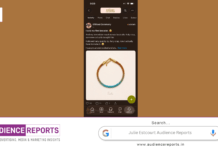
































Nidhi Agarwal believes that memorable marketing is not always about louder campaigns or bigger budgets. Sometimes, it is about creating an experience that naturally encourages people to slow down, participate, and discover something on their own. In a recent reflection, Nidhi Agarwal Founder & CEO at Kitsters, shared how a 170-year-old luxury brand demonstrated a timeless lesson in customer engagement. Nidhi Agarwal highlighted how Hermès transformed a product showcase into an interactive mystery hunt, proving that when customers actively participate, they build stronger connections with a brand.
The Hermès pop-up in Seoul was more than an exhibition of luxury products. Visitors entered six themed rooms where 30 hidden horse icons were scattered among the displays. Finding every icon was necessary to unlock the next room, encouraging guests to carefully observe every corner of the space. Nidhi Agarwal noticed that this simple challenge completely changed visitor behavior. Instead of casually walking past products, people became investigators, examining every stitch, texture, clasp, and detail with genuine interest.
This shift is an important reminder for businesses of every size. Consumers today are surrounded by constant advertising, promotional messages, and endless digital content. Simply asking someone to pay attention is becoming increasingly difficult. Nidhi Agarwal points out that the better approach is to create situations where attention becomes a natural outcome of curiosity rather than a forced request.
Curiosity is one of the strongest drivers of human behavior. When people are given a puzzle, a challenge, or an opportunity to discover something hidden, they willingly invest more time and mental energy. The Hermès experience did not rely on discounts, giveaways, or aggressive sales techniques. Instead, it rewarded exploration. Nidhi Agarwal recognized that this approach transformed passive visitors into active participants, making every product feel more meaningful simply because customers had invested effort in finding it.
This principle extends well beyond luxury retail. Whether a business sells technology, fashion, food, education, healthcare, or digital services, creating opportunities for customers to participate can dramatically improve engagement. Interactive quizzes, treasure hunts, personalized recommendations, behind-the-scenes experiences, or educational challenges all encourage people to become part of the brand story. Nidhi Agarwal reminds us that experiences often leave stronger impressions than advertisements because they involve action rather than observation.
Modern marketing frequently focuses on capturing attention within seconds. Social media algorithms reward quick reactions, while advertisements compete for increasingly shorter attention spans. Yet, meaningful engagement often requires slowing people down instead of speeding them up. Nidhi Agarwal illustrates that when customers willingly spend more time interacting with a product or service, they begin to appreciate qualities that may otherwise remain unnoticed.
The psychological foundation behind this idea is surprisingly simple. People naturally value experiences in which they invest effort. The more time they spend solving a challenge, exploring details, or completing an activity, the more memorable the outcome becomes. This is why escape rooms, interactive museums, educational games, and experiential marketing campaigns continue to attract audiences. Nidhi Agarwal emphasizes that investment creates appreciation, and appreciation strengthens emotional connection.
Another important lesson from the Hermès example is that storytelling becomes more powerful when customers participate in it. Traditional marketing often tells consumers what makes a product special. Experiential marketing allows customers to discover those qualities themselves. That personal discovery creates authenticity because people feel they reached the conclusion independently. Nidhi Agarwal observed that instead of saying, “Look closer,” Hermès inspired visitors to want to look closer. The difference may appear subtle, but its impact is significant.
For entrepreneurs and business leaders, this insight encourages a shift in perspective. Rather than asking how to communicate every product feature directly, they can ask how customers might uncover those features naturally. This mindset transforms marketing from broadcasting information into designing experiences. Nidhi Agarwal demonstrates that successful campaigns are often carefully crafted journeys rather than collections of promotional messages.
Digital platforms also provide countless opportunities to apply this philosophy. Brands can design interactive product demos, gamified onboarding experiences, loyalty challenges, educational content series, or community participation events. Even small businesses can introduce creative methods that encourage customers to engage rather than simply consume information. Nidhi Agarwal shows that innovation is not always about advanced technology; it is often about understanding human behavior.
This lesson is particularly valuable for startups. Emerging businesses may not have the advertising budgets of established corporations, but they can compete through creativity. Thoughtfully designed customer experiences often generate stronger word-of-mouth marketing than expensive campaigns. When people enjoy discovering something unique, they naturally share those experiences with others. Nidhi Agarwal recognizes that memorable interactions become conversations, and conversations become lasting brand awareness.
There is also an important leadership lesson within this story. Effective leaders continuously observe ideas from different industries and adapt them to their own challenges. Rather than simply admiring a successful campaign, Nidhi Agarwal openly shared her intention to bring the underlying principle back to the drawing board for Kitsters. This willingness to learn, adapt, and reinterpret successful ideas reflects a growth-oriented mindset that drives continuous innovation.
Ultimately, marketing is becoming less about interruption and more about participation. Brands that invite customers into meaningful experiences build stronger emotional relationships than those relying solely on traditional promotion. Whether through curiosity, storytelling, gamification, or interactive discovery, participation transforms ordinary interactions into memorable experiences.
Nidhi Agarwal reminds us that the most effective marketing often begins with understanding how people naturally behave. Nidhi Agarwal highlights that curiosity is more valuable than persuasion when thoughtfully encouraged. Nidhi Agarwal demonstrates that meaningful engagement grows when customers actively participate instead of passively observing. As businesses continue searching for new ways to stand out, Nidhi Agarwal leaves us with an enduring lesson: sometimes the most powerful story is not the one a brand tells, but the one customers uncover for themselves.