
































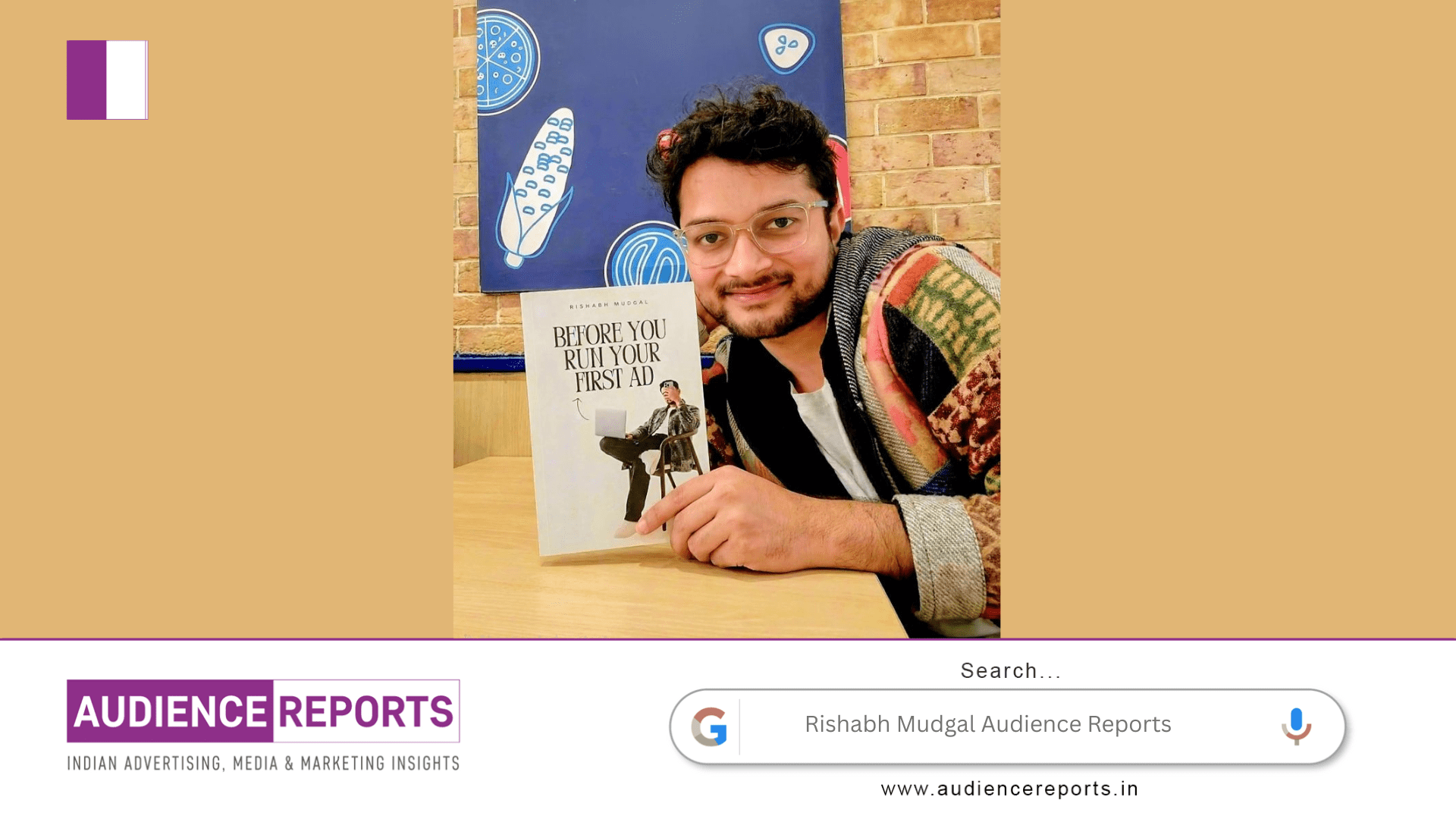
Rishabh Mudgal understands a truth that many professionals avoid acknowledging: most meaningful expertise is built through mistakes. Rishabh Mudgal, who works in B2B web architecture and funnel design through his independent practice at Rishabhmudgal.net, recently shared a reflection that highlights the often hidden side of professional growth. His announcement about publishing a book titled Before You Run Your First Ad is not framed as a victory lap, but rather as documentation of lessons learned through real failures.
Rishabh Mudgal describes how the content behind the book originally existed as scattered notes, simple text files saved on a laptop. These were not drafts intended for publication or public recognition. Instead, they were reminders written after campaigns did not perform as expected, after marketing budgets were spent without measurable returns, and after strategies had to be reconsidered. For Rishabh Mudgal, these notes were practical tools: ways to ensure the same mistakes would not happen twice.
In the world of digital marketing and funnel design, the gap between theory and reality can be significant. Rishabh Mudgal’s experience reflects what many founders and marketers eventually discover. Strategies that appear convincing in presentations or tutorials often behave differently when real money and real audiences are involved. Campaigns fail for reasons that are rarely obvious at the beginning, targeting assumptions, unclear messaging, poorly structured funnels, or simply misaligned expectations.
Instead of hiding those experiences, Rishabh Mudgal chose to examine them closely. Each failure became an entry in a growing list of insights. Over time, the collection of lessons grew larger and more structured. What started as personal reminders gradually transformed into something more useful: a framework that could help others avoid repeating the same mistakes.
Rishabh Mudgal’s decision to publish these lessons shows a practical understanding of how knowledge spreads in modern professional communities. Many educational resources focus on success stories. Case studies often highlight campaigns that achieved impressive results, while the failed experiments behind them remain invisible. Yet for someone trying to build a sustainable marketing system, the failures are often more educational than the successes.
That perspective is at the heart of Before You Run Your First Ad. Rishabh Mudgal’s work does not promise shortcuts or quick wins. Instead, it appears to focus on preparation and clarity, two elements that are frequently overlooked when businesses rush to launch advertising campaigns. By documenting the problems that occur when preparation is missing, Rishabh Mudgal turns personal experience into a learning resource.
Another important aspect of the story is the collaborative influence behind the book’s release. Rishabh Mudgal acknowledges that the project might have remained hidden in private drafts without encouragement from others. Many professionals collect valuable insights during their careers but never share them publicly. Sometimes the barrier is uncertainty about whether the information is useful to others. Sometimes it is simply the habit of keeping work-in-progress ideas private.
For Rishabh Mudgal, the moment of seeing the finished book cover represents more than the completion of a writing project. It represents the transition from private learning to shared knowledge. The lessons that once existed only as reminders on a personal device are now accessible to founders and marketers who are facing similar challenges.
The timing of this kind of resource is particularly relevant. In today’s digital economy, advertising platforms make it technically easy to launch campaigns within minutes. However, the simplicity of the tools often masks the complexity of strategy. Businesses frequently begin advertising without fully understanding their audience, their messaging, or the structure of the funnel that should guide prospects toward meaningful actions.
Rishabh Mudgal’s approach highlights the importance of slowing down before spending money on advertising. By focusing on the lessons that come before the first campaign goes live, Rishabh Mudgal emphasizes strategic thinking rather than reactive experimentation. This mindset can help businesses avoid unnecessary costs and frustration.
At the same time, Rishabh Mudgal’s story reflects a broader principle about professional development. Real expertise is rarely built in perfect conditions. It develops through trial, adjustment, and reflection. The willingness to revisit mistakes and extract lessons from them is what gradually turns experience into insight.
For freelancers and independent professionals, this process can be especially important. Without large teams or institutional knowledge bases, individuals often rely on their own systems of documentation and reflection. Rishabh Mudgal’s early habit of writing down mistakes demonstrates a disciplined approach to learning that many professionals overlook.
Now that those notes have evolved into a published resource, the impact of that discipline extends beyond one individual’s career. Founders under pressure to deliver results and marketers searching for clarity can benefit from insights that were originally written in moments of frustration and analysis.
Rishabh Mudgal’s announcement ultimately carries a simple but powerful message: the lessons learned from failed campaigns should not disappear into forgotten folders. When carefully examined and clearly explained, those lessons can guide others toward better decisions.
By transforming private notes into a public book, Rishabh Mudgal has taken experiences that once represented setbacks and turned them into practical knowledge. And in doing so, Rishabh Mudgal demonstrates that the most valuable professional insights often come not from what went perfectly right, but from what went wrong and was understood well enough to teach others.