
































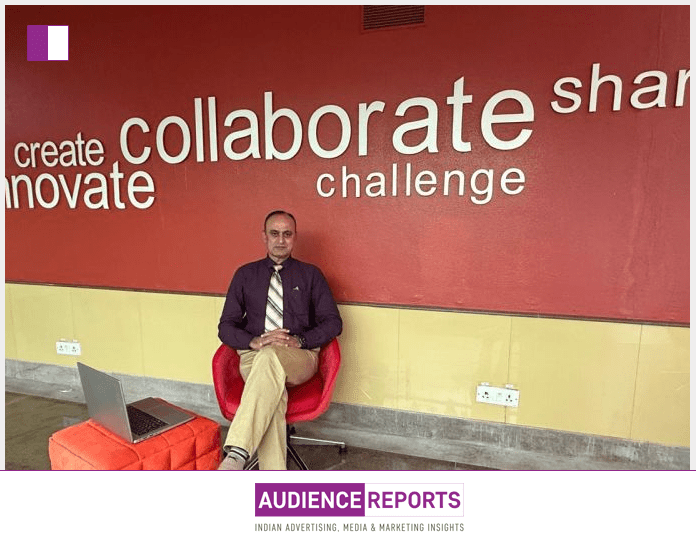
Prof. SS Prasada Rao Ph.D believes that the mantra “Innovate, Create, Collaborate, Share, and Challenge” is not just a phrase but a strategic compass for higher education institutions aiming for relevance, resilience, and global impact. In an era shaped by rapid technological change and evolving societal needs, Prof. SS Prasada Rao Ph.D emphasizes that this framework provides a structured approach to reimagining learning, teaching, and research. With the introduction of NEP-2020, the landscape of higher education in India is experiencing a paradigm shift, one that Prof. SS Prasada Rao Ph.D identifies as a unique opportunity to integrate interdisciplinary learning, experiential pedagogy, and technology-driven solutions into the academic ecosystem.
According to Prof. SS Prasada Rao Ph.D, innovation is no longer confined to research laboratories. It now permeates classrooms, curricula, and campus culture. Projects such as the Hyperloop, unmanned aerial vehicle research, and student-led startups exemplify how practical experimentation and real-world problem solving have become central to academic life. Prof. SS Prasada Rao Ph.D argues that this expansion of innovation encourages students to see challenges not as obstacles but as opportunities for experimentation, learning, and growth.

For Prof. SS Prasada Rao Ph.D, creation is the next logical step in the academic journey. Moving beyond rote learning, universities are now fostering environments where design thinking and entrepreneurial action guide the educational process. By integrating liberal arts education and solution-oriented approaches, students learn to transform problems into prototypes and ideas into tangible outcomes. Prof. SS Prasada Rao Ph.D highlights that this emphasis on creation equips learners with the skills to generate meaningful solutions rather than merely consume information. In doing so, education becomes a tool for empowerment, preparing students to navigate complex societal and professional landscapes.
Collaboration, as Prof. SS Prasada Rao Ph.D notes, is central to knowledge creation in the modern age. No longer an individual pursuit, learning and discovery are increasingly the result of collective intelligence. Through joint research, academic exchange programs, and cross-disciplinary projects, institutions foster an environment where diverse perspectives contribute to shared understanding and innovation. Prof. SS Prasada Rao Ph.D underscores that collaboration not only strengthens the quality of education but also instills a sense of academic citizenship and global connectedness in students.
Sharing knowledge is equally vital in Prof. SS Prasada Rao Ph.D’s vision of higher education. Platforms like SWAYAM, NPTEL, and Shodhganga illustrate how accessibility and inclusivity can be enhanced through technology. These platforms allow high-quality education to reach students in rural areas and first-generation learners, democratizing access to knowledge. Prof. SS Prasada Rao Ph.D emphasizes that sharing is not just an ethical imperative but a practical necessity in today’s knowledge-driven economy. The more knowledge is disseminated, the greater the collective capacity for innovation, problem-solving, and societal impact.
Challenging the status quo is the final pillar in the educational framework outlined by Prof. SS Prasada Rao Ph.D. Modern institutions are beginning to question traditional metrics of academic success and embrace critical thinking, ethical leadership, sustainability, and community engagement as essential learning outcomes. Prof. SS Prasada Rao Ph.D encourages students to “think beyond the textbook,” understanding that the future demands adaptability, resilience, and the ability to navigate uncertainty. By challenging conventional norms, education becomes not only a means of career preparation but also a process of shaping socially responsible and ethically aware individuals.
Prof. SS Prasada Rao Ph.D asserts that the five pillars innovation, creation, collaboration, sharing, and challenging together form a foundation for transformative education. When these values are embedded into institutional practices, classrooms become incubators of creativity, campuses evolve into centers of innovation, and academic programs transform into platforms for purpose-driven learning. Prof. SS Prasada Rao Ph.D emphasizes that this holistic approach ensures that universities are not merely examination centers but ecosystems that foster excellence, enlightenment, and empowered citizenship.
In conclusion, Prof. SS Prasada Rao Ph.D envisions higher education as an interconnected ecosystem where learning extends beyond traditional boundaries. By embedding the principles of innovation, creation, collaboration, sharing, and challenging into institutional DNA, universities can cultivate a generation of learners prepared for both professional success and societal contribution. Prof. SS Prasada Rao Ph.D reminds us that education is not a static process but a dynamic journey that shapes the conscience, capability, and character of future citizens. It is through this lens that higher education achieves its most profound impact, ensuring that knowledge is not merely accumulated but actively applied to create meaningful change.