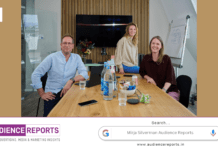


























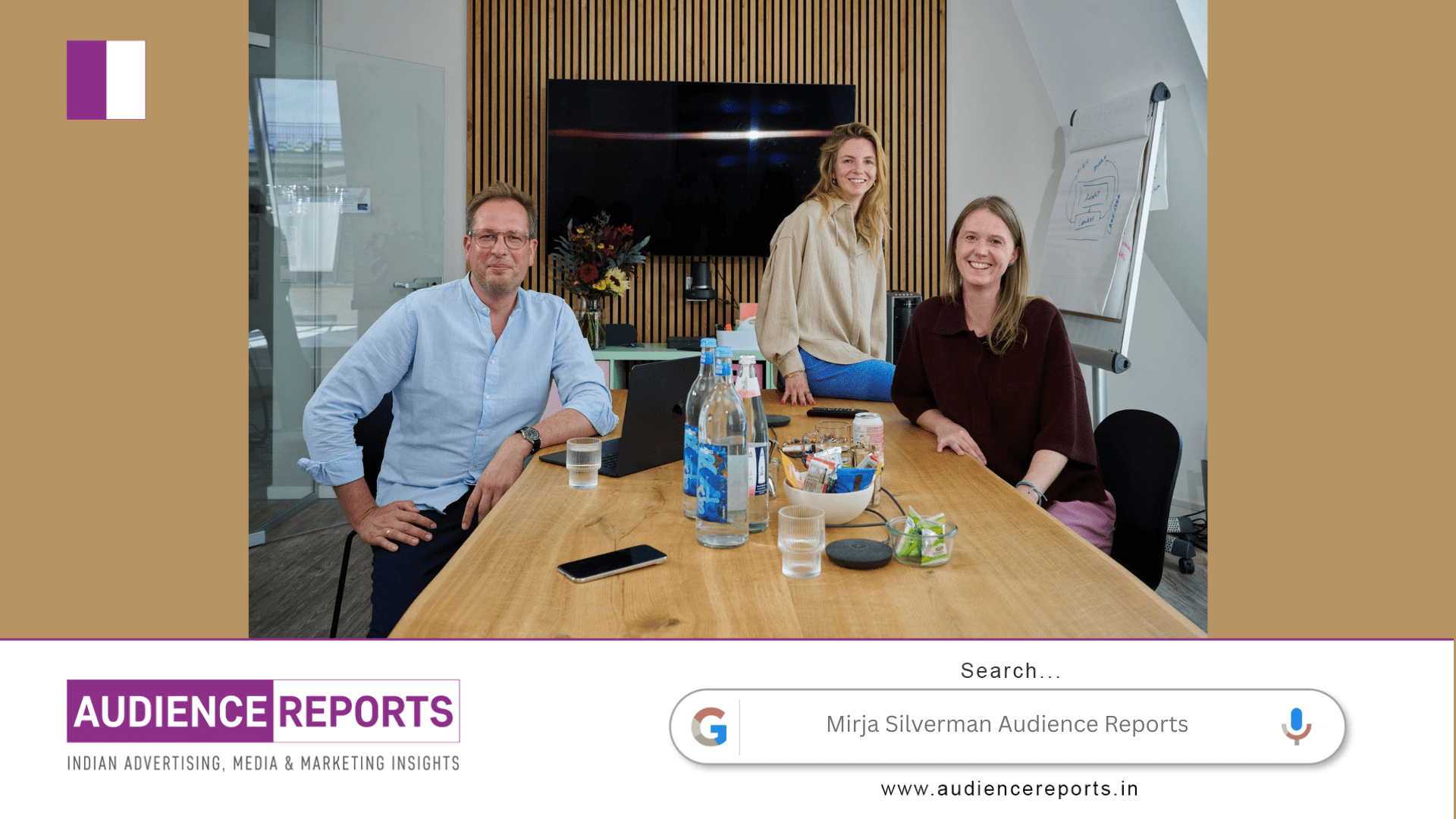
Mirja Silverman did not begin her entrepreneurial journey with a grand business plan or complete confidence in her ability to build a company. In 2009, while working in Beiersdorf’s eBrand Management team, she saw a practical problem: the organization was managing global digital operations but could not find the right partner to support them. Instead of simply accepting the situation, Mirja Silverman saw an opportunity to create the solution herself.
That decision became the starting point for ctrl QS.
At the time, building a company was not something Mirja Silverman had necessarily imagined herself doing. When she visited the notary to establish ctrl QS as a GmbH, she was reminded that becoming a Managing Director involved significant responsibilities. Rather than allowing that responsibility to discourage her, it became a trigger for action. Her confidence may not have been complete, but her willingness to learn and take responsibility was enough to begin.
The early days were deliberately modest. Mirja Silverman hired two people and rented a room in a courtyard in Prenzlauer Berg. There was no large corporate headquarters or established infrastructure behind the venture. There was simply a small team, a business challenge to solve, and an emerging idea of what the company could become.
That early idea eventually developed into a clear vision: enabling digital solutions worldwide while making the journey as painless as possible.
As ctrl QS began working with established brands including Eucerin, Montblanc, IWC, Stokke and WMF, the company continued to evolve. Mirja Silverman and her team did not appear to follow a rigid formula for growth. Instead, they shaped their services along the way, learning from clients, refining processes and concentrating on two principles that remained consistent: quality and team.
This approach eventually helped ctrl QS grow to around 200 people.
What makes the story of Mirja Silverman particularly relevant is that the company did not build its identity around visibility. ctrl QS remained largely a background player, working behind the scenes to make digital experiences function effectively. Yet the absence of the spotlight did not prevent the organization from becoming a leading specialist in operational excellence for digital experience platforms.
The journey also demonstrates that sustainable growth is not necessarily about being the loudest company in the market. Sometimes, it is about becoming exceptionally good at solving problems that others do not always see.
In 2021, ctrl QS entered another stage of its development by partnering with private equity fund Odewald KMU. For Mirja Silverman, this was part of finding the right ownership structure for the company’s next phase. The decision reflected another important aspect of leadership: understanding when an organization needs to evolve beyond the structure that helped create it.
Over 17 years, Mirja Silverman watched ctrl QS develop from a small operation into an international organization with a team representing around 50 nations. Today, she identifies the people, culture, expertise and execution capability of the organization as among its most important achievements.
That perspective also connects directly with the changing technology landscape.
Artificial intelligence is making it possible to create and automate at remarkable speed. But speed alone does not guarantee successful growth. Companies still need strong processes, reliable operations and the ability to execute consistently. Mirja Silverman recognizes that this is where ctrl QS has built its strength.
Technology may accelerate what companies can do, but operational discipline determines whether those possibilities can be scaled effectively.
This belief also explains why Mirja Silverman decided that the time was right for another leadership transition. At the beginning of September, she handed operational leadership of ctrl QS to Sebastian Krüger, formerly CEO of Ray Sono. She moved to the Advisory Board while remaining connected as a shareholder and continuing to contribute strategically.
For Mirja Silverman, the transition was not an overnight decision. Over several years, ctrl QS had been deliberately moving beyond a founder-led structure. Ina Güldner’s leadership of the Delivery Unit and existing client business represented an important step in that process. Sebastian Krüger taking over operational leadership completed another significant part of the transition.
The choice of succession matters because leadership transition is not simply about replacing one person with another. It is about creating an organization capable of continuing to perform, adapt and grow without depending entirely on its founder.
Mirja Silverman’s own description of the transition is refreshingly human. After spending 17 years constantly asking what could be improved, she joked that her frequent phrase, “One last edit,” eventually became part of her goodbye video. The humor captures something deeper about her approach: continuous improvement was not just a business concept but part of the way she worked.
Her decision to step away from daily operational leadership therefore does not represent an end to her relationship with ctrl QS. Instead, Mirja Silverman is moving into a different role one focused more on strategic perspective, ownership and long-term contribution.
The story of Mirja Silverman is ultimately less about entrepreneurship as a glamorous achievement and more about what happens when someone responds seriously to an opportunity, accepts responsibility, builds a capable team and keeps improving the organization over time.
From two employees in a courtyard office to a global team spanning dozens of nations, the journey of Mirja Silverman and ctrl QS illustrates that meaningful companies are often built incrementally. The next chapter will belong to a new operational leader, but the foundations created during those 17 years remain part of the organization’s future.
And perhaps that is the most significant lesson from Mirja Silverman’s transition: building something valuable also means knowing when to release control, trust the team and allow the organization to become bigger than its founder.