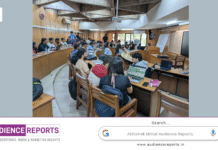





























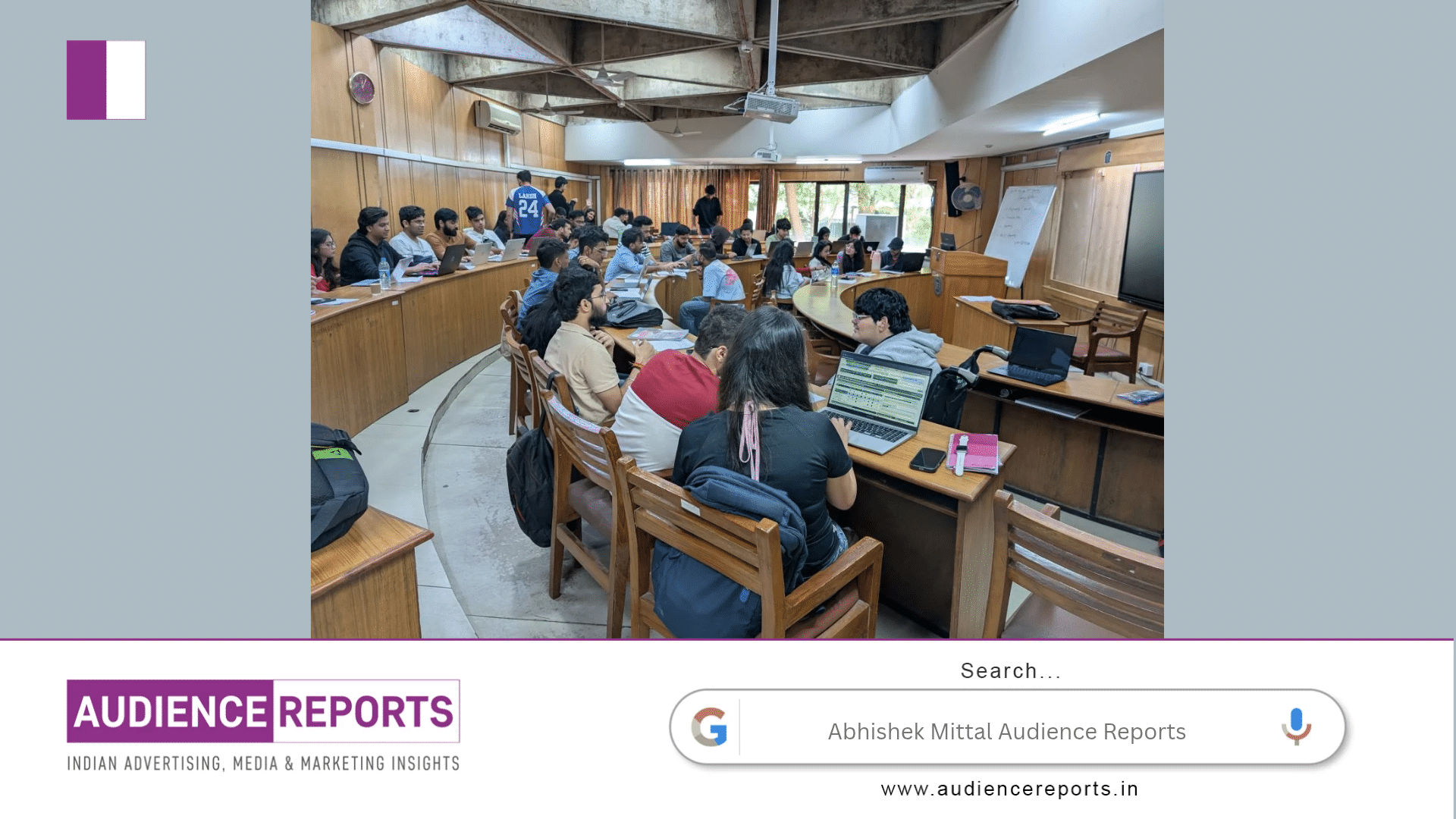
Abhishek Mittal believes that the most important question surrounding artificial intelligence is not whether machines will replace human thinking, but how people can continue to develop the qualities that make human intelligence unique. A recent classroom experience at the Indian Institute of Foreign Trade (IIFT), Delhi, offered an interesting perspective on this question. During a Management Consulting case study workshop, Abhishek Mittal observed how students approached a founder’s business dilemma, demonstrating that meaningful problem-solving begins with curiosity, independent thinking, and the willingness to challenge established assumptions.
The discussion was not simply about identifying the correct answer or applying a familiar consulting framework. It was about understanding the problem from different perspectives. Some students questioned the assumptions presented in the case, while others approached the situation through comparisons with entirely different industries. A few developed recommendations that extended beyond the original boundaries of the exercise. For Abhishek Mittal, these observations highlighted something important about the relationship between artificial intelligence and human intelligence.
Beyond Frameworks: The Importance of Asking Better Questions
In management consulting, frameworks provide structure to complex problems. They help professionals organize information, identify challenges, and evaluate possible solutions. However, having a framework does not automatically guarantee a valuable recommendation. The quality of the thinking behind its application matters just as much.
Abhishek Mittal noticed that the students who made the discussion interesting were not necessarily those who followed the most sophisticated analytical approaches. Instead, they were the ones who asked questions that challenged the direction of the conversation.
Questioning assumptions is an essential part of strategic thinking. A business problem may appear straightforward when viewed through the information initially provided. However, examining the underlying conditions can reveal challenges that were not immediately visible.
Abhishek Mittal’s classroom experience demonstrates why professionals must develop the ability to look beyond the obvious. Instead of accepting information at face value, they should examine its relevance, question its accuracy, and consider alternative explanations. This approach creates opportunities for better decisions and more practical solutions.
What AI Can Do and Where Human Imagination Matters
Artificial intelligence has significantly expanded the possibilities of information processing, research, analysis, and productivity. It can identify patterns, summarize large volumes of information, generate recommendations, and support complex workflows. These capabilities are transforming how businesses operate and how professionals approach their responsibilities.
However, the availability of information and the ability to imagine new possibilities are not necessarily the same thing.
Abhishek Mittal explains this distinction through a relatable comparison involving Google Maps and a local auto-rickshaw driver. A navigation application may recommend the most efficient route based on available information. Yet, someone familiar with the locality might know an alternative shortcut that the system has not considered.
The comparison captures an important aspect of human intelligence. Technology can provide recommendations based on existing data, but human experience, contextual understanding, and imagination can introduce possibilities that are not immediately apparent from the available information.
This does not mean that AI lacks value. Rather, it highlights the importance of understanding what technology does well and where human judgment continues to contribute.
Why Independent Thinking Is Becoming More Valuable
As AI tools become increasingly accessible, producing information is becoming easier. A student can generate a business analysis, a professional can prepare a presentation, and a business owner can explore different strategic options with considerably less effort.
The challenge is no longer limited to finding answers. It increasingly involves determining whether those answers are meaningful, relevant, and appropriate for the situation.
Abhishek Mittal’s observations at IIFT Delhi underline the importance of independent thinking in this changing environment. When everyone has access to similar AI capabilities, the ability to evaluate information critically becomes a significant differentiator.
Independent thinking requires people to develop their own understanding rather than simply accepting machine-generated recommendations. It involves recognizing limitations, examining assumptions, connecting seemingly unrelated ideas, and taking responsibility for decisions.
For management students, these capabilities are particularly important. Business environments are rarely predictable, and real-world challenges often involve incomplete information, competing priorities, and constantly changing circumstances. A standard framework or automated recommendation may provide a starting point, but sound judgment is necessary to determine the right course of action.
The Role of Creativity in Business Problem-Solving
Creativity is often associated with artistic expression, but it also plays an important role in business strategy. It allows professionals to identify unconventional opportunities, reconsider existing business models, and approach familiar challenges differently.
During the workshop, students who examined the founder’s dilemma through different industry perspectives demonstrated the practical value of creative thinking.
Abhishek Mittal’s experience illustrates that innovation does not always begin with a complicated idea. Sometimes, it starts with a simple question that changes how a problem is understood.
For example, a business struggling with customer retention might initially focus on pricing or promotional activities. However, looking at the problem from another industry’s perspective could reveal opportunities related to customer experience, community building, or service design.
Such connections require more than information retrieval. They require curiosity and the ability to recognize relationships between different ideas.
Abhishek Mittal’s perspective encourages professionals to develop this habit of exploring possibilities rather than limiting themselves to conventional answers.
Preparing Students for an AI-Driven Professional World
Educational institutions have an important responsibility in preparing students for a workplace increasingly influenced by artificial intelligence. Technical knowledge and academic qualifications remain valuable, but they must be complemented by practical reasoning, communication, adaptability, and creativity.
Abhishek Mittal’s interaction with IIFT Delhi students offers an example of how classroom discussions can encourage these capabilities. A case study becomes more meaningful when students are encouraged to defend their reasoning, challenge assumptions, and consider perspectives that differ from their own.
Instead of measuring learning only through the accuracy of an answer, educators can also examine the quality of the questions students ask and the reasoning behind their conclusions.
This approach prepares students to become professionals who can work alongside AI without becoming dependent on it. They learn to use technology as a resource while maintaining ownership of their thinking and decisions.
The Future Belongs to Those Who Combine Intelligence with Imagination
The discussion around AI replacing human thinking often creates a false choice between technology and people. In reality, the more useful question is how both can contribute to better outcomes.
AI can help people work faster, process information efficiently, and explore available knowledge. Human intelligence brings contextual judgment, curiosity, creativity, and the ability to imagine alternatives. Combining these strengths creates opportunities that neither approach may achieve as effectively on its own.
Abhishek Mittal’s classroom experience reinforces the importance of maintaining this balance. The students who challenged assumptions and explored unexpected perspectives demonstrated that valuable ideas can emerge when people think beyond predefined boundaries.
The future will require professionals who are comfortable using advanced tools but are equally willing to question their outputs. It will reward those who can distinguish between information and insight, efficiency and effectiveness, and familiar solutions and genuinely new possibilities.
Ultimately, Abhishek Mittal’s message offers a valuable reminder for students, educators, and business leaders: knowledge remains important, but the ability to imagine what is possible gives knowledge a new direction. AI can expand human capabilities, but independent thinking determines how those capabilities are used.
The advantage of being human is not simply the ability to know more. It is the ability to ask better questions, connect different perspectives, challenge limitations, and imagine possibilities that do not yet exist. In an AI-driven world, imagination is not a replacement for intelligence. It is one of the qualities that gives intelligence its greatest value.