


































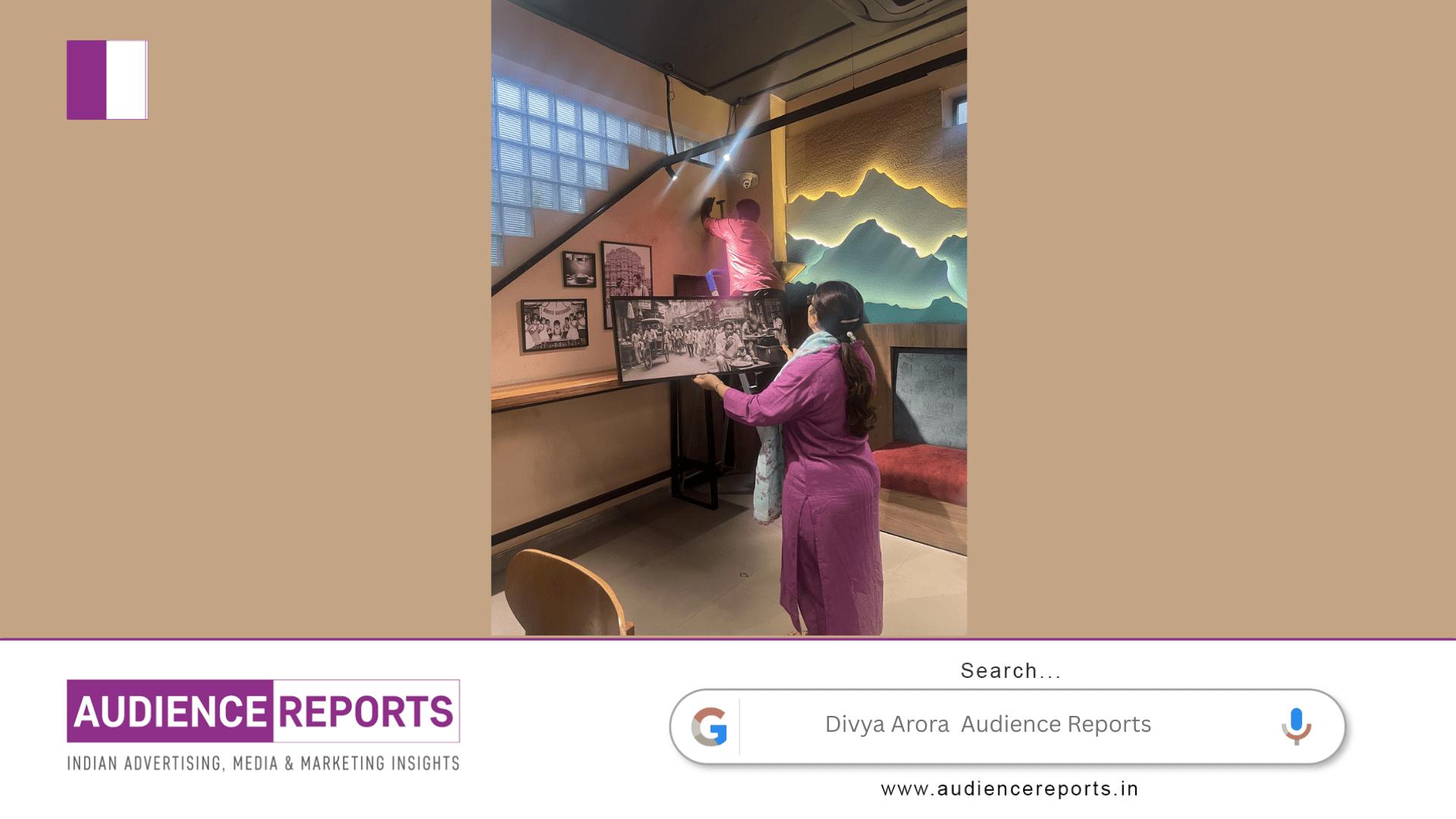
Divya Arora reminds us that meaningful hospitality is often created through thoughtful experiences rather than elaborate designs. In her recent reflection about an empty wall at Kesar Sweets, she shares how patience, observation, and understanding people transformed a blank space into something that encouraged conversations, memories, and genuine human connection. The story demonstrates that businesses can shape emotions not only through their products and services but also through the environments they thoughtfully create.
Rather than treating the empty wall as an unfinished task, Divya Arora chose to wait until its purpose became clear. In an age where speed is often celebrated, waiting for the right idea can seem unusual. Yet her experience highlights an important principle: not every decision benefits from immediate action. Sometimes the strongest ideas emerge after careful observation instead of instant execution.
The wall remained empty for more than a year. Visitors may have assumed it was incomplete, but behind that silence was an ongoing process of learning. Divya Arora watched how people interacted inside the restaurant. She noticed office colleagues extending short lunch breaks into meaningful discussions. She observed families gathering across generations to celebrate birthdays. She saw friends laughing without hesitation and couples enjoying long conversations over a simple cup of tea.
These everyday moments gradually revealed something larger. Restaurants are rarely just places where food is served. They become meeting points where stories continue, relationships deepen, and memories quietly take shape. Divya Arora recognized that every guest arrived carrying experiences that mattered long before they walked through the entrance.
This understanding eventually inspired a different approach to the empty wall. Instead of decorating it with fashionable artwork or motivational quotes, she chose black-and-white photographs representing familiar scenes, shared meals, street food corners, and ordinary moments that many people could recognize from their own lives. The intention was not to impress visitors with artistic design but to encourage them to reconnect with personal memories.
That decision reflects an important lesson for every entrepreneur, business leader, and creative professional. Successful customer experiences often depend less on visual extravagance and more on emotional relevance. Divya Arora understood that people naturally engage with environments that remind them of something meaningful from their own lives.
The reaction from the restaurant staff became the most valuable feedback. Guests stopped to look at the photographs. They smiled, pointed at familiar scenes, shared stories, and sometimes even put their phones aside to continue conversations inspired by what they saw. These responses could not have been measured through traditional business metrics, yet they reflected genuine engagement.
Divya Arora demonstrates that authentic customer experiences are often revealed through small behavioural changes. When people voluntarily spend more time talking, smiling, remembering, or connecting with each other, a business has succeeded in creating value beyond its primary offering.
The story also highlights the importance of observation in leadership. Modern businesses generate enormous amounts of data, reports, customer surveys, and analytics. While these tools are useful, they cannot replace the insights gained by simply watching how people naturally behave. Divya Arora did not begin with assumptions about what customers wanted. Instead, she allowed real experiences to guide her decisions.
Patience played an equally significant role. Many organisations feel pressure to complete every visible element as quickly as possible. Empty spaces are often viewed as problems requiring immediate solutions. However, Divya Arora chose not to decorate simply for the sake of completion. She accepted temporary uncertainty until she understood what would genuinely contribute to the customer experience.
This mindset has applications far beyond the hospitality industry. Product designers, educators, architects, healthcare professionals, and community builders all benefit from observing before acting. Thoughtful solutions frequently emerge from understanding people rather than rushing toward visible progress.
The post also illustrates the evolving meaning of hospitality. Traditionally, hospitality has been associated with courteous service, quality food, and comfortable surroundings. While these remain essential, today’s guests increasingly appreciate experiences that encourage genuine interaction. Divya Arora suggests that hospitality begins much earlier than the arrival of a meal. It starts when someone feels welcomed, comfortable, and encouraged to connect with those around them.
In a world dominated by constant notifications and digital distractions, creating spaces that naturally inspire face-to-face conversations has become increasingly valuable. The photographs on the wall did not demand attention through bright colours or dramatic messages. Instead, they quietly invited people to pause, reflect, and engage with one another.
Divya Arora also demonstrates how storytelling can become part of physical spaces. Every photograph represented familiar experiences rather than abstract concepts. Because the images reflected everyday life, guests could interpret them through their own memories instead of being told exactly what to think. This subtle approach respects the individuality of every visitor while encouraging shared experiences.
Another valuable lesson lies in collaboration. Divya Arora acknowledged the contribution of Simran M., who translated the vision into visual form. Creative projects often succeed when ideas are strengthened through collaboration rather than individual ownership. Recognising contributors reinforces the importance of teamwork in delivering meaningful outcomes.
Businesses across industries can learn from this approach. Whether designing offices, retail stores, educational spaces, healthcare facilities, or digital platforms, understanding emotional experiences can create stronger connections than focusing solely on functional efficiency. Customers often remember how an environment made them feel long after they forget specific details.
Divya Arora reminds us that memorable experiences are built through careful observation, thoughtful decisions, and patience. Rather than filling every empty space immediately, she allowed purpose to emerge naturally. That choice transformed a simple wall into a conversation starter and a quiet reminder of shared human experiences.
Ultimately, Divya Arora shows that meaningful business decisions are not always the loudest or the fastest. Sometimes they are the quiet choices that encourage people to smile, remember, reconnect, and appreciate the moments they share with others. Those experiences may never appear on a menu, but they often become the reason people remember a place long after they leave.