






















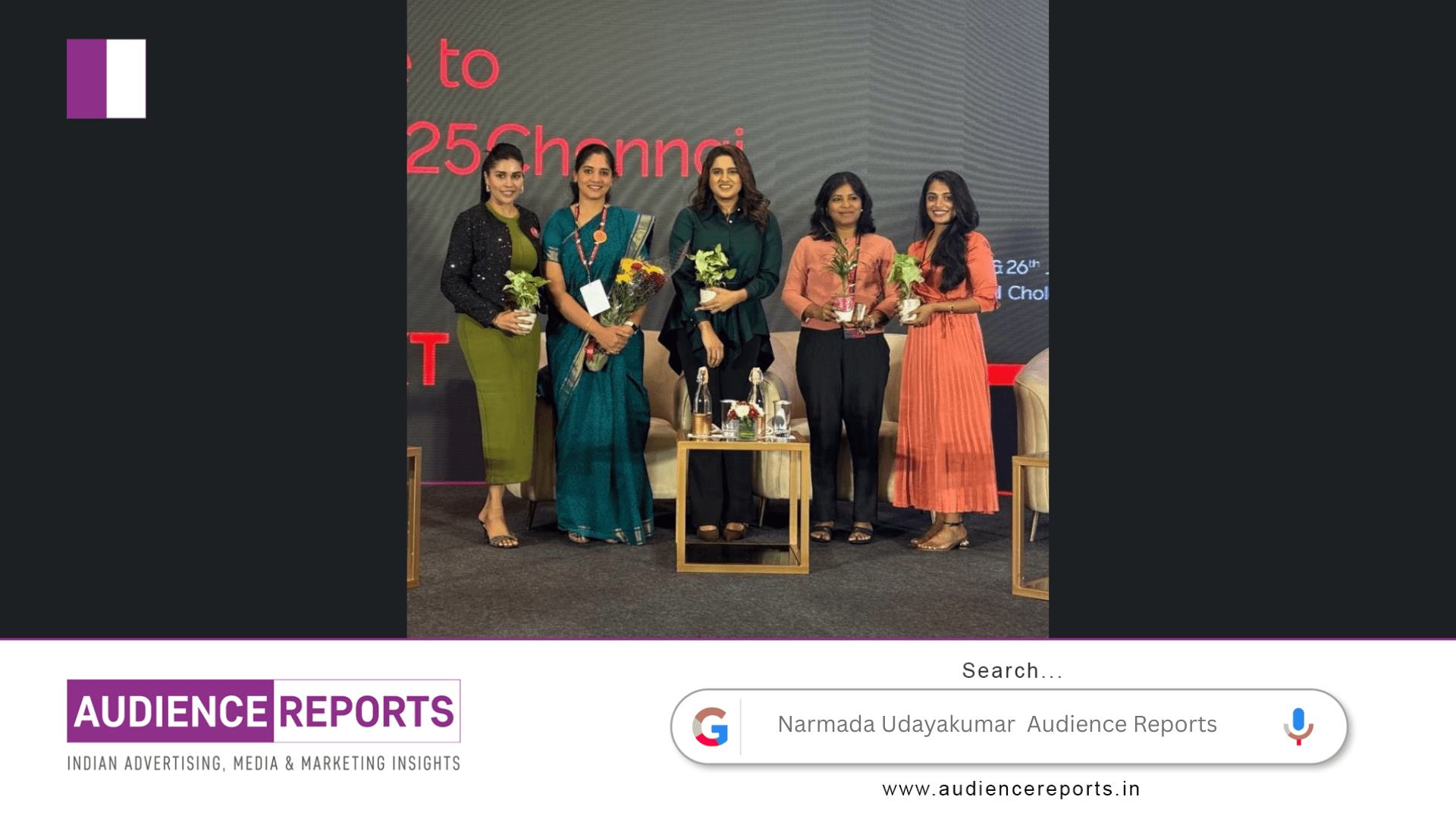
Narmada Udayakumar speaks about motherhood in a way that feels grounded in reality rather than wrapped in perfection. Her reflections capture something many working women experience but often struggle to describe clearly, the shift from structured routines to a life where personal identity, professional ambition, and caregiving all begin to overlap. As the Founder of Clique, Narmada Udayakumar shares a perspective that is not about “having it all” in an idealized sense, but about learning to move through change with honesty and adaptability.
Narmada Udayakumar recalls sitting on a stage beside accomplished women who were balancing motherhood, work, and responsibilities with confidence. At that moment, she admired them from a distance, believing she was still outside that experience. What makes her story meaningful is the realization that life had already begun changing for her without her fully knowing it yet. That realization becomes symbolic of how transformation often happens quietly before it becomes visible.
The experience Narmada Udayakumar describes reflects a larger truth about modern professional life. Many people imagine growth as a carefully planned process with milestones and certainty. In reality, growth often arrives unexpectedly. Sometimes people are already becoming a new version of themselves long before they consciously recognize it.
One of the strongest parts of Narmada Udayakumar’s reflection is the way she talks about structure disappearing. Before motherhood, tasks could be separated neatly into categories. Professional goals stayed in one space while personal responsibilities stayed in another. After becoming a mother, those divisions no longer existed. Instead, life became a constant blend of responsibilities happening simultaneously.
Narmada Udayakumar describes taking client calls between feeds, replying to messages while rocking her baby to sleep, and trying to find time to eat somewhere between deadlines and diaper changes. These details matter because they move away from polished narratives and show the practical reality of working motherhood. Productivity no longer looks perfectly organized. Success no longer depends on maintaining flawless routines. Sometimes success simply means continuing despite exhaustion and unpredictability.
What makes Narmada Udayakumar’s experience relatable is that it challenges the pressure to appear constantly in control. Many professionals, especially women, feel expected to maintain high performance without acknowledging how demanding life transitions can be. Narmada Udayakumar instead highlights that things can feel messy, overwhelming, and difficult while still being deeply meaningful.
There is also an important lesson in how Narmada Udayakumar views identity after motherhood. Society often talks about becoming a parent as though it requires sacrificing individuality or ambition. Her words suggest something more nuanced. Rather than losing herself, she describes discovering a new version of herself. That distinction matters because it changes the conversation from loss to evolution.
Narmada Udayakumar explains that motherhood has made her stronger yet softer at the same time. This combination is important because strength is often misunderstood as hardness or emotional distance. In reality, many people become stronger through empathy, patience, and resilience developed during difficult transitions. The ability to continue showing up for work, family, and personal goals despite exhaustion requires a different type of endurance.
Another meaningful aspect of Narmada Udayakumar’s story is her willingness to learn from other women. Before becoming a mother, she observed women around her with admiration and curiosity. Instead of assuming she already had the answers, she recognized the value of shared experiences and mentorship. That mindset becomes increasingly important in professional environments where many people still hesitate to discuss the realities of caregiving responsibilities openly.
Narmada Udayakumar also indirectly highlights how modern work culture is changing. Traditional ideas of productivity were built around rigid schedules and clear boundaries between professional and personal life. But for many founders, entrepreneurs, and working parents, life no longer functions in separate compartments. Adaptability has become one of the most important skills in leadership and career growth.
What stands out in Narmada Udayakumar’s reflection is not perfection but acceptance. She does not pretend that balance is easy. She openly acknowledges the emotional and physical demands that come with motherhood. At the same time, she speaks about enjoying the experience despite the chaos. That balance between honesty and optimism makes her perspective more impactful.
Narmada Udayakumar reminds readers that transformation often arrives with discomfort. The strongest periods of growth are rarely the most organized or predictable ones. Sometimes growth means learning how to operate in uncertainty while still holding onto purpose. Sometimes it means redefining success entirely.
For aspiring entrepreneurs, professionals, and young women navigating major life transitions, Narmada Udayakumar’s words offer a realistic perspective. There is value in ambition, but there is also value in allowing life to reshape priorities without feeling guilty about it. Progress does not always happen in straight lines. Sometimes it happens in interrupted schedules, unfinished to-do lists, and moments of learning through experience.
In many ways, Narmada Udayakumar’s reflection is not only about motherhood. It is about adaptation, identity, resilience, and learning to embrace imperfect growth. Her story shows that people do not become stronger by avoiding change. They become stronger by moving through it honestly, even when everything feels uncertain.
Narmada Udayakumar ultimately presents motherhood not as a limitation, but as a phase that expands emotional depth, patience, and perspective. Her experience demonstrates that while responsibilities may multiply, so can inner strength. And perhaps that is why her journey resonates with so many people trying to balance ambition with life’s unexpected transformations.