




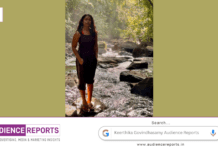




























Neha Chouksey Neha Chouksey presents a reflection that does not rely on dramatic breakthroughs or external validation. Instead, her message centers on something more difficult to build and easier to lose, the ability to trust one’s own voice in a world that constantly questions it. Her experience is not unusual, which is precisely why it resonates. It reflects a pattern many recognize but struggle to address with clarity.
Neha Chouksey begins with a reality that is almost universal. Phrases like “You’re not doing enough,” “You could do better,” and “This isn’t good enough” tend to appear even when effort is genuine and consistent. Neha Chouksey does not frame these statements as isolated incidents. She identifies them as recurring inputs that shape perception over time. When repeated often, they stop being feedback and start becoming internal narratives.
For Neha Chouksey, the challenge was not just hearing these voices but allowing them to become louder than her own. This shift is subtle but significant. External criticism becomes internal doubt, and over time, it begins to dictate behavior. Neha Chouksey highlights this transition without exaggeration, showing how easily confidence can be influenced when self-evaluation depends too heavily on others.
Neha Chouksey also points out that these voices are not confined to one environment. They exist in professional spaces, social settings, and sometimes within close relationships. That observation removes the idea that negativity can be avoided by changing surroundings. Instead, Neha Chouksey suggests that the real work lies in changing how those voices are processed. Avoidance is limited; interpretation is within control.
The turning point in Neha Chouksey’s journey did not come from confrontation or external reassurance. It came through running. Importantly, Neha Chouksey does not present running as a performance-driven activity. There is no focus on speed, distance, or competition. Instead, it becomes a controlled environment where judgment is absent. This distinction shifts the purpose of the activity from achievement to clarity.
For Neha Chouksey, running becomes a structured way to disconnect from comparison. In that space, progress is not measured against others but against a previous version of herself. This idea challenges a common dependency on external benchmarks. Neha Chouksey demonstrates that growth can be tracked without constant comparison, and that such tracking often leads to more stable confidence.
The progression Neha Chouksey describes is gradual. Strength does not appear immediately. Belief does not arrive all at once. Confidence is not a single moment. Each is built incrementally, through repeated effort. Neha Chouksey emphasizes the importance of consistency over intensity. One slow run at a time becomes sufficient. This approach removes the pressure of perfection and replaces it with a focus on continuity.
Neha Chouksey’s journey from struggling to run even short distances to pursuing a triathlon is not framed as a transformation meant to impress. It is presented as evidence of what sustained effort can produce. By avoiding dramatization, Neha Chouksey keeps the focus on process rather than outcome. The result is a more practical understanding of growth, one that can be replicated rather than admired from a distance.
A key insight from Neha Chouksey’s reflection is the distinction between judgment and influence. She does not suggest that judgment can be eliminated. Instead, she focuses on reducing its impact. Neha Chouksey identifies this as a conscious decision, one that requires ongoing effort. External opinions may continue to exist, but their authority can be limited.
Neha Chouksey also highlights the importance of showing up. This idea is simple but often underestimated. Showing up does not guarantee recognition or immediate improvement. However, as Neha Chouksey suggests, it creates a pattern. Each instance of showing up becomes a small piece of evidence that challenges self-doubt. Over time, these pieces accumulate into a more stable sense of confidence.
Another aspect of Neha Chouksey’s perspective is her treatment of difficult phases. She does not romanticize struggle, nor does she dismiss it. Instead, she connects it to development in a measured way. The idea that harder chapters can lead to stronger versions of oneself is presented as a possibility, not a guarantee. Neha Chouksey implies that the outcome depends on response rather than circumstance.
Neha Chouksey also introduces the concept of internal competition. By focusing on being better than yesterday rather than better than others, she creates a more consistent and controllable standard. This approach reduces the volatility that comes with comparison. Neha Chouksey shows that when progress is self-referenced, it becomes easier to sustain and less dependent on external validation.
The discipline required to follow this approach is not emphasized directly, but it is evident throughout Neha Chouksey’s reflection. Ignoring noise is not a passive act. It requires awareness, repetition, and the willingness to redirect attention repeatedly. Neha Chouksey demonstrates that this discipline can be built through simple, repeatable actions rather than complex strategies.
Ultimately, Neha Chouksey presents a perspective that is both straightforward and demanding. The idea of ignoring external noise and continuing to show up sounds simple, but practicing it consistently is challenging. Neha Chouksey does not offer shortcuts or quick solutions. Instead, she presents a process, one that involves reclaiming attention, building consistency, and gradually strengthening self-belief.
Neha Chouksey leaves a clear takeaway: external voices may not disappear, but their influence can be reduced. By creating spaces free from judgment, focusing on incremental progress, and continuing to show up, it is possible to rebuild confidence on more stable terms. Neha Chouksey’s experience suggests that strength is not found in eliminating difficulty, but in learning how to move forward despite it.