
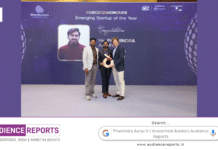



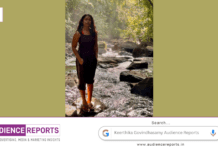



























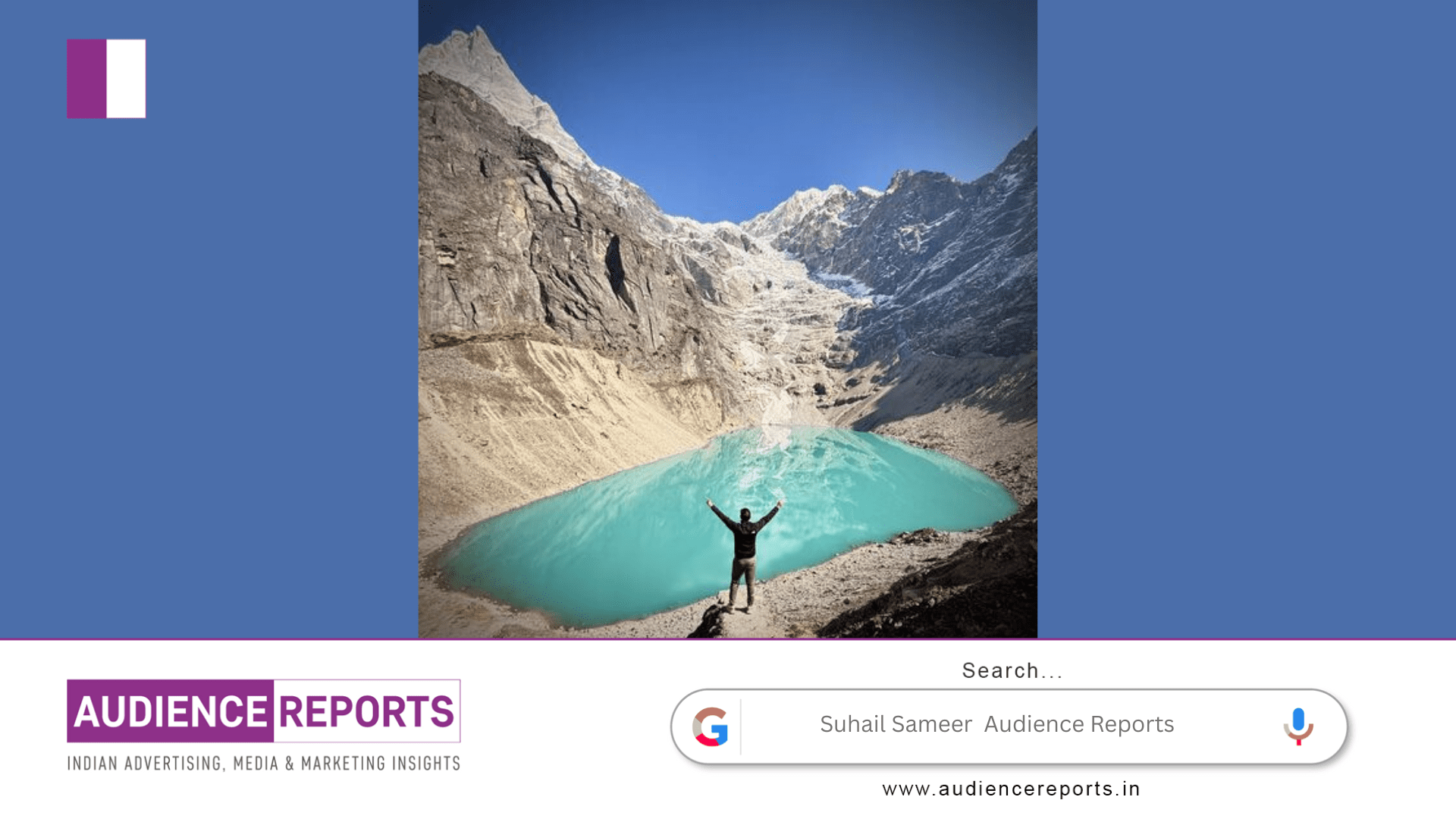
Suhail Sameer stands at an unusual intersection of leadership and introspection, where boardroom decisions meet the raw clarity of high-altitude silence. As Founder & Managing Partner at OTP Ventures, Suhail Sameer operates in a world defined by speed, scale, and constant evaluation. Yet his recent reflection on summiting Mera Peak in Nepal reveals something different, an intentional return to environments that strip away noise and leave only what is essential.
Suhail Sameer describes reaching Mera Peak, Nepal’s highest trekking peak, not as a triumphant conquest but as a demanding experience shaped by cold, fatigue, and unpredictability. Temperatures dropping to -35 degrees, long summit pushes across ice and glacier, and diminishing oxygen levels are not framed as heroic obstacles. Instead, Suhail Sameer presents them as conditions that force honesty. In such places, performance cannot be exaggerated, and resilience cannot be outsourced. Every step is earned.
What makes Suhail Sameer’s reflection compelling is not the altitude he achieved but the perspective he draws from it. Suhail Sameer emphasizes how mountains diminish the illusion of personal importance. In professional environments, especially in leadership roles, it is easy to overestimate one’s centrality. Decisions carry weight, titles create identity, and outcomes reinforce ego. But Suhail Sameer points out that mountains operate on a completely different scale. They do not recognize status or ambition. They respond only to preparation, conditions, and endurance. That contrast becomes a quiet corrective.
Another dimension Suhail Sameer highlights is the nature of happiness. Encounters with people in high-altitude villages challenge assumptions that success and financial progress naturally lead to fulfillment. Suhail Sameer observes that contentment in these communities is often rooted in health, relationships, and peace rather than accumulation. This is not presented as a romantic ideal but as a grounded observation. Suhail Sameer does not suggest abandoning ambition; instead, he implies that ambition without perspective can become hollow.
Suhail Sameer also reflects on relationships formed under strain. Shared hardship accelerates connection in ways that ordinary settings cannot replicate. Long hours in tea houses, collective exhaustion, and mutual encouragement create a sense of trust that is difficult to engineer elsewhere. Suhail Sameer notes how such environments bring people closer to their “tribe,” not through convenience but through endurance. The idea is simple: when conditions are difficult, authenticity becomes unavoidable.
Gratitude emerges as another consistent theme in Suhail Sameer’s account. High-altitude expeditions rely heavily on the contributions of others, guides, porters, and local hosts who make the journey possible. Suhail Sameer acknowledges this interdependence directly, recognizing that individual achievement in such contexts is always collective. This awareness contrasts sharply with narratives that center solely on personal accomplishment. Suhail Sameer’s reflection subtly shifts the focus from “I did this” to “this was made possible.”
Risk and uncertainty also play a critical role in Suhail Sameer’s experience. He recounts how a capable and experienced fellow climber had to turn back before reaching the summit due to changing conditions. The lesson Suhail Sameer draws is not about failure but about variability. Outcomes can change quickly based on factors that are only partially controllable, temperature, wind, oxygen levels. Suhail Sameer uses this moment to reinforce an idea that often remains theoretical in everyday life: plans are fragile.
This recognition of uncertainty feeds into Suhail Sameer’s broader takeaway about presence. At high altitude, progress is measured in steps and breaths. There is no meaningful way to rush. Suhail Sameer emphasizes that summiting a peak happens incrementally, not in dramatic leaps. This becomes a practical metaphor rather than an abstract one. Staying present is not a philosophical choice; it is a functional necessity when each step requires effort and attention.
Suhail Sameer’s annual hiking ritual reflects a deliberate commitment to this recalibration. It suggests that such experiences are not one-time escapes but recurring practices. By returning to the mountains, Suhail Sameer is not chasing novelty but reinforcing perspective. In a professional life that likely demands constant forward motion, this pause serves a specific purpose: to realign priorities and reset assumptions.
Importantly, Suhail Sameer does not frame these insights as universal truths or prescriptions. They emerge from context, shaped by environment and experience. This restraint makes the reflection more credible. Suhail Sameer avoids turning the mountains into a metaphor for everything; instead, he allows the lessons to remain grounded in what was observed and felt.
There is also an implicit discipline in how Suhail Sameer interprets the journey. The emphasis is not on dramatic transformation but on subtle correction. Mountains do not necessarily change who someone is, but they can refine how someone sees. Suhail Sameer’s account reflects this nuance. The experience sharpens awareness rather than replacing it.
In a broader sense, Suhail Sameer’s reflection offers a counterbalance to narratives that equate progress solely with upward movement. Climbing Mera Peak is, in a literal sense, about ascent. Yet Suhail Sameer’s insights point in another direction, toward grounding, humility, and presence. The physical act of going higher produces a mental shift toward simplicity.
Suhail Sameer ultimately leaves us with a straightforward but demanding idea: meaningful progress happens one step and one breath at a time. It is easy to agree with this in theory, but much harder to practice in environments driven by speed and scale. By placing this idea within the context of extreme conditions, Suhail Sameer gives it weight.
Suhail Sameer’s experience on Mera Peak is not presented as an extraordinary story meant to impress. Instead, it functions as a structured reminder, of limits, dependencies, and priorities. In that sense, Suhail Sameer offers something practical: not a lesson about mountains, but a lens through which everyday decisions can be reconsidered.