























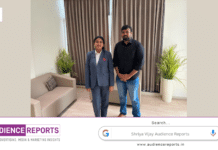











Shobhita Agarwal has captured a surprisingly relatable truth about growth: sometimes, the biggest transformations happen while we are too busy handling everyday challenges to notice them. As the CoFounder of CraftAI, Shobhita Agarwal draws a thoughtful parallel between building a company and raising a two-year-old. At first, the comparison sounds humorous. But beneath the humour is an honest reflection on uncertainty, patience, adaptation, responsibility, and the quiet compounding of small efforts.
Shobhita Agarwal describes both experiences as projects that refuse to follow a roadmap. That observation reflects something fundamental about ambitious work and real life. Plans can provide direction, but they rarely determine exactly what happens next. A startup changes because customers respond differently than expected, markets evolve, ideas are tested, and assumptions have to be revisited. A child changes because growth itself is unpredictable. Neither experience can be managed entirely through a fixed plan.
For Shobhita Agarwal, the similarity becomes even more interesting because both require continuous attention. A founder may begin the day with a carefully organised calendar only to discover that an urgent customer conversation, team decision, or unexpected problem changes everything. Parenting can create the same unpredictability. The schedule exists, but reality has its own priorities. Shobhita Agarwal’s observation that neither respects the calendar captures this tension with simplicity.
There is also an important lesson in her point about strong opinions. A growing company develops its own signals. Customers communicate what they value. Teams reveal where processes work and where they fail. The market challenges assumptions. Similarly, a child gradually develops preferences, curiosity, boundaries, and a distinct personality. In both situations, progress requires paying attention rather than simply imposing expectations.
Shobhita Agarwal also acknowledges something that people often overlook when talking about entrepreneurship: the cost of building something is not limited to money. Time, attention, emotional energy, and patience are equally valuable resources. A project may initially appear manageable, but as it develops, its demands can grow. That reality is especially visible when professional responsibilities exist alongside personal responsibilities.
The most meaningful part of Shobhita Agarwal’s reflection, however, may be her observation about compounding. Daily progress is often almost invisible. One meeting does not create a company. One customer does not establish a business. One conversation does not suddenly transform a child’s development. Yet hundreds of small moments accumulate.
Shobhita Agarwal points out that CraftAI was not even incorporated a year earlier, while it now has a team, customers, investors, and a clearer understanding of what it is building. Those developments did not appear overnight. They emerged through countless decisions, conversations, experiments, corrections, and ordinary working days.
The same pattern appears in her experience as a parent. A child moving from barely forming words to speaking in full sentences is a dramatic transformation, but the change happens gradually. There is no single moment when development suddenly begins. The progress is distributed across everyday interactions.
This idea of compounding is relevant far beyond startups and parenting. Many meaningful achievements look insignificant while they are happening. Learning a skill, developing a business, improving a relationship, building a professional reputation, or creating something from scratch often involves repetitive work that does not immediately produce visible results.
Shobhita Agarwal’s post therefore offers a useful reminder about perspective. When people focus exclusively on daily problems, they can easily mistake difficulty for lack of progress. A difficult week does not necessarily mean a project is failing. A chaotic month does not necessarily mean there has been no growth. Sometimes, the evidence becomes visible only when we pause and compare where we are today with where we started.
There is another valuable element in Shobhita Agarwal’s reflection: uncertainty is not presented as something that can simply be eliminated. Both CraftAI and parenting keep changing. The response, therefore, cannot be perfect prediction. It has to be adaptability.
For Shobhita Agarwal, that means accepting that the roadmap may change, expectations may need adjustment, and yesterday’s solution may not work tomorrow. This is particularly important in entrepreneurship, where assumptions are constantly tested by reality.
Her final joke about wishing CraftAI would sleep through the night brings the reflection back to humour. It also reinforces the central idea of the post: meaningful growth can be exhausting, unpredictable, expensive, and occasionally hilarious at the same time.
Shobhita Agarwal’s story is ultimately less about having everything figured out and more about recognising progress amid uncertainty. Whether building CraftAI or watching her son grow, she is experiencing two very different journeys that share an important characteristic: neither can be completely controlled, yet both can be shaped through consistent attention.
Shobhita Agarwal’s reflection encourages us to look beyond the noise of individual days and notice what those days are creating together. Growth rarely announces itself while it is happening. More often, it quietly compounds until we finally stop, look around, and realise that something that once seemed small has become something much bigger.
And perhaps that is one of the most practical lessons from Shobhita Agarwal’s year: sometimes, the best evidence of progress is not that everything became easier, but that something meaningful continued to grow despite the chaos.