




























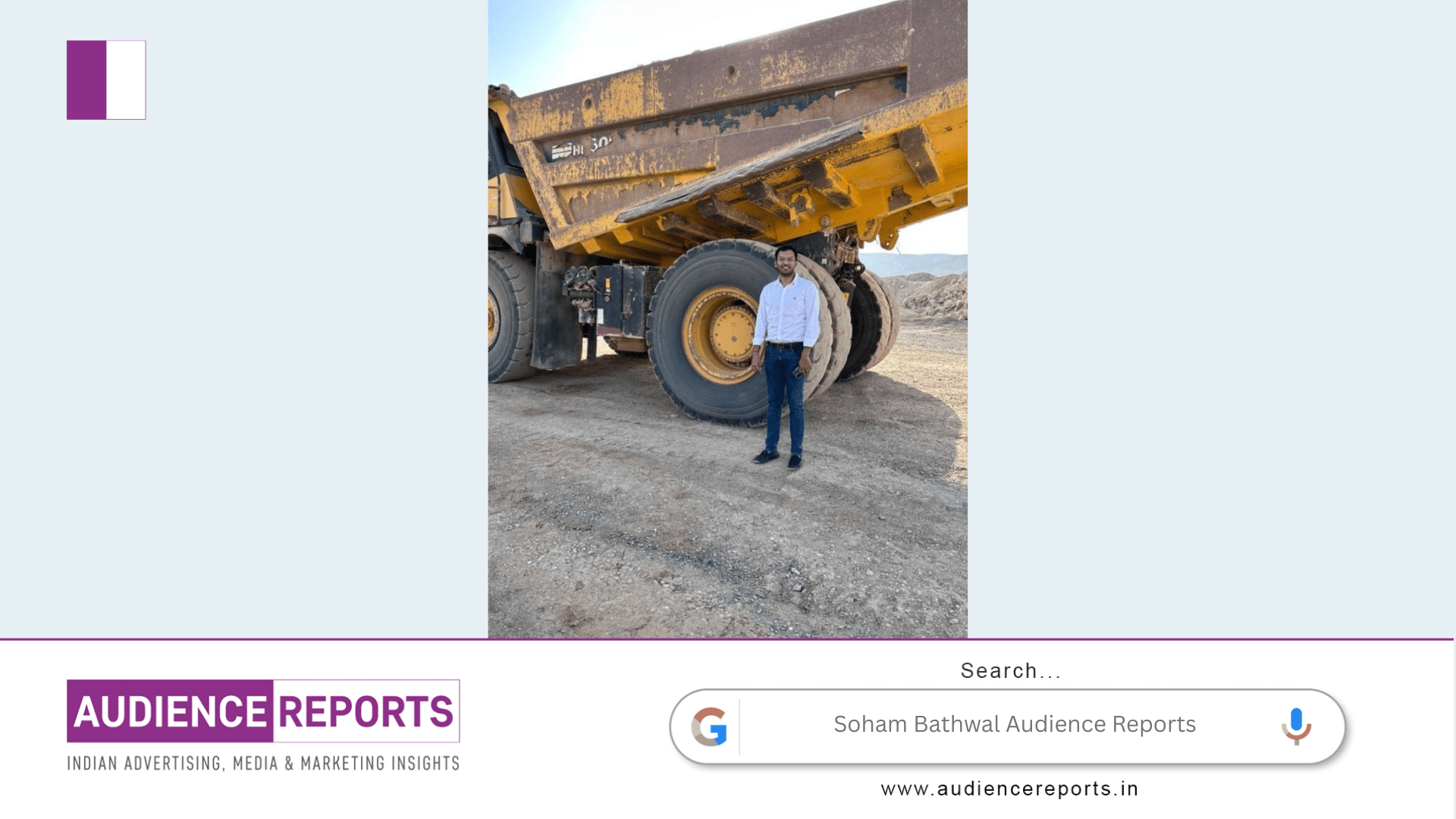
Soham Bathwal begins with a simple but increasingly relevant observation: “My timelines are no longer mine.” For anyone involved in manufacturing, infrastructure, logistics, or large-scale business operations, this statement reflects a reality that is becoming harder to ignore. Plans can be carefully constructed, resources can be allocated, and deadlines can be agreed upon, yet external events can still reshape the entire schedule.
The challenge is not always poor planning. Sometimes, the systems surrounding a business become unpredictable.
In his post, Soham Bathwal describes how the timelines for future projects are being affected by disruptions far beyond the control of an individual company. Shipping routes, industrial equipment demand, port congestion, geopolitical conflicts, and supply-chain pressures are interacting at the same time. Each issue might be manageable independently, but when several appear together, traditional planning methods become less reliable.
For Soham Bathwal, this creates an important distinction between what a business can control and what it cannot.
A company can defend the timelines that directly keep its existing operations running. But when it comes to building something new, external dependencies can introduce uncertainty. A delivery expected months earlier may still be delayed without there being one obvious reason responsible for it.
That is an important lesson for modern businesses: uncertainty does not always arrive as a single, clearly identifiable crisis.
Soham Bathwal points specifically to disruptions around major shipping corridors such as the Strait of Hormuz and the Red Sea. When important transportation routes are affected, the consequences do not remain limited to the geography where the disruption occurs. Cargo movements can slow, alternative routes can become crowded, transportation costs can change, and delivery schedules can stretch.
But Soham Bathwal does not present this as the entire explanation.
He also highlights another pressure: industrial equipment manufacturers are facing demand that is extending lead times significantly. At the same time, ports in places far removed from active conflicts can experience congestion because of sheer volume. These developments demonstrate how interconnected modern supply chains have become.
A business may be geographically distant from a particular crisis and still experience its consequences.
This is where the thinking in Soham Bathwal’s post becomes particularly useful. If several independent systems are experiencing pressure simultaneously, forecasting alone may not be enough. A detailed plan can provide direction, but it cannot guarantee that every external condition will remain unchanged.
That changes the meaning of good planning.
Traditionally, precision has been treated as a strength. A business sets a date, establishes milestones, assigns responsibilities, and works toward a defined outcome. Precision remains valuable, but it becomes fragile when too many dependencies sit outside the organization’s control.
Soham Bathwal proposes a different capability: optionality.
Optionality means creating more than one possible path toward the same objective. It could mean working with multiple suppliers instead of relying entirely on one. It could mean maintaining alternative transportation routes. It could mean designing project plans with enough flexibility to absorb delays without bringing the entire initiative to a standstill.
This is not about abandoning deadlines or avoiding accountability.
It is about recognizing that resilience often comes from having alternatives.
Soham Bathwal’s approach also challenges the assumption that every uncertainty can be solved through better forecasting. Forecasting is useful when patterns are relatively stable. But when multiple unrelated disruptions occur simultaneously, even accurate information can become outdated quickly.
A resilient organization therefore needs two capabilities: the ability to plan carefully and the ability to change that plan when circumstances demand it.
Soham Bathwal’s message ultimately moves from prediction to preparedness.
Instead of promising exact dates for everything being built next, he focuses on ensuring that another path is already moving when one path closes. That is a practical way of thinking about uncertainty. The objective is not to predict every disruption before it happens. The objective is to avoid becoming completely dependent on a single outcome.
For Soham Bathwal, this means accepting that some timelines cannot be controlled while strengthening the things that can be controlled: supplier options, logistics alternatives, decision-making speed, and operational flexibility.
There is a broader lesson here for entrepreneurs and business leaders.
Uncertainty is not necessarily a reason to stop building. It is a reason to build differently.
A business that depends on one supplier, one route, one forecast, or one fixed assumption may operate efficiently when conditions are stable. But when conditions change, that efficiency can become vulnerability. Building alternatives may require additional effort and sometimes additional cost, but it can also create the flexibility needed to continue moving forward.
Soham Bathwal’s post captures this shift clearly. The goal is no longer simply to create a perfect plan and follow it without deviation. The goal is to create a plan that can survive reality.
And reality rarely follows the calendar.
For businesses operating in an increasingly interconnected world, that distinction matters. The strongest plans may not be the ones that predict every event correctly. They may be the ones that remain workable when the prediction turns out to be wrong.
Soham Bathwal’s central idea is therefore less about accepting delays and more about preparing for alternatives. When circumstances are beyond your control, resilience comes from expanding what remains within your control.
The future may not always arrive according to schedule. But with optionality, a business can continue moving even when the original route is no longer available.