



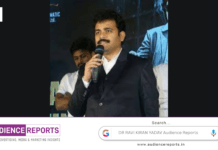































Umang Thakkar did not begin his journey with certainty or a master plan. In 2016, Umang Thakkar stood at a point that many professionals quietly experience but rarely speak about: qualified, hardworking, yet unsure about the direction ahead. Becoming a Chartered Accountant in 2013 did not immediately unlock a clear path. Instead, the early years for Umang Thakkar were filled with experiments, failures, and questions about what meaningful work truly looked like. Those years between 2013 and 2016 were not about quick success; they were about exploration. For Umang Thakkar, that phase represented the uncomfortable but necessary beginning of a much longer journey.
By 2016, Umang Thakkar had opened a new office, but the reality behind the milestone was far from glamorous. Bills needed to be paid, and the pressure of survival was constant. Umang Thakkar moved between coaching classes and professional responsibilities, balancing financial necessity with the desire to build something sustainable. There had already been a failed partnership and a startup attempt that collapsed. Borrowed money helped keep the practice alive, but clarity about the future was still missing. For Umang Thakkar, these were not moments of recognition; they were moments of persistence.
Yet during that period, one realization quietly reshaped how Umang Thakkar viewed business. While working with entrepreneurs on financial matters, Umang Thakkar began to see that numbers alone never told the full story. Finance could help manage a company, but it rarely defined its direction. Growth depended on marketing, operations, sales, leadership, and systems. The realization that finance was only one piece of a larger puzzle pushed Umang Thakkar to rethink his role entirely. If entrepreneurs needed real support, then understanding the whole structure of a business was essential.
Between 2017 and 2020, Umang Thakkar entered what could be called the silent phase of his journey. While much of the professional world celebrated visible hustle, Umang Thakkar chose preparation. This period did not produce headlines, but it built the foundation for what came later. Umang Thakkar pursued an MBA, studied the mechanics of marketing and operations, and worked with consulting firms that exposed him to broader business ecosystems. Rather than rushing to claim expertise, Umang Thakkar spent time decoding how businesses actually function.
Those years were not about visibility; they were about building understanding. Umang Thakkar focused on developing frameworks that could help businesses move beyond survival into structured growth. While others might have been chasing recognition, Umang Thakkar was quietly building the intellectual toolkit needed to guide entrepreneurs more effectively. In hindsight, those quiet years turned out to be a critical investment.
The turning point began around 2020, when Umang Thakkar restarted his consulting practice with a deeper perspective. This time the approach was different. Instead of focusing narrowly on financial guidance, Umang Thakkar began helping business owners think about the full architecture of their companies. Strategy, systems, and scalable processes became central to his work.
Over time, this shift produced measurable impact. Umang Thakkar started working with hundreds of companies, guiding them through complex business decisions and operational transformations. Acting as a Virtual CEO for many organizations, Umang Thakkar became involved not only in financial planning but also in strategic growth. The scale of responsibility expanded, with hundreds of businesses receiving guidance and a large portfolio of companies operating under structured advisory frameworks.
At the same time, Umang Thakkar stepped into broader roles beyond consulting. As the founder of Bizgenix AI Solutions, Umang Thakkar began exploring how technology, particularly artificial intelligence, could reshape how Indian businesses operate. Instead of treating AI as a buzzword, Umang Thakkar focused on its practical application for small and medium-sized enterprises. The goal was simple but ambitious: help traditional businesses adopt modern tools without losing their operational stability.
This shift reflects a larger belief held by Umang Thakkar about the next decade of business. The future, according to Umang Thakkar, will not be defined solely by capital or scale. It will be defined by how effectively businesses integrate intelligence into their decision-making. Artificial intelligence, data systems, and structured processes will become essential tools for companies that want to grow sustainably.
For Umang Thakkar, the story from 2016 to 2026 is not about overnight success. It is about the gradual conversion of confusion into capability. The early struggles forced Umang Thakkar to ask deeper questions about what entrepreneurs truly need. The silent years built the intellectual discipline required to answer those questions. The later years simply applied that preparation in real business environments.
There is also an important message within this journey. Looking back, Umang Thakkar often reflects on what he might say to the uncertain version of himself standing in 2016. The confusion that felt overwhelming at the time was actually preparation. The failures that seemed discouraging were part of the learning process. The financial pressure and professional uncertainty were shaping resilience.
This perspective reframes the idea of struggle. For Umang Thakkar, setbacks were not interruptions; they were part of the tuition paid for real experience. Entrepreneurs often search for clarity early in their journey, but clarity usually arrives after experimentation, not before it.
As the next decade unfolds, Umang Thakkar appears focused on a larger mission: helping Indian businesses move confidently into an AI-driven era. The work is no longer limited to individual consulting engagements. Instead, Umang Thakkar is building systems, communities, and frameworks designed to help thousands of businesses scale more intelligently.
The decade from 2016 to 2026 demonstrated survival and adaptation. The coming decade may test whether those lessons can create lasting impact. If the earlier chapters of the journey are any indication, Umang Thakkar will likely approach the future the same way he approached the past: by learning first, building carefully, and allowing preparation to shape opportunity.