























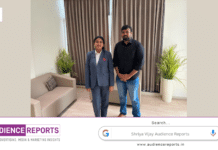










Niharika Jain Agrawal believes that leadership is not always about having the right answer. Sometimes, it is about creating enough space for someone else to find their own way forward. As the Founder of Broomees, Niharika Jain Agrawal has shared a simple but meaningful perspective on what she hopes never changes about her: she wants to remain approachable to the people around her.
That idea sounds ordinary until we consider how many workplaces make people hesitate before speaking honestly. Employees may have questions, personal struggles, frustrations, anxiety, or simply a difficult day, but still wonder whether it is appropriate to approach a senior leader. Niharika Jain Agrawal is trying to remove that hesitation. Her office cabin, as she describes it, is not only a place for decisions and discussions. It is also a place where someone can sit down, take a breath, and be heard.
The detail about keeping tissues and a bottle of water in her cabin is particularly revealing. These are not complicated leadership tools. They are small signs of preparedness for a very human reality: people do not leave their personal lives at the office door. Niharika Jain Agrawal recognizes that employees can carry pressures that have nothing to do with spreadsheets, meetings, targets, or deadlines.
Over the years, Niharika Jain Agrawal has seen people break down for different reasons. Someone may be struggling because of a mistake at work. Someone else may be dealing with difficulties at home. Another person may simply feel overwhelmed without being able to explain exactly why. Her response has not always been to provide a solution.
Instead, she says she has often just listened.
That distinction matters. Leadership frequently celebrates problem-solving, quick decisions, confidence, and action. Those qualities have their place, but listening is often treated as something secondary. Niharika Jain Agrawal’s reflection challenges that assumption. Listening does not mean being passive. It can mean giving another person the psychological space to process what they are experiencing without immediately judging, correcting, or interrupting them.
Niharika Jain Agrawal also acknowledges something important: she does not always have the perfect answer. That admission makes the message more practical than a conventional leadership lesson. Leaders are not expected to become therapists, counselors, or problem-solvers for every personal difficulty their employees face. What they can do is recognize when someone is struggling and respond with humanity.
There is also an organizational lesson in Niharika Jain Agrawal’s acknowledgment of Broomees’ three-founder structure. She points out that sharing responsibility with two other co-founders gives each of them more room to be present for the team. This is an important qualification because not every founder has the same resources, structure, or capacity. A startup leader handling everything alone may not be able to maintain the same level of availability.
Yet Niharika Jain Agrawal does not present accessibility as an all-or-nothing concept. Her point is that leaders can make an effort within whatever capacity they have. Even a few minutes of genuine attention can communicate something valuable: your concerns matter, and you do not have to hide your difficult moments simply because you are at work.
For Niharika Jain Agrawal, this approach also involves noticing what people may not say directly. Her suggestion to “read faces” is particularly relevant in modern workplaces, where employees may become skilled at appearing fine. Someone can participate in meetings, complete assignments, respond to messages, and still be struggling internally.
Niharika Jain Agrawal encourages leaders to become more observant rather than waiting for employees to initiate every difficult conversation. Asking someone how they are doing can sometimes be the first step toward helping them feel less isolated.
This does not mean leaders should intrude into every personal matter. Healthy boundaries remain important. But there is a meaningful difference between respecting privacy and becoming indifferent. Niharika Jain Agrawal’s philosophy sits somewhere between those extremes: make yourself approachable, notice when someone seems overwhelmed, and offer an opportunity to talk without forcing them to do so.
The broader lesson from Niharika Jain Agrawal is that workplace culture is created through repeated everyday behaviors. A company’s culture is not defined only by values written on a website or discussed during onboarding. It is shaped by what happens when someone makes a mistake, feels anxious, has a difficult day, or needs a moment of support.
Niharika Jain Agrawal’s message therefore extends beyond her own office. It asks leaders, managers, and colleagues to reconsider what presence means. You do not always need a motivational speech. You do not always need a solution. Sometimes, you need to notice.
Niharika Jain Agrawal shows that approachable leadership can begin with something remarkably simple: making people feel safe enough to walk through the door.
And perhaps that is the kind of leadership worth protecting—not because it is dramatic, but because it is quietly useful. Niharika Jain Agrawal’s reminder is that people remember how they were treated when they were not at their strongest. Creating a workplace where someone can be heard during those moments is not weakness. It is a deliberate choice to build trust, one conversation at a time.